
Chrysaora quinquecirrha
Chrysaora quinquecirrha
The Chrysaora quinquecirrha, also known as the Atlantic sea nettle, is a beautiful jellyfish with long, flowing tentacles. It glides through the water and can be found in warm coastal areas, making it a fascinating sight for ocean lovers!
Habitat: Coastal areas
The Chrysaora quinquecirrha is a bell-shaped jellyfish, usually translucent white or yellowish with reddish-brown stripes radiating from its center. It possesses long, ribbon-like oral arms and numerous delicate stinging tentacles that hang beneath its bell.
Category
InvertebrateRarity
Common
Danger
3/5 · Moderate
Snaps
Be the first to snap!
A group of jellyfish is surprisingly called a 'smack' or a 'bloom'!
Its long tentacles can stretch up to 5 meters, much longer than a car!
They have no brain or heart, but they are still amazing hunters!
This jellyfish's bell can reach the size of a dinner plate!
Chrysaora quinquecirrha has long trailing tentacles equipped with stinging cells that help them catch unsuspecting prey.
Chrysaora quinquecirrha can pulse its bell to gently move through the water, allowing them to drift with currents.
Chrysaora quinquecirrha can sometimes glow with light, a cool ability that helps them startle predators or attract mates.
This jellyfish is a predator, using its stinging tentacles to catch small creatures that swim by.
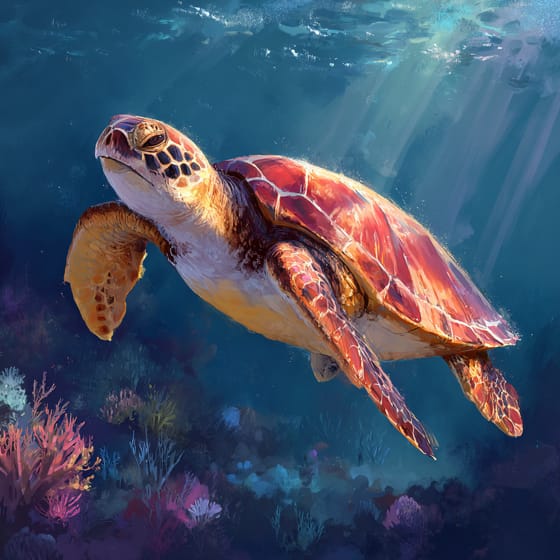
Caretta caretta
Turtles are predators of jellyfish.
Mola mola
This giant fish feasts on jellyfish.
Mnemiopsis leidyi
Jellyfish sometimes consume comb jellies.
Solitary animals live alone for most of their lives, only interacting with others for mating or parental care.
Colorful describes organisms or objects displaying a wide range of bright and distinct colors.
Filter feeders obtain nutrients by straining suspended food particles and small organisms from water.
Gliding animals move through the air by launching themselves and maintaining flight with specialized body structures, without flapping wings.

Coastal habitats are dynamic environments located along the interface between land and sea, influenced by tides, waves, and saltwater.

This trait identifies organisms whose diet consists entirely or primarily of animal tissue.

Describes a species whose presence and role have a disproportionately large effect on its environment.

Marine habitats encompass all saltwater environments of the Earth's oceans, supporting an immense diversity of aquatic life.

Pertaining to organisms that emit light through bioluminescence or fluorescence.

Venomous organisms produce toxins that are injected into another animal, typically through a bite or sting.
Danger
3/5 · Moderate
Never touch jellyfish, as they can sting and hurt you.
The easiest way to identify Chrysaora quinquecirrha is to use the Snappit nature identifier app.
5-25 cm
0.05-0.5 kg
0.5-1 years
This jellyfish is a predator, using its stinging tentacles to catch small creatures that swim by.
0.5 km/h
Coastal areas
Ambush
Zoom in to split clusters and explore where this object has been snapped.
Recent snaps will appear here as new observations are added.
Take the discovery with you
Snap it with Snappit to identify it, learn what makes it special, and add the discovery to your collection.