Florida Apple Snail
pomacea paludosa
The Florida Apple Snail is a big, colorful snail that loves to glide through the water! Kids can spot them in swamps and ponds as they munch on aquatic plants.
Habitat: Freshwater lakes, ponds, and swamps in Florida.
The Florida Apple Snail has a large, globular, spiral shell, typically olive-green to yellow-brown, often with darker bands. Its shell opening is wide and rounded, sealed by a horny lid called an operculum. Unlike many pond snails, its shell coils to the right.
Category
InvertebrateRarity
Common
Danger
1/5 · Very low
Snaps
Be the first to snap!
Florida Apple Snails are a favorite snack for the endangered Snail Kite, a bird with a hooked beak!
Their bright pink eggs, laid above water, are actually toxic to many predators!
These snails can "hibernate" buried in mud for months during dry seasons to survive.
They use a special tongue covered in tiny, sharp teeth, called a radula, to scrape up food.
Florida Apple Snails can breathe both underwater with a gill and air using a lung, allowing them to survive varying water conditions.
This snail lays its bright pink egg clutches on emergent vegetation, keeping them safe from most aquatic predators.
It has a hard operculum that completely seals its shell, providing protection from predators and preventing drying out during droughts.
These snails are plant-eaters, grazing on various aquatic vegetation and algae in their watery homes.
Rostrhamus sociabilis
A specialized bird that relies almost solely on these snails.
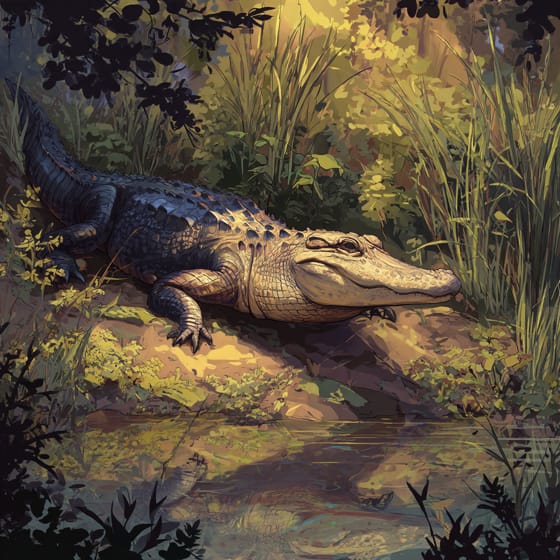
Alligator mississippiensis
A common predator in their wetland habitats.
Pseudemys nelsoni
Freshwater turtles sometimes consume snails.
Nymphaea odorata
Feeds on the leaves and stems of aquatic plants.
Solitary animals live alone for most of their lives, only interacting with others for mating or parental care.
Colorful describes organisms or objects displaying a wide range of bright and distinct colors.
This trait characterizes organisms whose diet consists entirely or primarily of plant material.
Diurnal animals are primarily active during daylight hours, typically resting or sleeping at night.

Aquatic habitats encompass environments where organisms live predominantly in water, including oceans, rivers, lakes, and wetlands.
Danger
1/5 · Very low
No special safety notes yet.
The easiest way to identify Florida Apple Snail is to use the Snappit nature identifier app.
5 cm
2 years
These snails are plant-eaters, grazing on various aquatic vegetation and algae in their watery homes.
Freshwater lakes, ponds, and swamps in Florida.
Grazing
500
Zoom in to split clusters and explore where this object has been snapped.
Recent snaps will appear here as new observations are added.
Take the discovery with you
Snap it with Snappit to identify it, learn what makes it special, and add the discovery to your collection.