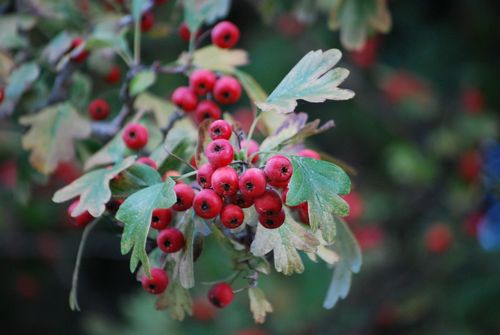


Common Hawthorn Complex
crataegus monogyna
The Common Hawthorn (Crataegus monogyna) is a robust, historically significant deciduous shrub or small tree, renowned for its dense, thorny habit and spectacular seasonal displays. Often forming the backbone of traditional European hedgerows, this adaptable plant bursts into a profusion of fragrant, white-to-pale-pink blossoms in late spring, marking the definitive arrival of the season. By autumn, these blooms give way to clusters of brilliant red, berry-like false fruits known as "haws." Beyond its immense cultural value—steeped deeply in folklore and myth—the Common Hawthorn is an ecological powerhouse. Its dense, thorny branches provide critical safe nesting sites for a multitude of small birds, while its flowers offer a vital nectar source for early pollinators, and its nutrient-rich haws sustain wildlife through the harsh winter months.
Habitat: Found in hedgerows, scrublands, and along woodland margins, often forming dense thickets in open environments.
The Common Hawthorn typically grows as a dense shrub or small tree reaching 5 to 14 meters in height. Its branches are armed with stout, sharp thorns measuring 1 to 1.5 cm long. The foliage is highly distinctive: leaves are dark green on top, paler underneath, and deeply lobed with one to three deep cuts on each side extending almost to the midrib. In May, it produces flat-topped clusters of small, five-petaled, white flowers with prominent pinkish-red anthers. In autumn, the tree bears small, dark red, oval-shaped fruits called haws, each typically containing a single seed.
Category
PlantsRarity
Common
Danger
1/5 · Very low
Snaps
1
In Celtic mythology, the hawthorn is considered a sacred tree; it was widely believed that cutting down a lone 'fairy thorn' would bring profound bad luck to the local community.
Its wood is exceptionally hard and burns at a very high temperature, historically making it a highly prized fuel for smelting iron.
The Common Hawthorn is famously associated with May Day and European folklore, traditionally used to make floral garlands to celebrate the arrival of spring.
The flowers emit a chemical called trimethylamine, giving them a distinct, slightly fishy odor that attracts carrion insects as well as bees for pollination.
Stout, sharp thorns heavily line the branches, effectively deterring grazing herbivores and protecting vulnerable new shoots from being eaten.
An extensive, deep root network allows the hawthorn to access hidden water reserves, making it highly resilient to drought and poor soil conditions.
The seeds within the haws possess a tough coating and require up to 18 months of cold stratification before germinating, ensuring they sprout only when conditions are perfectly favorable.
As an autotrophic plant, the Common Hawthorn produces its own energy and nutrients through photosynthesis.
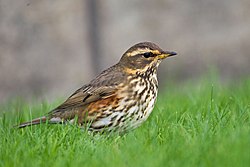
Turdus iliacus
The berries (haws) are a crucial winter food source for these migrating thrushes.
Apis mellifera
Bees visit the strongly scented flowers for nectar and pollen, aiding in the tree's reproduction.
Yponomeuta padella
Caterpillars feed extensively on the foliage of the hawthorn during their larval stage.
No trait badges are assigned for this object yet.
No aliases listed yet.
Collections for this object will appear here as more themes are added.
Danger
1/5 · Very low
No special safety notes yet.
Start with the whole plant, then compare leaf arrangement, leaf edges, stems and any flowers or fruit. Opposite leaves grow in pairs; alternate leaves come one at a time along the stem. These details tell you far more together than a single green leaf does. Plant Identifier: upload a photo and compare the visible details.
500-1400 cm
100-400 years
As an autotrophic plant, the Common Hawthorn produces its own energy and nutrients through photosynthesis.
Found in hedgerows, scrublands, and along woodland margins, often forming dense thickets in open environments.
Zoom in to split clusters and explore where this object has been snapped.

Municipal District of Cobh, IE
You might spot Ring-Tailed Lemur, Giraffes, and Cheetahs.
View guide →

Oregon, US
You might spot Savannah Sparrow, Song Sparrow, and American Robin.
View guide →

Connecticut, US
You might spot Monarch, Common Milkweed, and Common Blue Violet.
View guide →
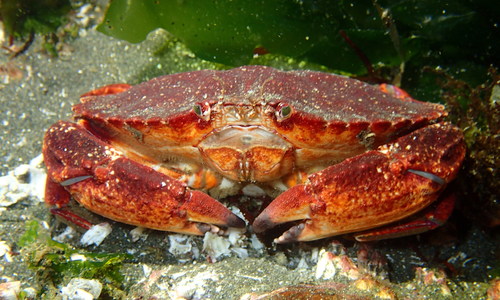
British Columbia, CA
You might spot Red Rock Crab, Dungeness Crab, and Salal.
View guide →
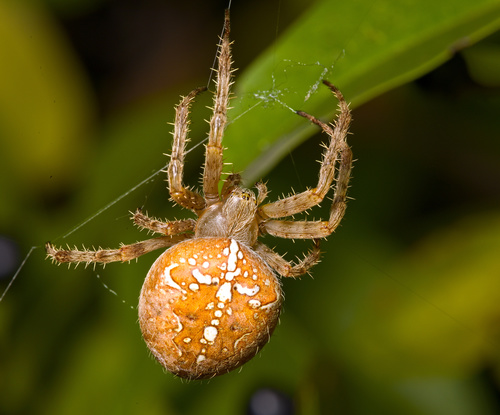
Washington, US
You might spot Cross Orbweaver and Fringed Willowherb.
View guide →
Take the discovery with you
Snap it with Snappit to identify it, learn what makes it special, and add the discovery to your collection.