.jpg&width=800)





northern blue flag
Iris versicolor
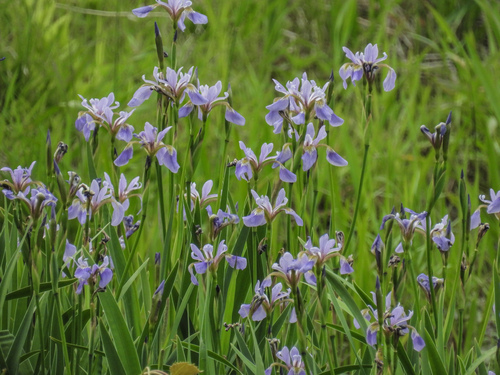
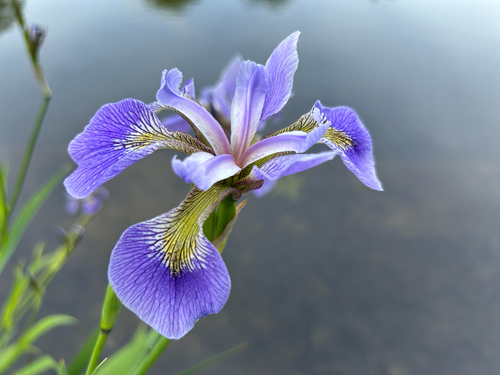
The northern blue flag is a beautiful flower with blue and purple petals. It grows in wet places and is loved by many butterflies and bees.
Habitat: Wetlands
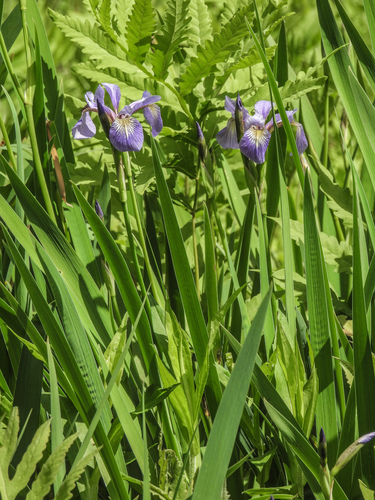
The northern blue flag has striking violet-blue flowers, each with unique yellow and white markings, resembling a flag. Its long, sword-shaped green leaves stand upright, forming dense clumps that often line wetland edges.
Category
PlantsRarity
Common
Danger
1/5 · Very low
Snaps
25
Its name 'versicolor' means 'variously colored' due to its mixed flower hues!
Native Americans once used parts of this plant for traditional medicines and dyes.
This plant is fantastic at soaking up extra water, helping to clean its wetland home!
You might find its beautiful blooms growing wild even in city park ponds!
Northern blue flag can thrive in waterlogged soil thanks to rhizomes that help it breathe and store nutrients.
Northern blue flag has bright, intricate flowers that guide thirsty insects like bees and butterflies to its sweet nectar.
Northern blue flag contains irritating compounds that make it unappetizing to most animals, keeping them from eating it.
Bombus impatiens
drinks nectar from its flowers
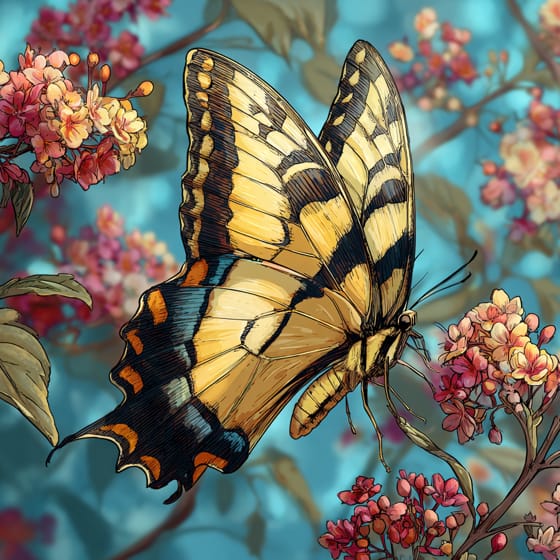
Papilio glaucus
drinks nectar from its flowers
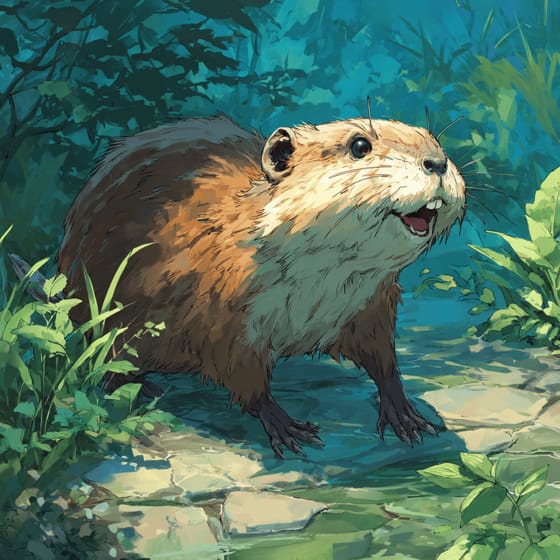
Ondatra zibethicus
eats rhizomes in aquatic habitats
Flowering plants are any plants that produce flowers as part of their reproductive cycle.
Spring blooming plants produce their flowers during the spring season, often signifying the end of winter and the start of new growth.
Summer blooming plants produce their flowers during the summer season, often providing vibrant color when many other plants have finished.
Fragrant flowers emit a pleasant aroma, often to attract pollinators or for defense.

Colorful describes organisms or objects displaying a wide range of bright and distinct colors.

Describes plants that are particularly attractive and beneficial to a wide range of pollinating organisms.

This habitat trait identifies species found in wetlands, which are areas of land saturated with water, either permanently or seasonally, including marshes, swamps, and bogs.

Describes organisms that transfer pollen, enabling the fertilization and reproduction of plants.
Danger
1/5 · Very low
Always look but don't touch flowers unless an adult says it's okay.
The easiest way to identify northern blue flag is to use the Snappit nature identifier app.
30-90 cm
30-60 cm
5-10 cm
Late spring to early summer
No
Moderate
Perennial
Zoom in to split clusters and explore where this object has been snapped.
Jun 2, 2026
Lyman School for BoysPhoto attribution
no rights reserved
License: CC0 1.0 ↗
Image may be shown cropped inside the card frame.
Jun 2, 2026
Cato Hill Historic DistrictPhoto attribution
(c) Branson Khounvichith, some rights reserved (CC BY-SA)
License: CC BY-SA 4.0 ↗
Image may be shown cropped inside the card frame.
May 29, 2026
Jackson Terrace Historic DistrictPhoto attribution
no rights reserved
License: CC0 1.0 ↗
Image may be shown cropped inside the card frame.

Massachusetts, US
You might spot Common Eastern Bumble Bee and Eastern Skunk Cabbage.
View guide →
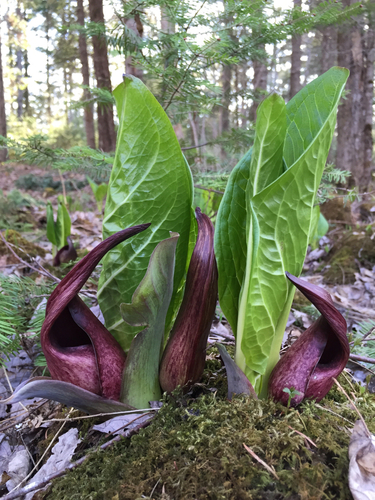
Connecticut, US
You might spot Eastern Skunk Cabbage and Eastern White Pine.
View guide →

Ohio, US
You might spot Widow Skimmer, Eastern Pondhawk, and Bee.
View guide →

Delaware, US
You might spot American Toad, Eastern Tiger Swallowtail, and Red Fox.
View guide →

Maine, US
You might spot Purple Pitcher Plant and American Toad.
View guide →

Pennsylvania, US
You might spot Solomon's Plume, Moonseed, and Virginia Waterleaf.
View guide →
Take the discovery with you
Snap it with Snappit to identify it, learn what makes it special, and add the discovery to your collection.








.jpg&width=800)


_001.jpg&width=800)




