





common jewelweed
Impatiens capensis
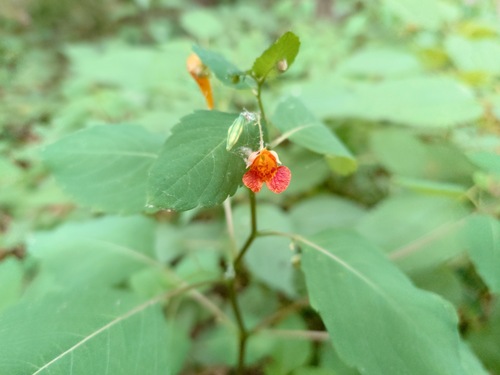
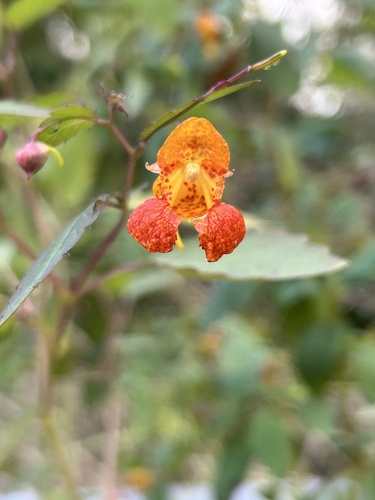
Common jewelweed is a bright orange flower that grows near water. Its leaves are soft and can help soothe skin irritations. It's a fun plant to find in the wild!
Habitat: Wetlands
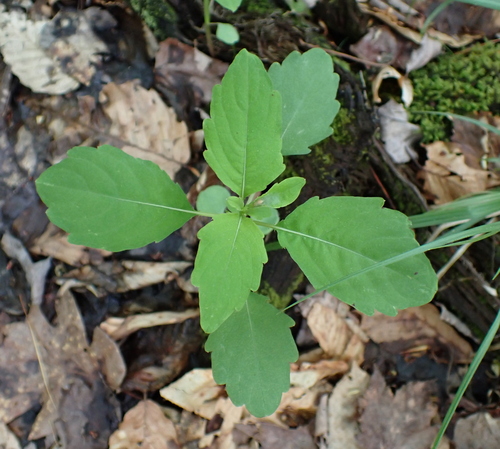
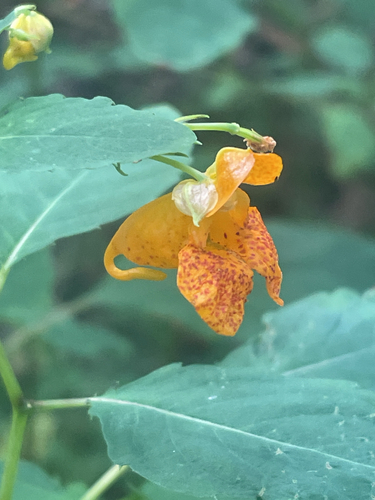
The common jewelweed has unique trumpet-shaped, orange flowers often spotted with reddish-brown, resembling dangling lanterns. Its delicate green leaves beautifully repel water, making droplets shimmer like liquid silver on their surface.
Category
PlantsRarity
Common
Danger
1/5 · Very low
Snaps
45
Its hollow stems are so translucent you can almost see through them!
Native Americans traditionally used its juice for soothing insect bites.
Raindrops bead up like tiny, shiny jewels on its waterproof leaves.
Tiny hummingbirds love to sip the sweet nectar from its orange flowers!
Common jewelweed can forcefully eject its seeds when touched, ensuring they spread far from the parent plant.
Common jewelweed has leaves that instantly shed water, making raindrops look like mercury jewels.
Common jewelweed produces a sap that can help soothe skin irritations from plants like poison ivy.
Bombus impatiens
collects nectar and pollen

Archilochus colubris
drinks sweet nectar from blooms
Uroleucon nigrotuberculatum
feeds on plant's sap
Deciduous plants periodically shed all their leaves, typically during autumn or dry seasons.
Flowering plants are any plants that produce flowers as part of their reproductive cycle.
Summer blooming plants produce their flowers during the summer season, often providing vibrant color when many other plants have finished.
Medicinal plants possess chemical compounds that can be used for therapeutic purposes to treat illnesses or maintain health.

Colorful describes organisms or objects displaying a wide range of bright and distinct colors.

Describes plants that are particularly attractive and beneficial to a wide range of pollinating organisms.

This habitat trait identifies species found in wetlands, which are areas of land saturated with water, either permanently or seasonally, including marshes, swamps, and bogs.
Danger
1/5 · Very low
Always wash your hands after touching plants, just to be safe!
The easiest way to identify common jewelweed is to use the Snappit nature identifier app.
90-150 cm
30-60 cm
2-3 cm
Summer to fall
No
Mild
Annual
Zoom in to split clusters and explore where this object has been snapped.
May 27, 2026
Pittsfield Center Historic DistrictPhoto attribution
(c) Steven Lamonde, some rights reserved (CC BY)
License: CC BY 4.0 ↗
Image may be shown cropped inside the card frame.
May 18, 2026
FruitvalePhoto attribution
(c) geotrope, some rights reserved (CC BY-SA)
License: CC BY-SA 4.0 ↗
Image may be shown cropped inside the card frame.
Sep 16, 2025
South Mountain ReservationPhoto attribution
(c) Tom Pollard, some rights reserved (CC BY)
License: CC BY 4.0 ↗
Image may be shown cropped inside the card frame.
Sep 14, 2025
Stockbridge Common Historic DistrictPhoto attribution
(c) Marina, some rights reserved (CC BY)
License: CC BY 4.0 ↗
Image may be shown cropped inside the card frame.

Alabama, US
You might spot Elf Orpine, Canada Goose, and Leatherleaf Mahonia.
View guide →

Tennessee, US
You might spot Black Bear, Yellow Wakerobin, and Pipevine Swallowtail.
View guide →

Oregon, US
You might spot Duck, Pacific Trillium, and Wood Duck.
View guide →
Iowa, US
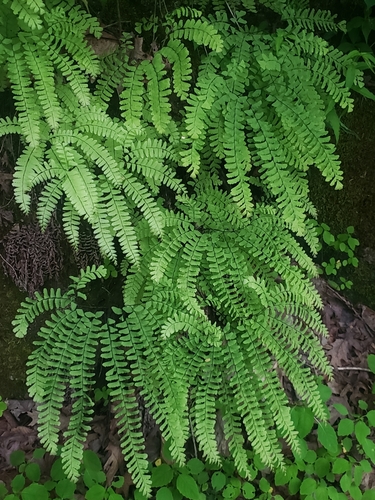
You might spot Northern Maidenhair Fern and Wood Nettle.
View guide →

District of Columbia, US
You might spot Eastern Gray Squirrel, Duck, and House Sparrow.
View guide →

Virginia, US
You might spot Pharaoh Cicada, Lesser Celandine, and Eastern Box Turtle.
View guide →
Take the discovery with you
Snap it with Snappit to identify it, learn what makes it special, and add the discovery to your collection.







.jpg&width=800)



_001.jpg&width=800)




