





Ruby-throated Hummingbird
Archilochus colubris
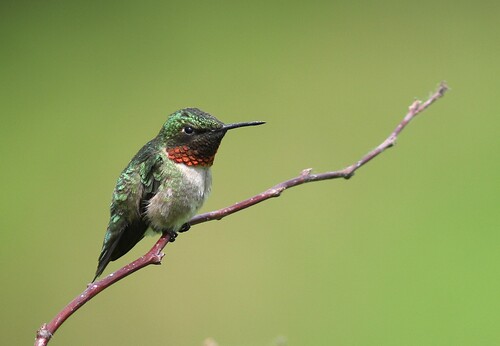
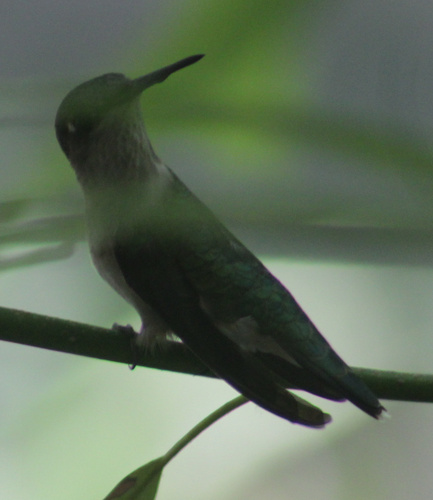
The Ruby-throated Hummingbird is a tiny bird known for its bright green back and sparkling red throat. These little birds are amazing fliers and can hover in one spot while they sip nectar from flowers.
Habitat: Forests
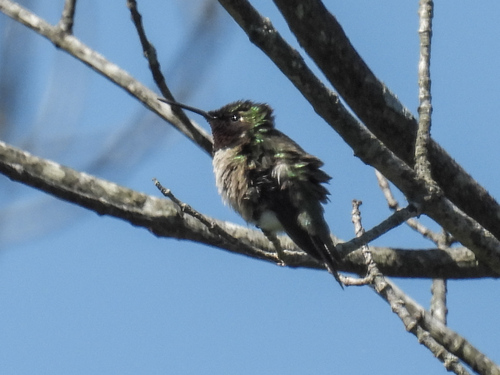
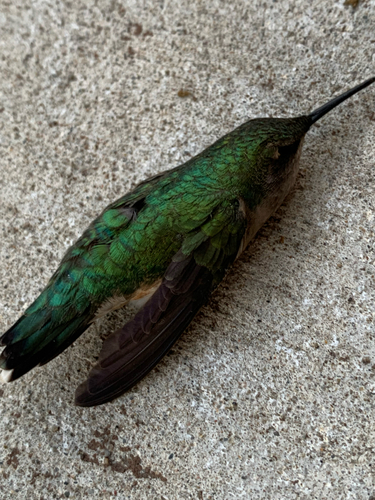
The Ruby-throated Hummingbird is a tiny, iridescent bird with a bright emerald green back and whitish underparts. Males display a dazzling, fiery ruby-red throat patch, contrasting with the plain white throat of females and juveniles.
Category
BirdsRarity
Common
Danger
1/5 · Very low
Snaps
82
Their brain is only the size of a tiny pea, yet they are so smart!
Their tiny heart beats over 1,200 times per minute!
These birds enter a deep sleep called torpor to save energy at night.
They are the only hummingbird species to breed in eastern North America.
Ruby-throated Hummingbird can hover perfectly in mid-air because of unique wing rotation, helping them drink nectar.
Ruby-throated Hummingbird has a long, grooved tongue that helps them quickly lap up nectar from deep inside flowers.
Ruby-throated Hummingbird can beat its tiny wings over 50 times per second to power its high-energy flight.
Ruby-throated Hummingbird can fly thousands of kilometers non-stop, crossing oceans during migration.
They mostly drink sweet flower nectar for energy and eat small insects for protein.
4.jpg&width=800)
Monarda didyma
Drinks nectar, transferring pollen between flowers.
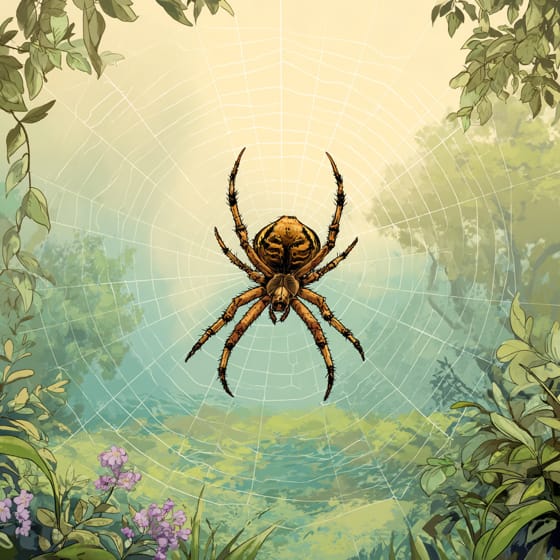
Argiope aurantia
Can be caught in large, strong spider webs.
Culex pipiens
Catches and eats small flying insects for protein.

Quercus alba
Nests are often built on thin branches of trees.
Feathered describes animals, primarily birds, possessing a covering of feathers.
Aerial creatures spend a significant portion of their lives airborne, utilizing flight for various activities such as hunting, migration, or nesting.
Colorful describes organisms or objects displaying a wide range of bright and distinct colors.
This trait characterizes organisms whose diet consists entirely or primarily of plant material.

Forest habitats are terrestrial environments dominated by dense tree cover, supporting a high diversity of plant and animal life.

Diurnal animals are primarily active during daylight hours, typically resting or sleeping at night.

Describes a species whose presence and role have a disproportionately large effect on its environment.

This trait identifies organisms that exhibit exceptional swiftness in movement for hunting, escape, or travel.

Migratory animals undertake seasonal movements from one region to another, typically in response to changes in climate or food availability.

Describes organisms that transfer pollen, enabling the fertilization and reproduction of plants.
No aliases listed yet.
Danger
1/5 · Very low
Watch hummingbirds from a distance and don't try to touch them, as they are very small and quick.
The easiest way to identify Ruby-throated Hummingbird is to use the Snappit nature identifier app.
7-9 cm
8-11 cm
0.002-0.006 kg
3-5 years
50 km/h
They mostly drink sweet flower nectar for energy and eat small insects for protein.
Forests
Zoom in to split clusters and explore where this object has been snapped.
Jun 3, 2026
Lyman School for BoysPhoto attribution
no rights reserved
License: CC0 1.0 ↗
Image may be shown cropped inside the card frame.
May 30, 2026
Foellinger-Freimann Botanical ConservatoryPhoto attribution
no rights reserved
License: CC0 1.0 ↗
Image may be shown cropped inside the card frame.
May 29, 2026
Sheepscot Historic DistrictPhoto attribution
no rights reserved
License: CC0 1.0 ↗
Image may be shown cropped inside the card frame.
May 13, 2026
FruitvalePhoto attribution
(c) geotrope, some rights reserved (CC BY-SA)
License: CC BY-SA 4.0 ↗
Image may be shown cropped inside the card frame.

Arkansas, US
You might spot Eastern Gray Squirrel and Asian Lady Beetle.
View guide →

Illinois, US
You might spot Brown-Belted Bumble Bee and Eastern Gray Squirrel.
View guide →

Illinois, US
You might spot Carolina Mantis and Goldenrod Soldier Beetle.
View guide →

Vermont, US
You might spot Asian Bittersweet, Alder Buckthorn, and Eastern Newt.
View guide →

Maryland, US
You might spot Osprey, Duck, and Spotted Lanternfly.
View guide →

Indiana, US
You might spot Eastern Fox Squirrel, Duck, and Canada Goose.
View guide →
Take the discovery with you
Snap it with Snappit to identify it, learn what makes it special, and add the discovery to your collection.




.jpg&width=800)





