Common Pill Woodlouse
armadillidium vulgare
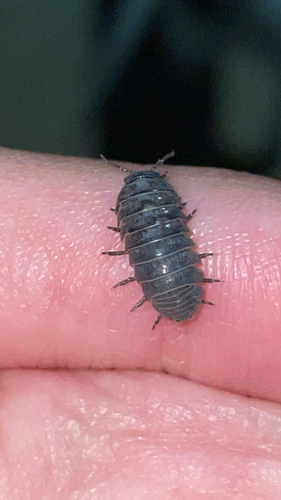
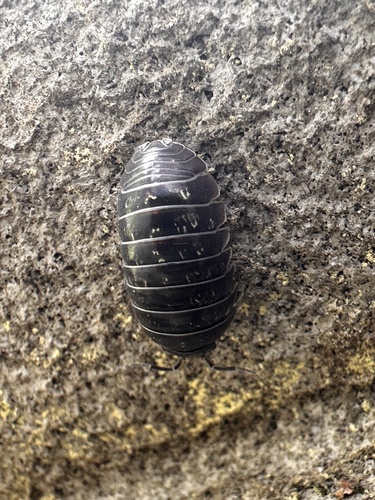
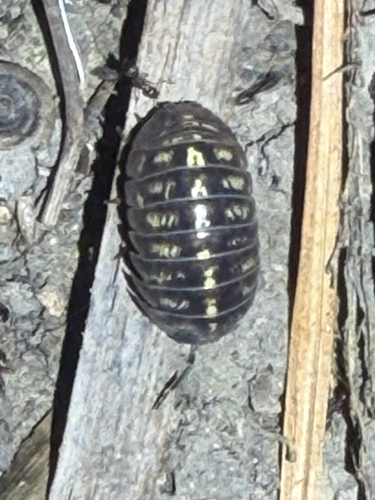
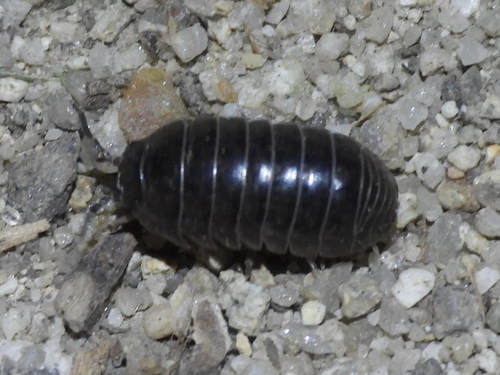
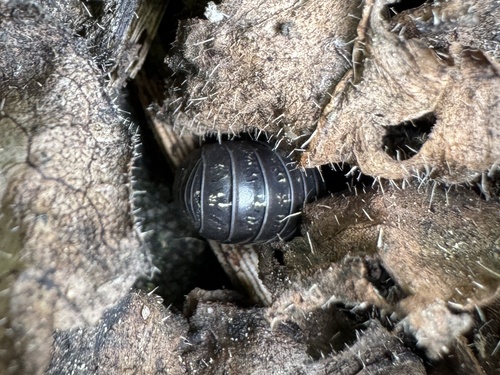
The Common Pill Woodlouse is a tiny creature that can roll into a ball when scared! It loves to hide under rocks and leaves in damp places.
Habitat: They live in moist environments like gardens, forests, and under rocks.
The Common Pill Woodlouse is a small, oval-shaped crustacean, usually dark grey to brown, sometimes mottled. It has a distinctly segmented body and seven pairs of legs. Its smooth, rounded back allows it to roll into a perfect ball.
Category
InvertebrateRarity
Common
Danger
0/5 · No known danger
Snaps
105
A mother woodlouse carries her eggs in a pouch under her belly.
Their blood is actually blue, thanks to a special copper protein!
They drink water through tiny tubes on their bottoms!
They shed their old skin in two pieces, like a top and bottom half!
Common Pill Woodlouse can roll into a tight, impenetrable ball because of its segmented exoskeleton that helps them hide from danger.
Common Pill Woodlouse can munch on dead leaves and decaying plants because of its specialized mouthparts that helps them recycle nutrients into the soil.
Common Pill Woodlouse has gill-like structures on its underside that help them breathe by absorbing oxygen from moist air.
They are nature's tiny recyclers, feasting on dead plants and decaying organic matter.
Dysdera crocata
This spider has fangs adapted to pierce woodlouse armor.
Lithobius forficatus
Centipedes are speedy hunters that prey on many invertebrates.
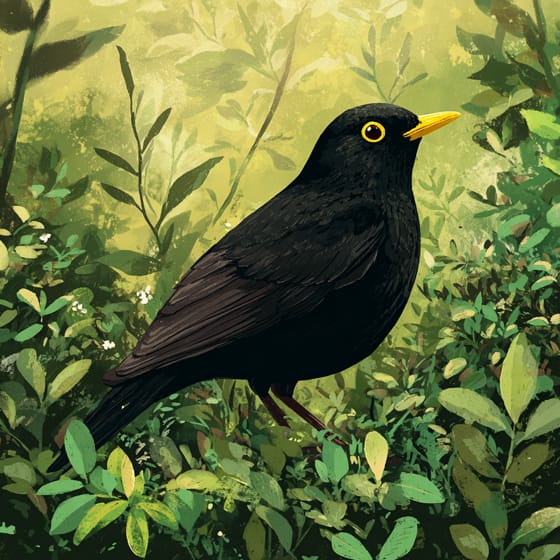
Turdus merula
Birds often forage for woodlice in leaf litter and under logs.
Solitary animals live alone for most of their lives, only interacting with others for mating or parental care.
Burrowing animals dig tunnels and chambers in the ground, using these subterranean structures for shelter, hunting, or breeding.
This trait characterizes organisms whose diet consists entirely or primarily of plant material.
Describes organisms that break down dead organic material, recycling nutrients back into the ecosystem.

Forest habitats are terrestrial environments dominated by dense tree cover, supporting a high diversity of plant and animal life.
Danger
0/5 · No known danger
No special safety notes yet.
The easiest way to identify Common Pill Woodlouse is to use the Snappit nature identifier app.
1.5 cm
0.2 g
3 years
They are nature's tiny recyclers, feasting on dead plants and decaying organic matter.
They live in moist environments like gardens, forests, and under rocks.
Foraging
Zoom in to split clusters and explore where this object has been snapped.
Jun 8, 2026
Morton ArboretumPhoto attribution
(c) Belinda Ramos, some rights reserved (CC BY)
License: CC BY 4.0 ↗
Image may be shown cropped inside the card frame.
Jun 7, 2026
SkylandsPhoto attribution
(c) gwt2102, some rights reserved (CC BY)
License: CC BY 4.0 ↗
Image may be shown cropped inside the card frame.
Jun 4, 2026
Las Vegas High School Neighborhood Historic DistrictPhoto attribution
(c) Katrina Smith, some rights reserved (CC BY)
License: CC BY 4.0 ↗
Image may be shown cropped inside the card frame.
Jun 1, 2026
Julia Davis ParkPhoto attribution
(c) Sam Kieschnick, some rights reserved (CC BY)
License: CC BY 4.0 ↗
Image may be shown cropped inside the card frame.
May 6, 2026
Zoologická zahrada Děčín - Pastýřská stěnaPhoto attribution
(c) kyselinasirova, some rights reserved (CC BY)
License: CC BY 4.0 ↗
Image may be shown cropped inside the card frame.

Virginia, US
You might spot Cope's Gray Tree Frog and Basilica Orbweaver.
View guide →

Ohio, US
You might spot Eastern Fox Squirrel and Spotted Lanternfly.
View guide →

Illinois, US
You might spot Common Eastern Bumble Bee and Brown-Belted Bumble Bee.
View guide →

South Carolina, US
You might spot Anole, Green Treefrog, and Eastern Gray Squirrel.
View guide →

Alabama, US
You might spot Anole, Eastern Gray Squirrel, and Asian Lady Beetle.
View guide →

Rhode Island, US
You might spot Spotted Lanternfly, Duck, and American Robin.
View guide →
Take the discovery with you
Snap it with Snappit to identify it, learn what makes it special, and add the discovery to your collection.