





Common Wrinkle-Leaved Goldenrod
solidago rugosa
The Common Wrinkle-Leaved Goldenrod is a bright yellow plant that attracts many butterflies! It's a favorite among bees and helps make our gardens beautiful.
Habitat: Commonly found in fields, meadows, and along roadsides.
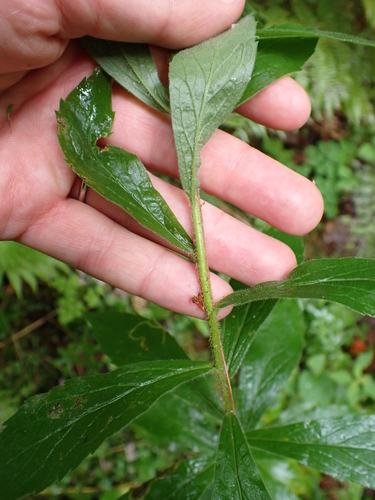
The Common Wrinkle-Leaved Goldenrod has tall, often reddish, hairy stems and distinctive dark green leaves with deeply wrinkled surfaces. Its numerous small, bright yellow flowers grow in dense, upright, or arching clusters, creating a vibrant display.
Category
PlantsRarity
Common
Danger
0/5 · No known danger
Snaps
16
A special fly lays eggs in its stem, causing a round, woody gall to form!
Indigenous peoples brewed its leaves into a tea for various traditional remedies.
Its vibrant yellow flowers were once used to make natural dyes for clothing!
This goldenrod is often mistaken for ragweed, but it doesn't cause hay fever!
Common Wrinkle-Leaved Goldenrod has creeping underground rhizomes that help it spread and quickly colonize new sunny areas.
Common Wrinkle-Leaved Goldenrod blooms late in the season, providing essential nectar for migrating butterflies and other pollinators.
Its leaves and stems contain special chemicals that make them less tasty to hungry animals, helping it stay safe.
Apis mellifera
Gathers nectar and pollen for food.
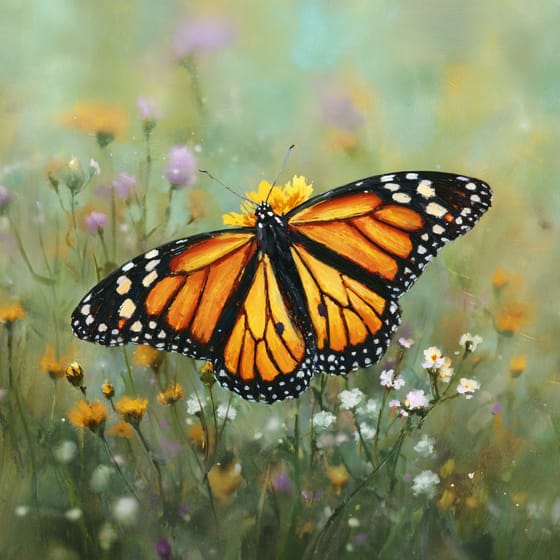
Danaus plexippus
Feeds on nectar during migration.
Eurosta solidaginis
Larvae develop inside stem galls.
Trirhabda virgata
Larvae and adults feed on its leaves.
Colorful describes organisms or objects displaying a wide range of bright and distinct colors.
Grassland habitats are terrestrial biomes dominated by grasses and herbaceous plants, supporting a variety of grazing animals.
This trait characterizes organisms whose diet consists entirely or primarily of plant material.
Diurnal animals are primarily active during daylight hours, typically resting or sleeping at night.

Describes organisms that transfer pollen, enabling the fertilization and reproduction of plants.
Danger
0/5 · No known danger
No special safety notes yet.
The easiest way to identify Common Wrinkle-Leaved Goldenrod is to use the Snappit nature identifier app.
100-200 cm
30-60 cm
0.2-0.4 cm
Late Summer to Fall
Yes
None
Perennial
Zoom in to split clusters and explore where this object has been snapped.
Aug 29, 2025
Lower Village DistrictPhoto attribution
(c) Steven Lamonde, some rights reserved (CC BY)
License: CC BY 4.0 ↗
Image may be shown cropped inside the card frame.

Rhode Island, US
You might spot Common Eastern Bumble Bee and Osprey.
View guide →

Massachusetts, US
You might spot Eastern Newt, Purple Pitcher Plant, and Hobblebush.
View guide →

Georgia, US
You might spot Eastern Gray Squirrel, Domestic Cat, and Anole.
View guide →

Connecticut, US
You might spot American Nursery Web Spider and Common Eastern Bumble Bee.
View guide →
.jpg)
Pennsylvania, US
You might spot Admiral Butterfly and Forest Tent Caterpillar Moth.
View guide →

Massachusetts, US
You might spot American Red Squirrel and Eastern White Pine.
View guide →
Take the discovery with you
Snap it with Snappit to identify it, learn what makes it special, and add the discovery to your collection.









.jpg&width=800)



_001.jpg&width=800)




