


Dark Dapperling
lepiota atrodisca
The Dark Dapperling is a small mushroom with a dark cap that can be found in the woods. It's a fun and interesting fungus that helps break down dead plants!
Habitat: It lives in damp, wooded areas, often near fallen leaves and decaying wood.
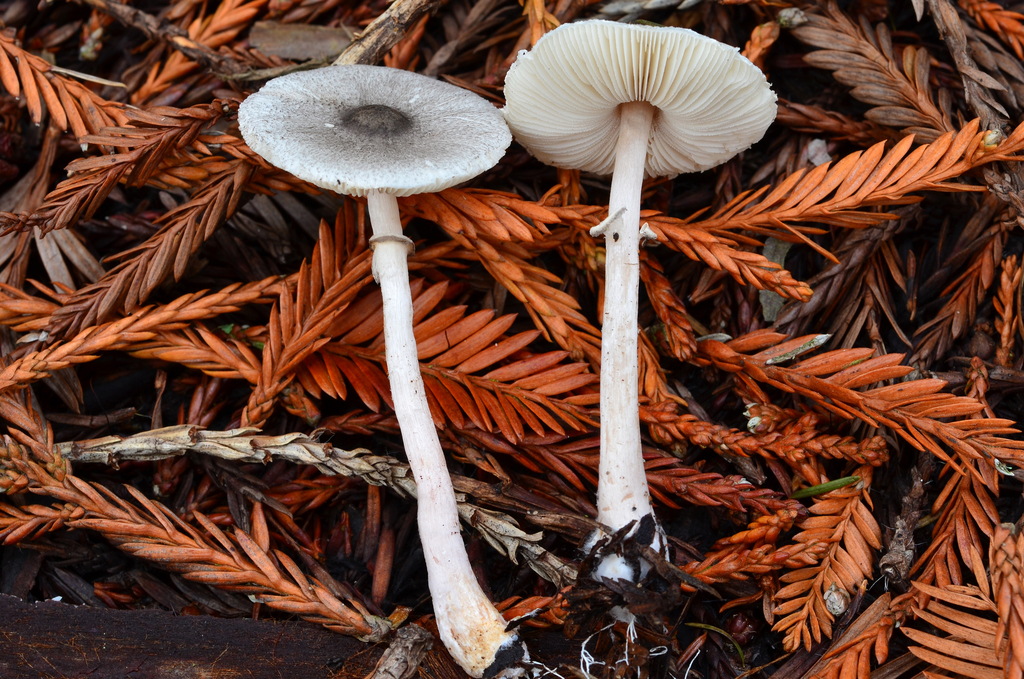
The Dark Dapperling has a small, dark blackish-brown cap, often granular or scaly, contrasting sharply with its slender, paler stem. Its gills are white and free from the stem, distinguishing it from many other forest fungi.
Category
FungiRarity
Common
Danger
2/5 · Low
Snaps
Be the first to snap!
"Dapperling" sounds cute, but many in this mushroom group are deadly!
Its dark cap often looks like it's sprinkled with tiny, mysterious crumbs.
Spores are pure white, a ghostly contrast to its dark, scaly cap.
This tiny mushroom is part of a giant family of over 400 related species.
Dark Dapperling can break down dead plant matter because of special enzymes that help it release nutrients back into the soil.
Dark Dapperling has mycelial threads that help them explore the soil to find essential minerals and water.
Dark Dapperling can produce toxic compounds that help them deter hungry creatures from taking a bite.

Quercus alba
Decomposes organic matter from its fallen leaves and wood.

Acer rubrum
Utilizes nutrients from decaying maple leaves.
Hylocomium splendens
Often grows hidden amongst carpets of this moss.
Solitary animals live alone for most of their lives, only interacting with others for mating or parental care.
Colorful describes organisms or objects displaying a wide range of bright and distinct colors.
Describes organisms that break down dead organic material, recycling nutrients back into the ecosystem.
Forest habitats are terrestrial environments dominated by dense tree cover, supporting a high diversity of plant and animal life.
Danger
2/5 · Low
Never touch or eat wild mushrooms without adult supervision.
Compare the cap shape, the underside, the stem and base, and whether the fungus grows on wood or soil. Some fungi have gills, others pores or teeth. A cap seen only from above often hides the most useful features. Mushroom Identifier: upload a photo and compare the visible details.
2-6 cm
poisonous
1-4 cm
It lives in damp, wooded areas, often near fallen leaves and decaying wood.
soil
Summer, Fall
White
Zoom in to split clusters and explore where this object has been snapped.
Recent snaps will appear here as new observations are added.
Take the discovery with you
Snap it with Snappit to identify it, learn what makes it special, and add the discovery to your collection.