





Dark-eyed Junco
Junco hyemalis
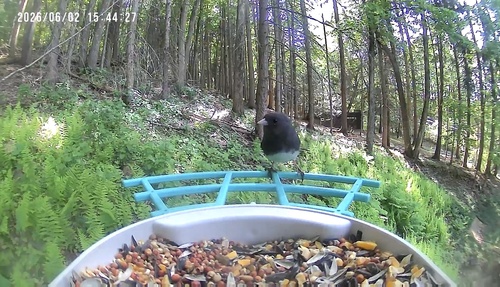
The Dark-eyed Junco is a small, cheerful bird with a round body and a short tail. They usually have a dark gray or brown color and can be found hopping around on the ground looking for seeds.
Habitat: Forests, gardens, and parks
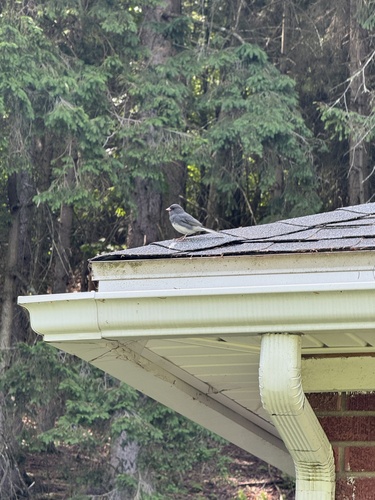
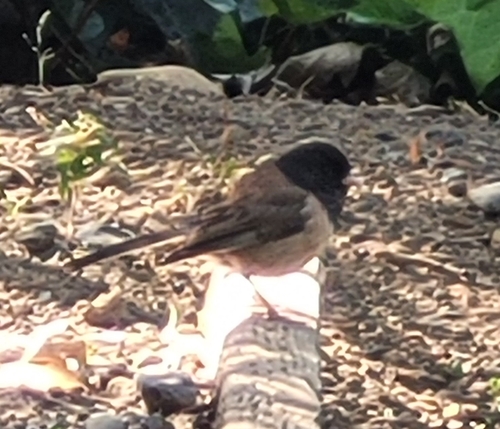
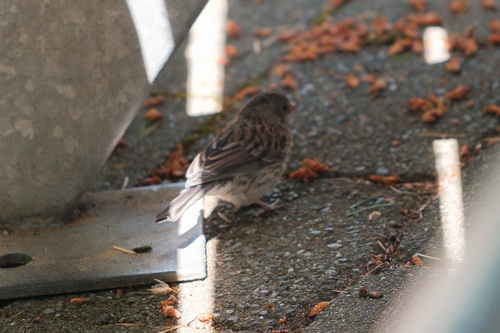
The Dark-eyed Junco has slate-grey upperparts, a bright white belly, and a pale pinkish bill. Its most distinctive feature is the flash of white outer tail feathers seen when it flies or hops. Females are typically paler brown-grey.
Category
BirdsRarity
Common
Danger
1/5 · Very low
Snaps
539
Baby juncos eat lots of insects, helping them grow big and strong quickly!
Did you know there are many different types of juncos with unique patterns?
Juncos typically build their nests on the ground, hidden under plants or logs!
Some juncos migrate over 2000 km to warmer winter homes!
Dark-eyed Juncos can 'kick-scratch' backwards with both feet simultaneously to uncover hidden seeds on the forest floor.
Dark-eyed Juncos have bright white outer tail feathers that they flash to confuse predators or signal to other juncos.
Dark-eyed Juncos can fluff feathers for insulation and shiver to generate heat, helping them survive cold winters.
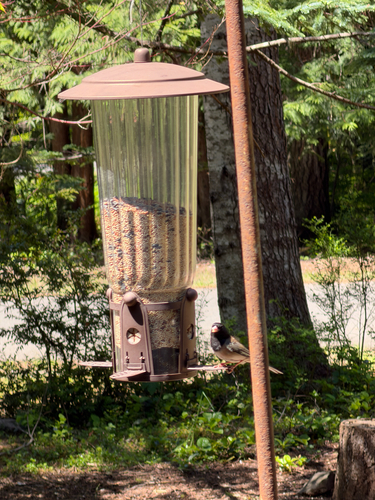
These small birds primarily eat seeds but also enjoy munching on various insects.
Age differences: Young juncos consume a higher proportion of insects for rapid growth.

Accipiter striatus
A common predator of small songbirds like juncos.
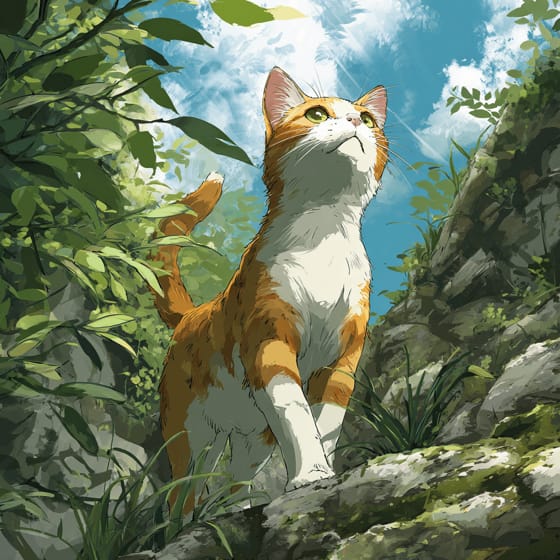
Felis catus
Domestic cats are significant predators, especially in urban areas.
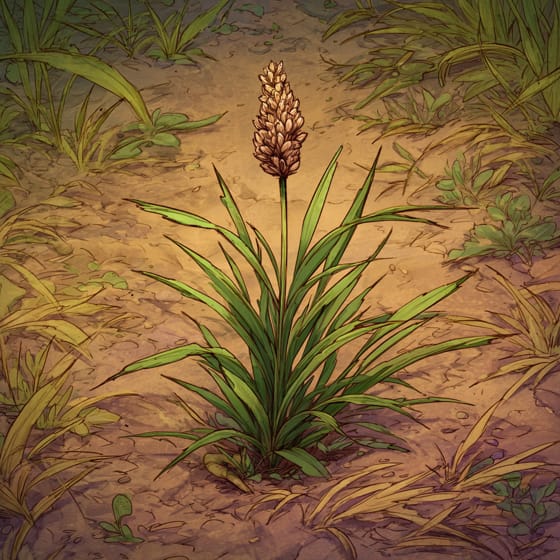
Elymus repens
Juncos consume the seeds of various common grasses.
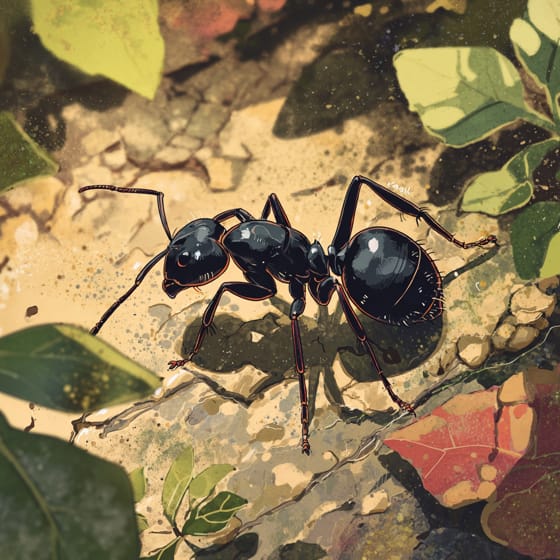
Lasius niger
Juncos forage for ants and other small invertebrates.
Wildlife encompasses all undomesticated animal and plant life existing in their natural habitats.
Feathered describes animals, primarily birds, possessing a covering of feathers.
This trait identifies organisms whose diet includes both plant and animal matter.
Singing animals produce complex vocalizations, often for purposes of attracting mates, defending territory, or communicating within their species.

Forest habitats are terrestrial environments dominated by dense tree cover, supporting a high diversity of plant and animal life.

Diurnal animals are primarily active during daylight hours, typically resting or sleeping at night.
Danger
1/5 · Very low
These birds are friendly and harmless. Just enjoy watching them from a distance!
The easiest way to identify Dark-eyed Junco is to use the Snappit nature identifier app.
13-17 cm
18-25 cm
0.018-0.03 kg
3-7 years
40 km/h
These small birds primarily eat seeds but also enjoy munching on various insects.
Forests, gardens, and parks
Zoom in to split clusters and explore where this object has been snapped.
Jun 2, 2026
Binghamton Zoo at Ross ParkPhoto attribution
(c) David Weisenbeck, some rights reserved (CC BY)
License: CC BY 4.0 ↗
Image may be shown cropped inside the card frame.
May 31, 2026
Binghamton Zoo at Ross ParkPhoto attribution
(c) David Weisenbeck, some rights reserved (CC BY)
License: CC BY 4.0 ↗
Image may be shown cropped inside the card frame.
May 30, 2026
Hakone GardensPhoto attribution
no rights reserved
License: CC0 1.0 ↗
Image may be shown cropped inside the card frame.
May 28, 2026
Hoyt ArboretumPhoto attribution
no rights reserved
License: CC0 1.0 ↗
Image may be shown cropped inside the card frame.
May 28, 2026
Cushman DamPhoto attribution
no rights reserved
License: CC0 1.0 ↗
Image may be shown cropped inside the card frame.

California, US
You might spot Monarch, Canada Goose, and Western Gull.
View guide →

Pennsylvania, US
You might spot Mountain Laurel, Ghost Pipe, and Sweetfern.
View guide →

California, US
You might spot Monarch, Bee, and Anise Swallowtail.
View guide →

Alaska, US
You might spot Brown Bear, Common Merganser, and Sockeye Salmon.
View guide →

Utah, US
You might spot Common Golden-Mantled Ground Squirrel and Steller's Jay.
View guide →

Utah, US
You might spot Common Golden-Mantled Ground Squirrel and Steller's Jay.
View guide →
Take the discovery with you
Snap it with Snappit to identify it, learn what makes it special, and add the discovery to your collection.




.jpg&width=800)








