



Diplolepis variabilis
Diplolepis variabilis
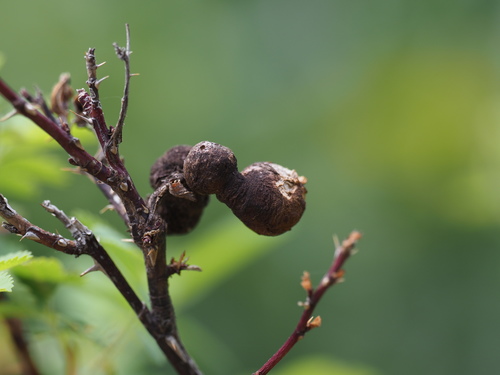
Diplolepis variabilis, also known as the rose gall wasp, is a tiny insect that makes galls on rose plants. These galls are like little homes for the wasp's babies, and they can look like colorful bumps on the leaves.
Habitat: Gardens
The Diplolepis variabilis is a tiny, dark-bodied wasp, typically black or dark brown. It is most easily identified by the smooth, often reddish or greenish, spherical galls it induces on the leaves of rose plants, which house its developing larvae.
Category
InsectsRarity
Common
Danger
1/5 · Very low
Snaps
Be the first to snap!
Each gall is a miniature fortress against danger.
The galls they create are like cozy, edible homes.
These wasps are masters of plant transformation.
Your rose bushes might hide tiny, living nurseries!
Diplolepis variabilis can create spherical galls on rose leaves because of chemical signals that reprogram plant growth, helping protect its larvae.
Diplolepis variabilis can reproduce without a male through parthenogenesis, allowing populations to quickly establish and grow.
Larvae munch on rose plant tissue inside galls, while adults sip sweet nectar.
Age differences: Larvae consume plant tissue inside galls; adults feed on nectar.
Rosa canina
induces galls on leaves for larvae
Ormyrus orientalis
lays eggs inside the gall wasp larvae
Torymus bedeguaris
parasitizes developing larvae within the galls
Solitary animals live alone for most of their lives, only interacting with others for mating or parental care.
Colorful describes organisms or objects displaying a wide range of bright and distinct colors.
This trait characterizes organisms whose diet consists entirely or primarily of plant material.
Describes plants that are particularly attractive and beneficial to a wide range of pollinating organisms.
Pertaining to species that are significantly smaller than typical or average for their kind.
This habitat trait indicates species that can coexist with humans in urban and suburban environments, utilizing man-made structures and green spaces.
Describes organisms that transfer pollen, enabling the fertilization and reproduction of plants.
Danger
1/5 · Very low
It's safe to look at these wasps, but don't touch them or the galls.
Look for six legs, antennae, three body sections and the shape of the wings. Beetles have hardened front wings; flies have just one working pair. Tiny insects may need a close view before their group is clear. Insect Identifier: upload a photo and compare the visible details.
4-8 mm
2-4 mm
14-30 days
Larvae munch on rose plant tissue inside galls, while adults sip sweet nectar.
Gardens
6
Zoom in to split clusters and explore where this object has been snapped.
Recent snaps will appear here as new observations are added.
Take the discovery with you
Snap it with Snappit to identify it, learn what makes it special, and add the discovery to your collection.