





Hercules Carpenter Ant
Camponotus herculeanus
The Hercules Carpenter Ant is a big, black ant that loves to live in trees! They are great builders and make their homes by chewing wood, which helps trees stay healthy.
Habitat: Forests
The Hercules Carpenter Ant is a large, robust ant, typically black or dark brown with a reddish-brown thorax and legs. It has a distinctly large head and a segmented body. Its impressive size helps distinguish it from most other common ants.
Category
InsectsRarity
Common
Danger
1/5 · Very low
Snaps
2
Ant queens can live over 15 years, founding massive colonies all alone!
Some colony members are "majors" with giant heads, acting as powerful nest guards!
These ants can chew through soft insulation and plastic to expand their nests!
They don't eat the wood they tunnel through; they just make homes inside it!
Hercules Carpenter Ant can chew intricate tunnels in wood because of its powerful mandibles that helps them create safe nesting chambers.
Hercules Carpenter Ant can lift many times its own body weight because of its strong exoskeletal muscles that helps them carry heavy food items.
Hercules Carpenter Ant has special glands that produce pheromones, which helps them communicate complex messages like danger or food location.
Hercules Carpenter Ant can spray irritating formic acid because of abdominal glands, which helps them defend against predators.
These ants enjoy a sweet tooth's delight: sugary liquids and protein-rich insects!
Aphis fabae
They guard aphids for their sugary honeydew.
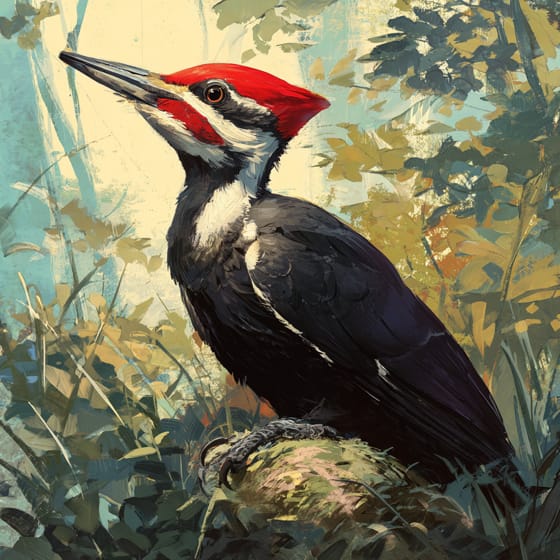
Dryocopus pileatus
Woodpeckers excavate nests to find these ants.
Vespula germanica
Wasps can prey on foraging worker ants.
Social animals live in organized groups, cooperating for survival benefits such as foraging, defense, and raising offspring.
This trait identifies organisms whose diet includes both plant and animal matter.
Arboreal animals live primarily in trees, utilizing them for shelter, food, and protection from predators.
Describes organisms that break down dead organic material, recycling nutrients back into the ecosystem.

Forest habitats are terrestrial environments dominated by dense tree cover, supporting a high diversity of plant and animal life.

This trait characterizes organisms with an exceptionally long lifespan compared to others of their kind.

Describes a species whose presence and role have a disproportionately large effect on its environment.

Giant describes organisms or objects of significantly larger size than average for their species or type.
No aliases listed yet.
Danger
1/5 · Very low
Don't disturb ant nests; they are busy working and need their homes!
The easiest way to identify Hercules Carpenter Ant is to use the Snappit nature identifier app.
6-18 mm
730-1095 days
These ants enjoy a sweet tooth's delight: sugary liquids and protein-rich insects!
Forests
Foraging
6
50000
Zoom in to split clusters and explore where this object has been snapped.

Alaska, US
You might spot Sandhill Crane, Fireweed, and Prickly Wild Rose.
View guide →

Montana, US
You might spot Grizzly Bear and North American River Otter.
View guide →
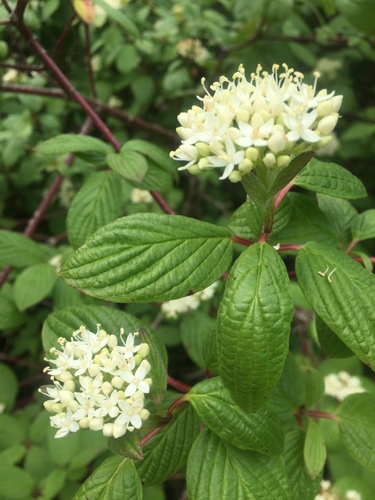
British Columbia, CA
You might spot Red Osier Dogwood, Lodgepole Pine, and Common Juniper.
View guide →
Take the discovery with you
Snap it with Snappit to identify it, learn what makes it special, and add the discovery to your collection.









.jpg&width=800)


