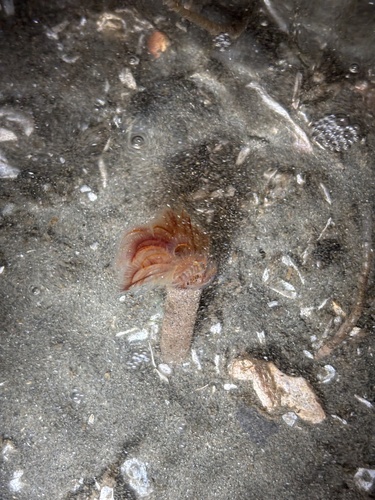





Eudistylia Catharinae
eudistylia catharinae
The Eudistylia Catharinae is a fascinating marine worm that builds colorful tubes on the ocean floor. These worms are great at helping to clean the sea by filtering tiny particles from the water!
Habitat: Eudistylia Catharinae lives in shallow coastal waters, typically found in sandy or muddy substrates.
The Eudistylia Catharinae has a striking, feathery plume that extends from a leathery, mud-encrusted tube. Its elegant crown is often banded with vibrant shades of red, orange, white, or brown, creating a beautiful contrast with its darker, sandy-colored tube. This distinctive, delicate structure sets it apart from simpler tube worms.
Category
InvertebrateRarity
Common
Danger
1/5 · Very low
Snaps
Be the first to snap!
Believe it or not, this worm can grow a new 'head' if its original one gets eaten by a predator!
Its elaborate tube is so strong, it can withstand strong ocean currents and hungry critters!
Some of these incredible tube worms have been observed living for over 15 years!
Wow! Its colorful, feathery 'head' is actually a super efficient breathing and eating machine!
Eudistylia Catharinae can rapidly retract its delicate plume into its protective tube because of strong muscles, helping them escape predators in a flash.
Eudistylia Catharinae can construct a sturdy, flexible tube from secreted mucus and surrounding sediment, that helps them stay anchored and safe.
Eudistylia Catharinae has an intricate crown of feathery tentacles that helps them efficiently filter tiny food particles from the surrounding seawater.
This worm is a tiny ocean janitor, using its feathery crown to catch microscopic food from the water.

Pycnopodia helianthoides
hunts its soft body from the tube.
Cancer productus
sometimes pulls worms from their tubes.
Mytilus californianus
competes for space on hard surfaces.
Social animals live in organized groups, cooperating for survival benefits such as foraging, defense, and raising offspring.
Colorful describes organisms or objects displaying a wide range of bright and distinct colors.
Filter feeders obtain nutrients by straining suspended food particles and small organisms from water.
Aquatic habitats encompass environments where organisms live predominantly in water, including oceans, rivers, lakes, and wetlands.
Marine habitats encompass all saltwater environments of the Earth's oceans, supporting an immense diversity of aquatic life.
Danger
1/5 · Very low
No special safety notes yet.
Look for fins, arms, tentacles, shells and body symmetry. Underwater light shifts colors, so structure and markings usually matter more than shade. Sea Creature Identifier: upload a photo and compare the visible details.
30 cm
2.5 cm
10 years
This worm is a tiny ocean janitor, using its feathery crown to catch microscopic food from the water.
Eudistylia Catharinae lives in shallow coastal waters, typically found in sandy or muddy substrates.
Filter feeding
Zoom in to split clusters and explore where this object has been snapped.
Recent snaps will appear here as new observations are added.
Take the discovery with you
Snap it with Snappit to identify it, learn what makes it special, and add the discovery to your collection.