





European Starling
Sturnus vulgaris
European Starlings are charming birds with shiny feathers that can change colors in the light. They love to chatter and often gather in big groups, making lots of fun sounds!
Habitat: Open fields, parks, and urban areas
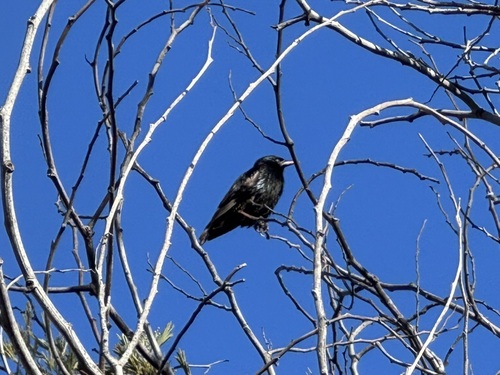
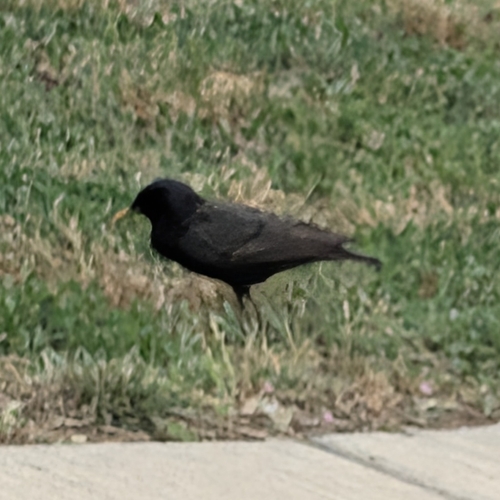
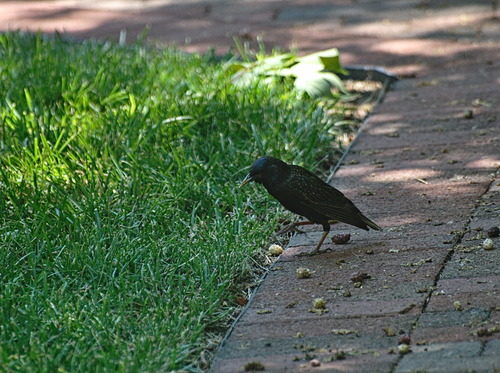
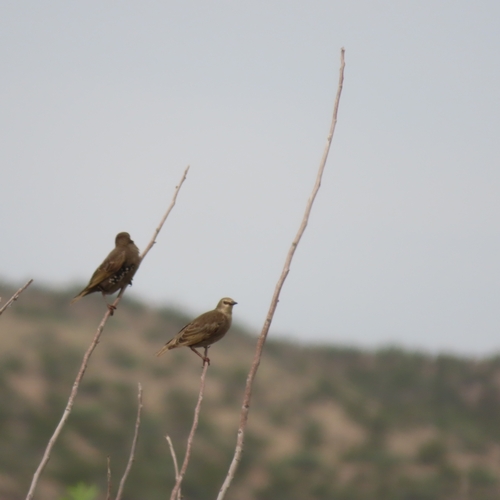
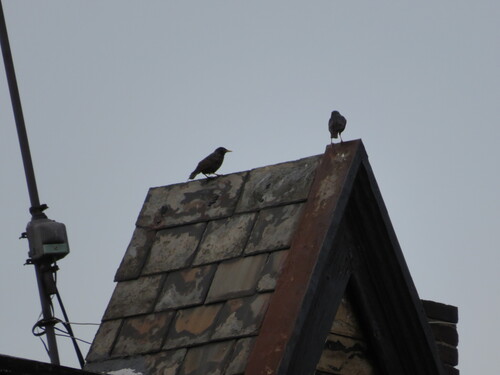
The European Starling has glossy black feathers, shimmering with iridescent purples and greens. In winter, its body becomes speckled with many white spots, and its beak is yellow in summer but dark in winter, making it distinct.
Category
BirdsRarity
Common
Danger
1/5 · Very low
Snaps
461
A baby starling can double its weight in just six days after hatching!
Starlings gather in groups of over a million, creating amazing sky dances!
Starlings introduced to North America over 130 years ago are now widespread!
They use their strong beaks to probe soil, finding tasty insects underground.
European Starlings can imitate calls of other birds and even human sounds because of their complex vocal cords.
European Starlings perform mesmerizing 'murmurations' in huge flocks, flying together in synchronized patterns.
European Starlings have a flexible diet, switching between insects and fruits, which helps them find food year-round.
These adaptable birds enjoy a varied diet of insects in summer and fruits and seeds later in the year.
Age differences: Young birds mainly eat insects for quick growth; adults have a broader diet.

Accipiter nisus
Sparrowhawks hunt starlings.
Lumbricus terrestris
Starlings forage for worms.
Prunus avium
Starlings consume its fruits.
Cuculus canorus
Cuckoos lay eggs in starling nests.

Melolontha melolontha
Starlings eat its larvae.
Wildlife encompasses all undomesticated animal and plant life existing in their natural habitats.
Feathered describes animals, primarily birds, possessing a covering of feathers.
Social animals live in organized groups, cooperating for survival benefits such as foraging, defense, and raising offspring.
This trait identifies organisms whose diet includes both plant and animal matter.

Singing animals produce complex vocalizations, often for purposes of attracting mates, defending territory, or communicating within their species.

This habitat trait indicates species that can coexist with humans in urban and suburban environments, utilizing man-made structures and green spaces.

Invasive species are non-native organisms that cause harm to the environment, economy, or human health.
Danger
1/5 · Very low
European Starlings are friendly birds, but it's best to observe them from a distance and not disturb their nests.
The easiest way to identify European Starling is to use the Snappit nature identifier app.
19-23 cm
31-44 cm
0.06-0.09 kg
2-7 years
77 km/h
These adaptable birds enjoy a varied diet of insects in summer and fruits and seeds later in the year.
Open fields, parks, and urban areas
Zoom in to split clusters and explore where this object has been snapped.
Jun 20, 2026
Blake GardenPhoto attribution
(c) Hydrocycler (Elizabeth Dougherty), some rights reserved (CC BY)
License: CC BY 4.0 ↗
Image may be shown cropped inside the card frame.
Jun 18, 2026
Cleveland ParkPhoto attribution
(c) Matthew Gerke, some rights reserved (CC BY)
License: CC BY 4.0 ↗
Image may be shown cropped inside the card frame.
Jun 13, 2026
Four CornersPhoto attribution
(c) Yoatzin Peñaflor, some rights reserved (CC BY)
License: CC BY 4.0 ↗
Image may be shown cropped inside the card frame.
Jun 12, 2026
Mesilla PlazaPhoto attribution
(c) Suanne Pyle, some rights reserved (CC BY)
License: CC BY 4.0 ↗
Image may be shown cropped inside the card frame.
Jun 6, 2026
Phipps Conservatory and Botanical GardensPhoto attribution
(c) toad-wife, some rights reserved (CC BY)
License: CC BY 4.0 ↗
Image may be shown cropped inside the card frame.

Massachusetts, US
You might spot Eastern Cottontail and American Robin.
View guide →

Arkansas, US
You might spot Eastern Gray Squirrel and Asian Lady Beetle.
View guide →

Connecticut, US
You might spot Bold Jumping Spider and American Tuliptree.
View guide →

Rhode Island, US
You might spot Spotted Lanternfly, Duck, and American Robin.
View guide →

California, US
You might spot Monarch, Bee, and Anise Swallowtail.
View guide →

District of Columbia, US
You might spot Eastern Gray Squirrel, Duck, and House Sparrow.
View guide →
Take the discovery with you
Snap it with Snappit to identify it, learn what makes it special, and add the discovery to your collection.




.jpg&width=800)










