




Forked Veilwort
Metzgeria furcata
Forked Veilwort is a tiny, green plant that grows in damp places. It looks like a little fork and loves to live on rocks and tree trunks in shady areas.
Habitat: Forests
The Forked Veilwort is a small, flat, ribbon-like plant, typically bright green to yellowish-green. It creates intricate, interwoven mats and gets its 'forked' name from its distinctive Y-shaped branching pattern.
Category
PlantsRarity
Common
Danger
1/5 · Very low
Snaps
Be the first to snap!
It's a bryophyte, one of Earth's oldest land plants, appearing before dinosaurs!
Its scientific name, 'Metzgeria', honors an Austrian botanist, J. Metzger.
Some Forked Veilworts have a fuzzy underside that helps trap moisture!
This tiny plant has no true roots, stems, or leaves, just a flattened body!
Forked Veilwort can survive dry spells by slowing its metabolism, then quickly rehydrating when moisture returns.
Forked Veilwort can reproduce by releasing tiny spores into the wind, colonizing new, damp surfaces far away.
Forked Veilwort has the amazing ability to grow new plants from small broken pieces, helping it recover or expand.
Forked Veilwort uses tiny, root-like structures called rhizoids to firmly anchor itself to rocks or bark.
Quercus robur
Grows epiphytically on its bark, absorbing moisture.
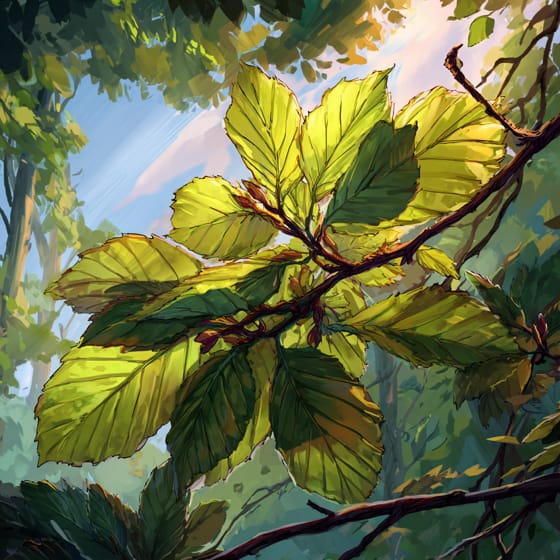
Fagus sylvatica
Adheres to its damp bark in shady forest environments.
Orchesella cincta
Tiny springtails sometimes graze on its delicate thallus.
This trait describes a composite organism resulting from a symbiotic association between a fungus and a photosynthetic partner, typically an alga or cyanobacterium.
This trait characterizes plants lacking specialized vascular tissues (xylem and phloem) for transporting water and nutrients.
Shade tolerant plants are adapted to grow and thrive in areas with low light levels, requiring less direct sunlight.
Spore-producing organisms reproduce by releasing small, often single-celled, reproductive units called spores.

Describes organisms that break down dead organic material, recycling nutrients back into the ecosystem.

Forest habitats are terrestrial environments dominated by dense tree cover, supporting a high diversity of plant and animal life.

Pertaining to species that are significantly smaller than typical or average for their kind.
No aliases listed yet.
Danger
1/5 · Very low
It's safe to look at Forked Veilwort, but don't pull it out of the ground.
The easiest way to identify Forked Veilwort is to use the Snappit nature identifier app.
0.5-2 cm
5-20 cm
No
None
Perennial
Forests
Zoom in to split clusters and explore where this object has been snapped.
Recent snaps will appear here as new observations are added.
Take the discovery with you
Snap it with Snappit to identify it, learn what makes it special, and add the discovery to your collection.








.jpg&width=800)



_001.jpg&width=800)



