




Fringed Black Bindweed
parogonum ciliinode
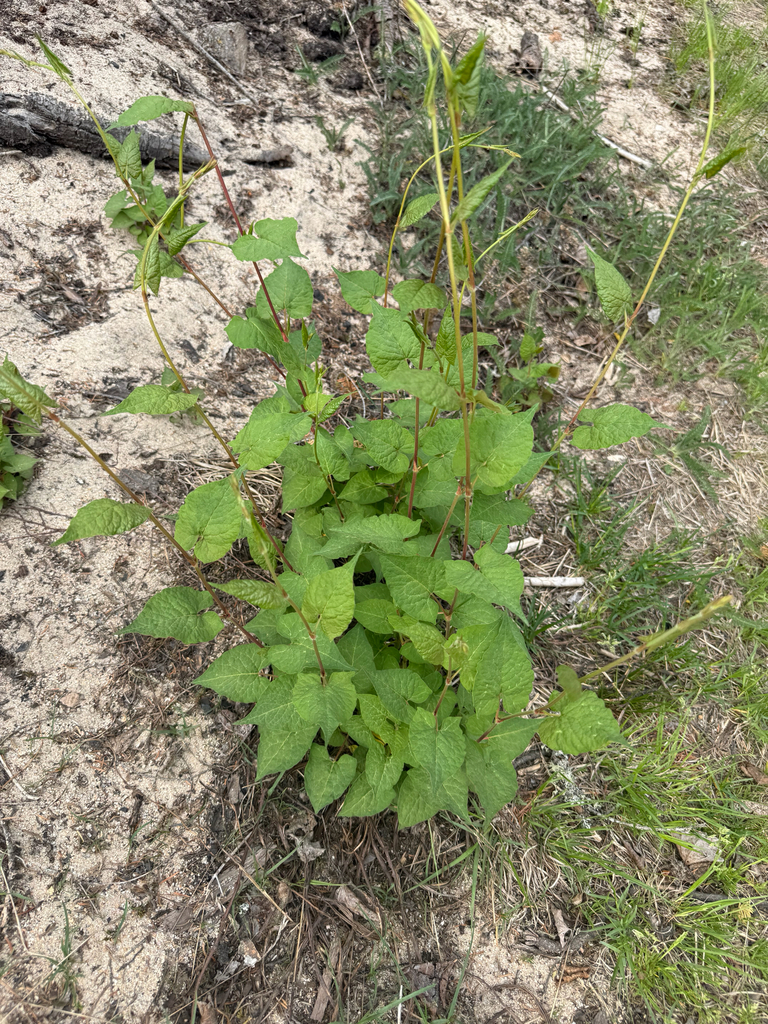
The Fringed Black Bindweed is a beautiful plant with delicate fringed leaves. It grows in sunny areas and can climb on other plants for support, making it look like a green waterfall!
Habitat: Sunny meadows and gardens.
The Fringed Black Bindweed is a fast-growing vine with reddish stems that can climb high. It has distinct heart-shaped, pointed leaves and small clusters of inconspicuous, greenish-white flowers. Its 'fringed' sheaths at each stem node make it unique.
Category
PlantsRarity
Common
Danger
0/5 · No known danger
Snaps
Be the first to snap!
Believe it or not, the young leaves and shoots of this plant are actually edible!
Its 'bindweed' name comes from how it climbs and wraps around other plants!
The tiny seeds of this plant are glossy and dark, looking like tiny beads of obsidian!
This plant is a relative of buckwheat, which is used to make flour for pancakes!
Fringed Black Bindweed can rapidly climb using its twining stems that help it reach sunlight above other plants.
It has unique fringed sheaths at its stem nodes that may protect the delicate new growth as it unfurls.
Fringed Black Bindweed produces abundant, shiny black seeds that spread easily, helping it colonize new areas quickly.
Apis mellifera
visits its small flowers for nectar

Bombus impatiens
collects nectar and pollen from blooms
Aphis fabae
sucks sap from stems and leaves

Carduelis tristis
feeds on its small, abundant seeds
Colorful describes organisms or objects displaying a wide range of bright and distinct colors.
Grassland habitats are terrestrial biomes dominated by grasses and herbaceous plants, supporting a variety of grazing animals.
This trait characterizes organisms whose diet consists entirely or primarily of plant material.
Forest habitats are terrestrial environments dominated by dense tree cover, supporting a high diversity of plant and animal life.
Describes organisms that transfer pollen, enabling the fertilization and reproduction of plants.
Danger
0/5 · No known danger
No special safety notes yet.
Start with the whole plant, then compare leaf arrangement, leaf edges, stems and any flowers or fruit. Opposite leaves grow in pairs; alternate leaves come one at a time along the stem. These details tell you far more together than a single green leaf does. Plant Identifier: upload a photo and compare the visible details.
50-250 cm
100-300 cm
0.2-0.3 cm
Summer to fall
Yes
None
Annual
Zoom in to split clusters and explore where this object has been snapped.
Recent snaps will appear here as new observations are added.
Take the discovery with you
Snap it with Snappit to identify it, learn what makes it special, and add the discovery to your collection.