





northern bayberry
Morella pensylvanica
Northern bayberry is a lovely shrub that grows along the coast. It has shiny green leaves and produces small, waxy berries that are grayish-blue. Birds love to eat these berries!
Habitat: Coastal areas
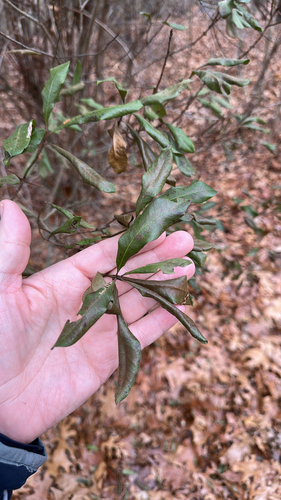
The northern bayberry is a dense, semi-evergreen shrub with gray-green, aromatic leaves. It produces small, waxy, blue-gray berries in tight clusters that persist through winter, making it visually distinct from many other shrubs.
Category
PlantsRarity
Common
Danger
1/5 · Very low
Snaps
5
Bayberry is famous for its berries being used to make fragrant, long-burning candles!
Native Americans boiled bayberry bark to create a traditional yellow dye.
Rub a bayberry leaf and it releases a wonderful spicy, fresh scent!
The waxy coating on its berries helps keep them safe for hungry winter birds.
This plant has tough adaptations to tolerate salty ocean spray and sandy soils, thriving where others can't.
Its waxy, blue berries provide a high-energy food source for birds, even when other foods are scarce.
Frankia alni
helps fix nitrogen in roots
.jpg&width=800)
Setophaga coronata
consumes energy-rich winter berries
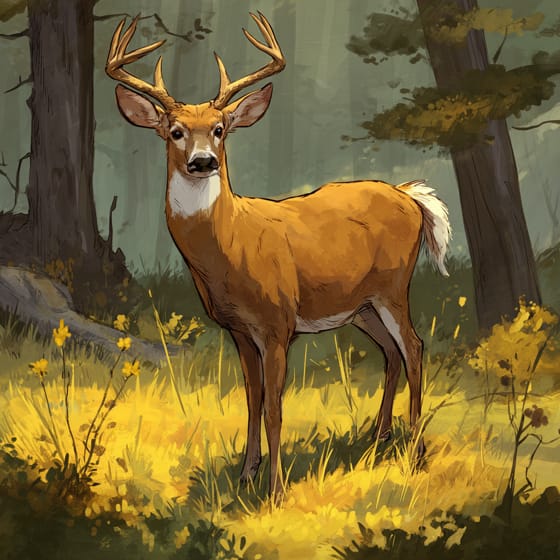
Odocoileus virginianus
browses on its leaves and twigs
A shrub is a woody plant smaller than a tree, typically with multiple stems branching from or near the ground.
Evergreen plants retain their foliage throughout the year, never shedding all their leaves at once.
Fruit-bearing plants produce fruits, which are the mature ovaries of flowering plants containing seeds.
Salt tolerant plants can withstand and grow in conditions with elevated salinity levels in the soil or water.

Edible plants are those parts of a plant that are considered safe for human consumption.

Describes plants that are particularly attractive and beneficial to a wide range of pollinating organisms.

Coastal habitats are dynamic environments located along the interface between land and sea, influenced by tides, waves, and saltwater.
No aliases listed yet.
Danger
1/5 · Very low
While the berries are fun to look at, it's best not to eat them without asking an adult.
The easiest way to identify northern bayberry is to use the Snappit nature identifier app.
150-300 cm
150-250 cm
0.5-1 cm
Spring
No
None
Perennial
Zoom in to split clusters and explore where this object has been snapped.
Jan 15, 2026
Oak Knoll Wildlife SanctuaryPhoto attribution
(c) John Baur, some rights reserved (CC BY)
License: CC BY 4.0 ↗
Image may be shown cropped inside the card frame.

Massachusetts, US
You might spot Eastern Skunk Cabbage and Sweet Pepperbush.
View guide →

Massachusetts, US
You might spot Common Eastern Bumble Bee and White-Tailed Deer.
View guide →

Massachusetts, US
You might spot Striped Wintergreen, Mapleleaf Viburnum, and Duck.
View guide →

New York, US
You might spot American Herring Gull, Brant, and Great Black-Backed Gull.
View guide →

Massachusetts, US
You might spot Atlantic Horseshoe Crab, Duck, and American Herring Gull.
View guide →

Rhode Island, US
You might spot Rugosa Rose, Chicory, and Northern Bayberry.
View guide →
Take the discovery with you
Snap it with Snappit to identify it, learn what makes it special, and add the discovery to your collection.









.jpg&width=800)



_001.jpg&width=800)


