Furrow Spiders
larinioides
Furrow spiders are master weavers that create beautiful webs in grassy areas! They can often be found hiding in their silk retreats, waiting for tasty insects to come by.
Habitat: Fields, gardens, and grassy areas.
The Furrow Spider has a plump, oval abdomen, typically brownish or grey, marked with a distinctive dark, wavy leaf-like pattern. Its legs are often banded, and males are generally smaller and darker than the more conspicuously patterned females.
Category
InvertebrateRarity
Common
Danger
1/5 · Very low
Snaps
Be the first to snap!
Male Furrow Spiders perform a special 'dance' on the web to show females they are friends, not food!
Some female Furrow Spiders can survive cold winters by finding cozy sheltered spots.
Their silk is incredibly strong; pound for pound, it's tougher than steel!
These spiders often eat their entire web each night to recycle the silk and rebuild a fresh one!
Furrow Spiders can spin large, intricate orb-webs from strong, sticky silk that helps them capture flying insects.
Furrow Spiders have sensitive hairs that detect tiny vibrations on their web, helping them pinpoint the location of trapped prey.
Furrow Spiders often rest on silk lines near their web, blending in with their surroundings, which helps them ambush unsuspecting prey.
They are insect hunters, catching flying prey in their sticky webs.
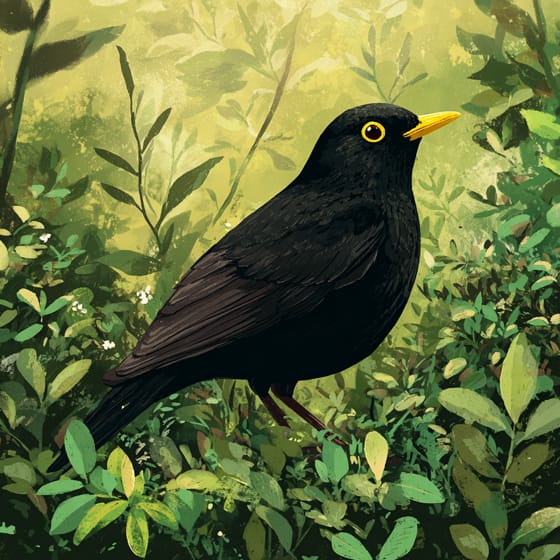
Turdus merula
Provides food for insect-eating birds.
Sceliphron caementarium
Paralyzed and stored for wasp larvae.
Musca domestica
Helps control fly populations.
Solitary animals live alone for most of their lives, only interacting with others for mating or parental care.
Camouflaged describes organisms that possess coloring or patterns that allow them to blend into their environment.
Grassland habitats are terrestrial biomes dominated by grasses and herbaceous plants, supporting a variety of grazing animals.
This trait identifies organisms whose diet consists entirely or primarily of animal tissue.

Diurnal animals are primarily active during daylight hours, typically resting or sleeping at night.
Danger
1/5 · Very low
No special safety notes yet.
The easiest way to identify Furrow Spiders is to use the Snappit nature identifier app.
5-15
1-2
They are insect hunters, catching flying prey in their sticky webs.
Fields, gardens, and grassy areas.
Ambush
8
Zoom in to split clusters and explore where this object has been snapped.
Recent snaps will appear here as new observations are added.
Take the discovery with you
Snap it with Snappit to identify it, learn what makes it special, and add the discovery to your collection.