Dicyrtomina Ornata
dicyrtomina ornata
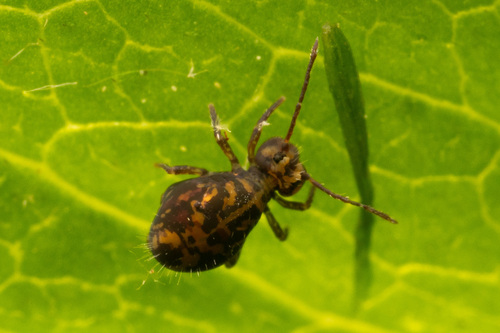
Dicyrtomina Ornata is a tiny, fascinating springtail that loves to hop around in the soil. They help keep the earth healthy by breaking down decaying materials!
Habitat: Moist soil and leaf litter in forests and gardens.
The Dicyrtomina Ornata is a tiny, globular springtail, meaning it has a distinctively round body shape. It typically displays a beautiful pattern of yellow or orange with dark, often brownish or black, markings and bands. Its spherical form makes it visually stand out from many other elongated springtail species.
Category
InvertebrateRarity
Common
Danger
0/5 · No known danger
Snaps
2
Did you know springtails are one of the most numerous animals on Earth?
Springtails use a special 'belly tube' to help them absorb water!
These tiny jumpers have been around for over 400 million years!
They can survive freezing temperatures by producing a natural antifreeze!
Dicyrtomina Ornata can launch itself into the air using a special 'furcula' tail-like appendage that helps them escape predators quickly.
Dicyrtomina Ornata has a waxy cuticle that helps them shed water, staying dry even in very moist habitats.
Dicyrtomina Ornata can cling to smooth surfaces using tiny claws and adhesive pads on their feet, allowing them to climb easily.
They munch on tiny bits of decaying plants and fungi, helping to recycle nutrients!
Penicillium chrysogenum
Grazes on fungal hyphae and spores in its habitat.
Bacillus subtilis
Feeds on bacterial colonies in damp soil environments.
Myrmica rubra
Ants can prey on springtails found in soil and litter.
Solitary animals live alone for most of their lives, only interacting with others for mating or parental care.
Burrowing animals dig tunnels and chambers in the ground, using these subterranean structures for shelter, hunting, or breeding.
Colorful describes organisms or objects displaying a wide range of bright and distinct colors.
Describes organisms that break down dead organic material, recycling nutrients back into the ecosystem.

Aquatic habitats encompass environments where organisms live predominantly in water, including oceans, rivers, lakes, and wetlands.
Danger
0/5 · No known danger
No special safety notes yet.
The easiest way to identify Dicyrtomina Ornata is to use the Snappit nature identifier app.
1.5 mm
6 months
They munch on tiny bits of decaying plants and fungi, helping to recycle nutrients!
Moist soil and leaf litter in forests and gardens.
Foraging
15 cm
Zoom in to split clusters and explore where this object has been snapped.
May 22, 2026
CheshamPhoto attribution
(c) Jack Forrester, some rights reserved (CC BY)
License: CC BY 4.0 ↗
Image may be shown cropped inside the card frame.

New Hampshire, US
You might spot Eastern Red-Backed Salamander and Eastern Newt.
View guide →

Massachusetts, US
You might spot Snow Leopard, Jaguar, and Canis Lupus Baileyi.
View guide →

Washington, US
You might spot Cross Orbweaver, Duck, and Fringed Willowherb.
View guide →
Take the discovery with you
Snap it with Snappit to identify it, learn what makes it special, and add the discovery to your collection.