





Golden Chalice Vine
solandra maxima
The Golden Chalice Vine has beautiful, trumpet-shaped flowers that can be yellow or cream in color. It's a fun plant to spot because it grows in large, sprawling vines that can climb up trees and walls!
Habitat: Tropical and subtropical areas, often found in gardens and along roadsides.
The Golden Chalice Vine has magnificent, large trumpet-shaped flowers, up to 25 cm wide, which open creamy white and mature to a rich golden yellow. Its glossy, dark green oval leaves provide a lush backdrop, highlighting the striking, chalice-like blooms.
Category
PlantsRarity
Common
Danger
0/5 · No known danger
Snaps
2
Giant moths and bats are its favorite nighttime visitors for a sweet nectar treat!
It can grow huge, sometimes creating its own shady, impressive jungle canopy!
Its flowers start cream-colored and magically turn bright gold as they age!
This plant is surprisingly related to potatoes and tomatoes, but it's super poisonous!
Golden Chalice Vine releases a strong, sweet fragrance at night that helps it attract nocturnal pollinators like bats and moths.
Its massive, cup-shaped flowers are perfectly designed to collect generous amounts of nectar, rewarding large pollinators.
Golden Chalice Vine uses aerial roots to quickly climb trees and structures, helping it reach sunlight in dense environments.
Leptonycteris curasoae
Primary nocturnal pollinator for its flowers.
Manduca sexta
Adult moths visit flowers for nectar at night.
Homo sapiens
Cultivated globally as a popular ornamental garden plant.
Arboreal animals live primarily in trees, utilizing them for shelter, food, and protection from predators.
Colorful describes organisms or objects displaying a wide range of bright and distinct colors.
This trait characterizes organisms whose diet consists entirely or primarily of plant material.
Forest habitats are terrestrial environments dominated by dense tree cover, supporting a high diversity of plant and animal life.

Describes organisms that transfer pollen, enabling the fertilization and reproduction of plants.
Danger
0/5 · No known danger
No special safety notes yet.
The easiest way to identify Golden Chalice Vine is to use the Snappit nature identifier app.
1000-3000 cm
300-1000 cm
15-25 cm
Late winter to spring
No
High
Perennial
Zoom in to split clusters and explore where this object has been snapped.

Hawaii, US
You might spot Brown Anole, Gold Dust Day Gecko, and Red-Crested Cardinal.
View guide →
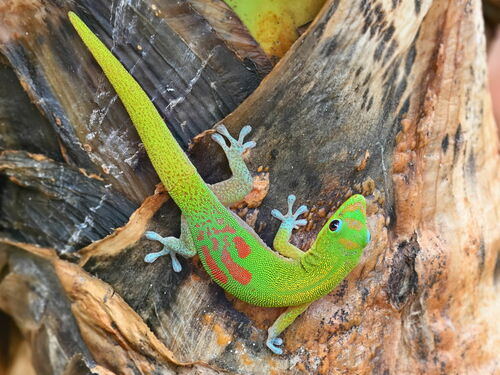
Hawaii, US
You might spot Gold Dust Day Gecko, Sea Turtle, and Brown Anole.
View guide →

Hawaii, US
You might spot 'āhinahina, Jackson's Chameleon, and Hawaiʻi ʻamakihi.
View guide →

California, US
You might spot Roxburgh Fig, Roses, and Swan-Neck Agave.
View guide →
Take the discovery with you
Snap it with Snappit to identify it, learn what makes it special, and add the discovery to your collection.








.jpg&width=800)



_001.jpg&width=800)




