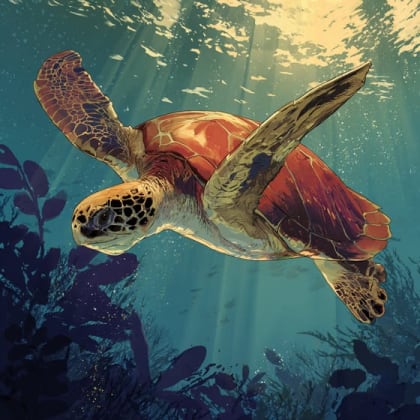





Sea Turtle
The National Tropical Botanical Garden safeguards the world's most vulnerable tropical flora.
The National Tropical Botanical Garden safeguards the world's most vulnerable tropical flora.
As a congressionally chartered, not-for-profit institution, the National Tropical Botanical Garden (NTBG) is a global leader in tropical plant research, conservation, and education, operating a network of gardens and preserves across Hawaii and Florida. These living laboratories are dedicated to perpetuating tropical plants, ecosystems, and cultural knowledge, boasting unparalleled collections of tropical flora, including the largest assemblages of native Hawaiian plant species and breadfruit cultivars in existence. Visitors are invited to explore lush landscapes that not only delight the senses but also contribute vitally to saving plants from extinction.
In Hawaii, NTBG manages four distinct gardens, each offering a unique experience. On Kauai, McBryde Garden is a botanical ark for threatened plants, featuring the world's largest collection of native Hawaiian species, a breadfruit agroforest, and the fascinating Hawaiian Life Canoe Garden. Adjacent Allerton Garden transforms nature into art with its meticulously designed "garden rooms," intricate water features, stunning sculptures, and the famous Moreton Bay fig trees that served as a backdrop for Hollywood blockbusters like *Jurassic Park*. On Maui, Kahanu Garden preserves Polynesian ethnobotanical collections alongside the majestic Pi'ilanihale Heiau, the largest ancient stone temple in Polynesia, while Kauai's Limahuli Garden and Preserve focuses on restoring traditional Hawaiian agricultural terraces and native ecosystems amidst breathtaking mountain and ocean views.
A visit to the National Tropical Botanical Garden is more than just a stroll through beautiful grounds; it's an immersive journey into the heart of tropical plant diversity and conservation. Whether you're captivated by rare Hawaiian hibiscus, enchanted by the artistic design of Allerton's garden rooms, or inspired by the cultural heritage of Kahanu's ancient sites, these gardens offer profound educational insights and unforgettable photographic opportunities. They provide a vital sanctuary for plants facing extinction and serve as a powerful reminder of nature's beauty and resilience, making it an essential destination for anyone passionate about the natural world. Wondering what that bird or insect is? Find out on your visit using the Snappit nature app.
and culture buffs (especially for Kahanu and Limahuli Gardens) * Movie fans (for Allerton Garden's filming locations)
Explore diverse plant collections, learn about conservation efforts, identify plants through informative signage, enjoy guided tours offering historical and botanical insights, and capture stunning photographs of unique landscapes and flora. Many tours require a shuttle ride from a visitor center into the gardens, which often includes scenic views.
Kauai's weather can be unpredictable, with tropical showers possible year-round. It's best to check local forecasts, but generally, the south shore (McBryde, Allerton) is drier than the north shore (Limahuli).
McBryde Garden has mostly unpaved trails. Guided tours often involve shuttle transport into the gardens. Comfortable walking shoes are essential for all visitors. Some tours require closed-toe shoes or secure hiking sandals. The Southshore Visitors Center Garden is freely accessible.
World's largest collection of native Hawaiian plants, the unique Breadfruit Institute agroforest, the Hawaiian Life Canoe Garden, and the "Spice of Life" trail featuring cacao and allspice trees.
Iconic Moreton Bay fig trees (a famous *Jurassic Park* filming location), architecturally designed "garden rooms" like the Mermaid Room with its statues and water features, Diana's Room, and the Bamboo Room.
The massive Pi'ilanihale Heiau, an ancient Polynesian temple, and extensive ethnobotanical collections including a large breadfruit collection and undisturbed hala (pandanus) forests.
Traditional Hawaiian agricultural terraces, rare native Hawaiian plants, and restored native ecosystems with stunning coastal views.
Each card links to a full Explore page with photos, traits, and fun facts.
Start with the big picture, then zoom in to explore individual wildlife observations around this place.
Wear appropriate footwear
Comfortable walking shoes are a must. For guided tours of Allerton and McBryde, closed-toe shoes or secure hiking sandals are required for safety.
Come prepared for weather
Bring rain protection (light jacket or umbrella) and sun protection (hat, sunscreen), as tropical weather can change quickly.
Stay hydrated and ward off bugs
Carry a refillable water bottle (filling stations may be available) and use insect repellent.
Book in advance
Especially for guided tours of Allerton Garden or combination tours, securing your spot online ahead of time is highly recommended.
Consider a combination tour
If time permits, the "Best of Both Worlds" tour offers highlights of both McBryde and Allerton Gardens and is a great way to experience the diversity of the Lawai Valley.
Don't forget your camera
The gardens are incredibly photogenic, with unique plants, stunning landscapes, and artistic installations.
Jun 19, 2026
Jun 15, 2026
Jun 12, 2026
Jun 12, 2026
Jun 12, 2026

Maryland, US
You might spot White-Tailed Deer and Eastern Gray Squirrel.
View guide →
.jpg)
District of Columbia, US
You might spot Eastern Gray Squirrel, Duck, and House Sparrow.
View guide →

Illinois, US
You might spot American Robin, Canada Goose, and House Sparrow.
View guide →

Virginia, US
You might spot Spotted Lanternfly and Northern Cardinal.
View guide →
Take the discovery with you
Identify the wildlife you spot, learn as you go, and keep a collection of the adventure.