





Green Ash
Fraxinus pennsylvanica
The Green Ash tree is known for its bright green leaves and strong branches. It can survive in many different places!
Habitat: Wetlands and floodplains
The Green Ash is a medium to large deciduous tree with an upright, oval crown. It has deeply furrowed gray-brown bark and compound leaves with 5-9 ovate leaflets that turn bright yellow in fall. Its distinguishing feature is its bright green leaves and often slightly hairy twigs.
Category
TreesRarity
Common
Danger
1/5 · Very low
Snaps
9
Before saws, Native Americans used ash wood to make bows, because it's so flexible!
Green Ash is one of the most common trees planted in many cities across North America!
Its scientific name, Fraxinus, means 'ash tree' in Latin, linking to its strong wood!
Tiny emerald ash borer beetles can sadly wipe out entire forests of ash trees!
Green Ash can survive in soggy soils because its roots tolerate low oxygen, helping it thrive near rivers and wetlands.
Green Ash can quickly establish itself in new areas thanks to its rapid growth rate, making it a pioneer tree.
Green Ash has winged seeds called samaras that twirl like tiny helicopters, helping them travel far on the wind to new spots.
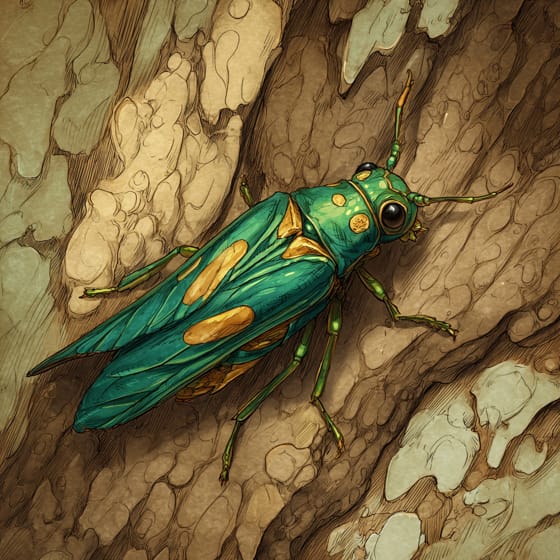
Agrilus planipennis
Larvae tunnel under bark
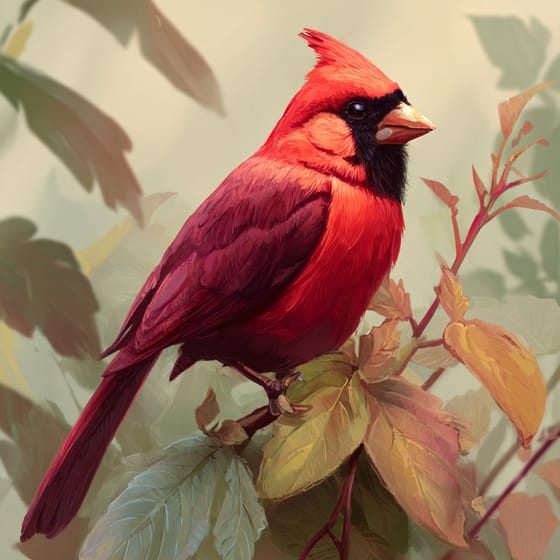
Cardinalis cardinalis
Consumes its winged seeds
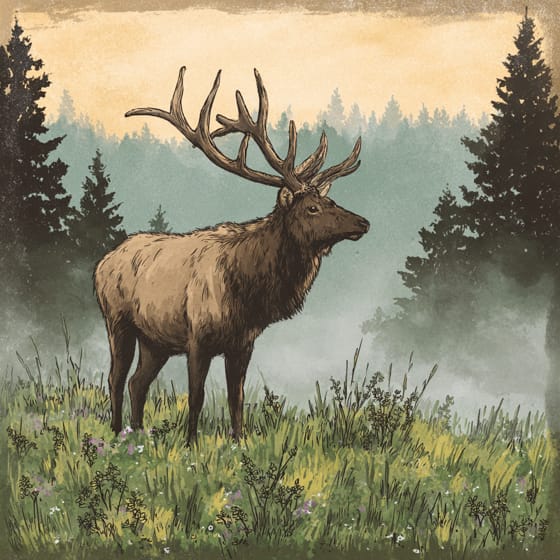
Cervus canadensis
Browses on twigs and foliage
Setophaga virens
Nests and forages in its branches
Deciduous plants periodically shed all their leaves, typically during autumn or dry seasons.
Shade tolerant plants are adapted to grow and thrive in areas with low light levels, requiring less direct sunlight.
Broadleaf trees are angiosperms characterized by flat, wide leaves that are typically shed annually in temperate climates.
Fruit-bearing plants produce fruits, which are the mature ovaries of flowering plants containing seeds.

Rapid growing plants exhibit accelerated growth rates, quickly increasing in size and biomass within a short period.

This habitat trait identifies species found in wetlands, which are areas of land saturated with water, either permanently or seasonally, including marshes, swamps, and bogs.
Danger
1/5 · Very low
Do not pick or eat anything you find. Some plants and mushrooms can be harmful.
The easiest way to identify Green Ash is to use the Snappit nature identifier app.
15-25 m
10-15 m
No
30-90 cm
70-120 years
Wetlands and floodplains
Samara
Zoom in to split clusters and explore where this object has been snapped.

Pennsylvania, US
You might spot American Robin, Red-Winged Blackbird, and Lesser Celandine.
View guide →

New Jersey, US
You might spot American Wintergreen, Wild Geranium, and Mayapple.
View guide →

North Dakota, US
You might spot Moose, Ring-Necked Pheasant, and Field Bindweed.
View guide →
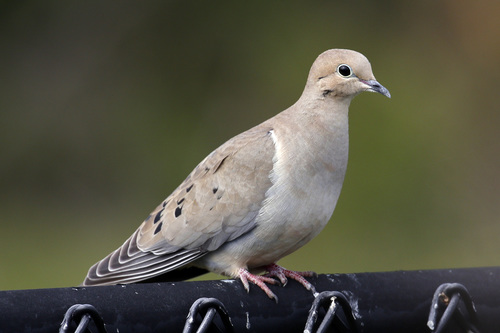
South Dakota, US
You might spot Mourning Dove, Vulture, and Woodhouse's Toad.
View guide →

Minnesota, US
You might spot American White Pelican and Painted Turtle.
View guide →
Georgia, US
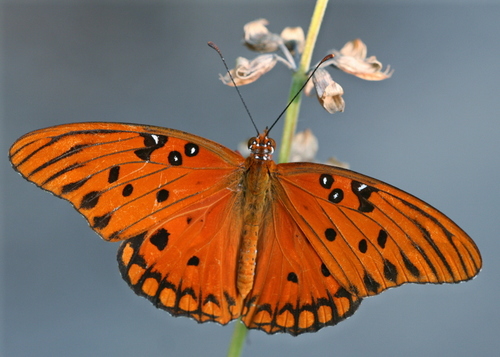
You might spot Gulf Fritillary and Common Eastern Bumble Bee.
View guide →
Take the discovery with you
Snap it with Snappit to identify it, learn what makes it special, and add the discovery to your collection.










