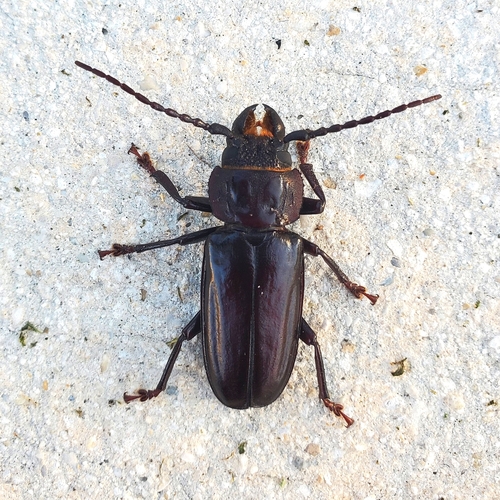


Hardwood Stump Borer
mallodon dasystomus
The Hardwood Stump Borer (Mallodon dasystomus) is an impressive member of the longhorn beetle family, Cerambycidae, found throughout the southern United States and Central America. These robust insects are known for their formidable size and powerful mandibles, which the males use to grapple with rivals and defend mating territories. Although their imposing appearance and strong jaws might seem intimidating, they are generally harmless to humans unless carelessly handled. As vital ecological recyclers, Hardwood Stump Borers play a crucial role in forest ecosystems. Their larvae are wood-borers, spending years tunneling through dead, decaying, or weakened hardwood stumps and logs, breaking down tough cellulose, and returning essential nutrients to the forest soil.
Habitat: Found in deciduous and mixed hardwood forests, especially in areas with abundant decaying stumps, fallen logs, or stressed trees.
This large, elongate beetle measures between 2 to 6 centimeters in length and features a flattened, robust body with a dark chestnut brown to nearly black coloration. They possess long, thread-like antennae that reach about half the length of their body, and their pronotum has finely serrated or tooth-like lateral edges. The most striking feature of the Hardwood Stump Borer is its massive, forward-pointing mandibles, which are significantly larger and more muscular in males, giving them a fierce, pincher-like appearance.
Category
InsectsRarity
Common
Danger
1/5 · Very low
Snaps
3
Adult beetles are quite clumsy fliers, often making loud, buzzing crashes into window screens or porch lights during summer evenings.
Despite their fearsome mandibles, male Hardwood Stump Borers use their jaws primarily to wrestle other males for mating rights rather than for hunting prey.
The larvae of this beetle can live silently inside dead wood for up to three years before transforming into adult beetles.
Adults possess robust, sharp mandibles capable of chewing through tough bark and delivering a painful pinch to ward off predators.
The larval stage produces specialized digestive enzymes that allow them to process and obtain nutrition from tough wood cellulose.
When threatened, these beetles can rub their head against their thorax to produce a squeaking distress sound designed to startle predators.
Larvae feed strictly on decaying hardwood timber, tunneling through the wood, while adults feed minimally on tree sap or soft plant tissue.
Age differences: Larvae are wood-boring detritivores that feed inside logs for several years, whereas adults feed sparingly on sap flows or may not feed at all during their short adult life.
_1_(24790682337).jpg&width=800)
Carya illinoinensis
Larvae tunnel into and feed on the dead or dying wood of the pecan tree, sometimes affecting stressed or managed orchard trees.
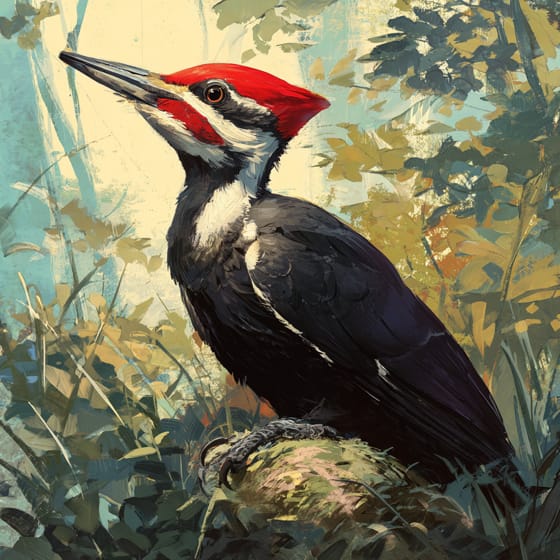
Dryocopus pileatus
Larvae living inside rotting logs are extracted and eaten by large woodpeckers.
Atanycolus simplex
The larvae of the beetle are host to parasitic wasps that lay eggs inside their wood tunnels.
No trait badges are assigned for this object yet.
No aliases listed yet.
Collections for this object will appear here as more themes are added.
Danger
1/5 · Very low
No special safety notes yet.
The easiest way to identify Hardwood Stump Borer is to use the Snappit nature identifier app.
2+ cm
5+ cm
0.005+ kg
2+ years
8 km/h
Larvae feed strictly on decaying hardwood timber, tunneling through the wood, while adults feed minimally on tree sap or soft plant tissue.
Found in deciduous and mixed hardwood forests, especially in areas with abundant decaying stumps, fallen logs, or stressed trees.
Zoom in to split clusters and explore where this object has been snapped.
Take the discovery with you
Snap it with Snappit to identify it, learn what makes it special, and add the discovery to your collection.













.jpg&width=800)




