





House Spider
Parasteatoda tepidariorum
House Spiders are friendly spiders that like to live in our homes. They help keep other bugs away!
Habitat: Inside homes
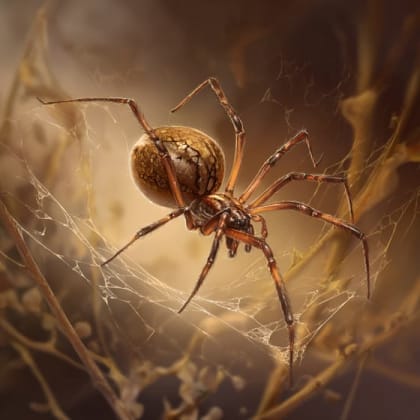
The House Spider has a compact, rounded body that is typically yellowish-brown to dark grey, often with subtle chevron patterns on its abdomen. Its eight long, slender legs are usually banded with a darker shade, giving it a somewhat striped appearance.
Category
InsectsRarity
Common
Danger
2/5 · Low
Snaps
1
A house spider's silk is super strong, even stronger than a steel thread of the same thickness!
Female house spiders can lay hundreds of eggs at once inside a protective, silky egg sac!
Some house spiders can regenerate lost legs after molting, like growing a brand new limb!
Spiders are very clean and spend hours grooming their eight legs and fangs.
House Spider can spin incredibly strong, sticky silk to build intricate webs that help them trap unsuspecting prey.
House Spider has tiny hairs on its legs that detect vibrations in its web, helping them locate prey or danger.
House Spider can walk upside down on smooth surfaces because of tiny claws and sticky hairs on its feet.
Tiny predators that capture insects in their sticky webs for a meal.
Musca domestica
Traps and eats common house flies.
Culex pipiens
Catches mosquitoes in its sticky web.
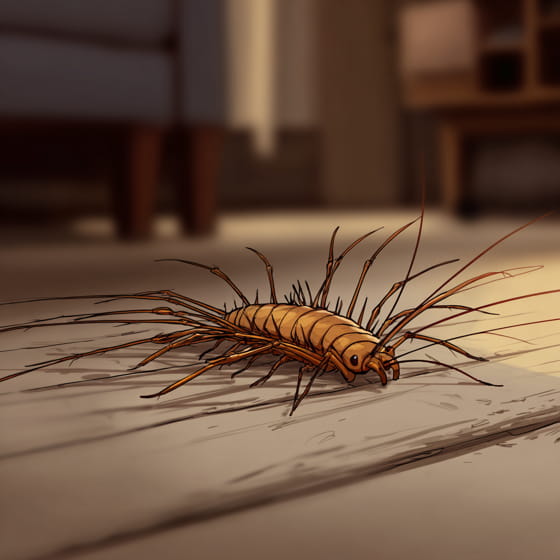
Scutigera coleoptrata
Can be prey for larger house centipedes.
Geolycosa missouriensis
Larger wolf spiders might prey on them.
Wildlife encompasses all undomesticated animal and plant life existing in their natural habitats.
Solitary animals live alone for most of their lives, only interacting with others for mating or parental care.
This trait characterizes organisms that construct elaborate silken webs for catching prey, shelter, or reproduction.
This trait identifies organisms whose diet primarily consists of insects and other small invertebrates.

This habitat trait indicates species that can coexist with humans in urban and suburban environments, utilizing man-made structures and green spaces.

Nocturnal animals are primarily active during the nighttime hours, typically resting or sleeping during the day.
Danger
2/5 · Low
Do not touch or pick up. Some insects sting or bite. Ask an adult for help.
The easiest way to identify House Spider is to use the Snappit nature identifier app.
3-8 mm
730-1095 days
Tiny predators that capture insects in their sticky webs for a meal.
Inside homes
Ambush
8
Zoom in to split clusters and explore where this object has been snapped.
Take the discovery with you
Snap it with Snappit to identify it, learn what makes it special, and add the discovery to your collection.










.jpg&width=800)




