


Koa
acacia koa
The Koa (Acacia koa) is a magnificent, fast-growing canopy tree endemic to the Hawaiian Islands, representing one of the most culturally and ecologically significant plants in the archipelago. Renowned for its beautiful, highly figured wood which ranges from rich gold to deep chocolate brown, Koa was historically used by Native Hawaiians to build oceanic voyaging canoes, surfboards, and weapons. Today, it remains highly prized by woodworkers globally. As a keystone species of Hawaii's wet and mesic forests, the Koa tree provides crucial habitat for a vast array of endemic birds, insects, and understory plants. It plays an essential role in forest hydrology and nitrogen fixation, nurturing the delicate volcanic soils of its island home.
Habitat: Found in wet to mesic montane forests across the major Hawaiian islands, typically at elevations between 300 and 2,000 meters.
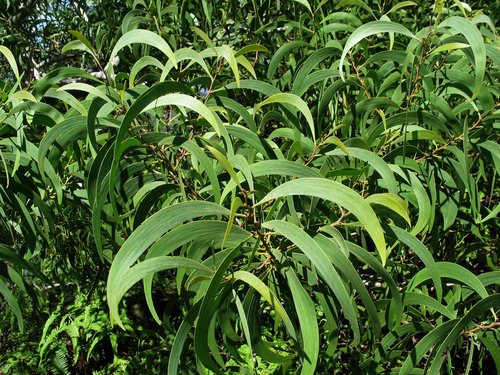
Koa trees are large, broad-canopied trees that can reach heights up to 30 meters. They are easily recognized by their distinctive crescent-shaped "leaves," which are actually modified leaf stems called phyllodes. True bipinnately compound leaves are present only on young seedlings or shaded lower branches. The bark is light gray, rough, and deeply fissured in older specimens. During the blooming season, the tree produces pale yellow, spherical flower heads resembling tiny powder puffs, which are followed by flat, brown seed pods measuring 7 to 15 centimeters long.
Category
PlantsRarity
Common
Danger
1/5 · Very low
Snaps
Be the first to snap!
Adult Koa trees do not have true leaves; instead, they photosynthesize using crescent-shaped, flattened leaf stems called phyllodes.
Koa is the second most common tree in Hawaii's forests, preceded only by the Ohia Lehua.
The word 'Koa' means 'brave, bold, fearless, or warrior' in the Hawaiian language, reflecting the strength and resilience of its wood.
Koa hosts Bradyrhizobium bacteria in its root nodules, converting atmospheric nitrogen into a usable form that enriches poor volcanic soils.
As it matures, Koa replaces its water-thirsty true leaves with drought-resistant, crescent-shaped phyllodes that reduce water loss.
Koa seeds possess a hard, durable coat that can remain dormant in the soil for decades, germinating rapidly after being scarified by forest fires.
As a photoautotrophic plant, Koa generates its own energy through photosynthesis, utilizing sunlight, carbon dioxide, water, and soil nutrients.
Drepanis coccinea
Feeds on the nectar of Koa flowers and nests in its canopy.
Coleotichus blackburniae
A native iridescent insect that feeds on the seeds and pods of the Koa tree.
Hemignathus wilsoni
An endemic Hawaiian honeycreeper that uses its specialized beak to forage for insects under the bark of Koa trees.
No trait badges are assigned for this object yet.
No aliases listed yet.
Collections for this object will appear here as more themes are added.
Danger
1/5 · Very low
No special safety notes yet.
Start with the whole plant, then compare leaf arrangement, leaf edges, stems and any flowers or fruit. Opposite leaves grow in pairs; alternate leaves come one at a time along the stem. These details tell you far more together than a single green leaf does. Plant Identifier: upload a photo and compare the visible details.
1500-3000 cm
50-150 years
As a photoautotrophic plant, Koa generates its own energy through photosynthesis, utilizing sunlight, carbon dioxide, water, and soil nutrients.
Found in wet to mesic montane forests across the major Hawaiian islands, typically at elevations between 300 and 2,000 meters.
Zoom in to split clusters and explore where this object has been snapped.
Recent snaps will appear here as new observations are added.
Take the discovery with you
Snap it with Snappit to identify it, learn what makes it special, and add the discovery to your collection.

















