
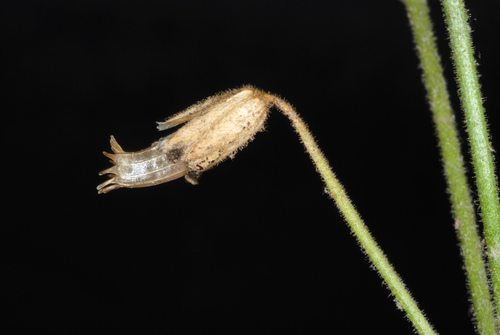


Large Field Chickweed
cerastium velutinum
The Large Field Chickweed (Cerastium velutinum) is a charming perennial wildflower native to eastern North America, prized for its carpet-like clusters of bright, star-shaped white blossoms. Frequently found gracing limestone glades, rocky barrens, and dry fields, this plant is remarkably resilient, thriving in shallow soils where other vegetation struggles. Belonging to the pink family (Caryophyllaceae), it is characterized by its distinctly velvety, hairy foliage that gives the plant its scientific name velutinum. During the peak of spring, these low-growing, mat-forming herbs burst into a beautiful display, providing an essential early-season nectar source for native bees and butterflies. For nature enthusiasts, encountering a patch of these delicate white flowers against rugged stone outcrops is a true highlight of spring exploration.
Habitat: Typically found in sunny, open areas with dry, rocky, or sandy soils, particularly limestone glades, serpentine barrens, and rocky cliffs.
This plant grows in low, spreading mats up to 45 centimeters tall, featuring opposite, lance-shaped leaves that are densely covered in soft, velvety white hairs. The flowers are approximately 1.5 to 2 centimeters wide, consisting of five bright white petals that are deeply notched at the tips, creating the illusion of ten petals. These blossoms are arranged in loose clusters at the ends of upright, hairy stems, contrasting sharply with the pale green, fuzzy foliage.
Category
PlantsRarity
Common
Danger
1/5 · Very low
Snaps
Be the first to snap!
The petals of the Large Field Chickweed are so deeply notched that they often look like ten petals instead of just five.
The scientific name velutinum translates to 'velvety', referring to the dense layer of soft hairs on the plant's leaves and stems.
This species is a specialist of limestone glades and serpentine barrens, environments characterized by harsh, metal-rich, or highly alkaline soils.
Dense, soft hairs covering the leaves and stems trap moisture and reduce water loss from wind, helping the plant survive in dry, exposed rocky habitats.
Highly adapted to thin, alkaline soils, allowing it to thrive in limestone-rich habitats where many competitor species cannot establish.
Its low-growing, spreading habit helps it suppress weeds, stabilize fragile soils on slopes, and maximize sun exposure.
As a photoautotrophic plant, it synthesizes its own food using sunlight, carbon dioxide, and water through the process of photosynthesis.
Bombus bimaculatus
Bees visit the flowers to feed on nectar, aiding in pollination.
Haematopis grataria
Caterpillars feed on the foliage of chickweeds.
No trait badges are assigned for this object yet.
No aliases listed yet.
Collections for this object will appear here as more themes are added.
Danger
1/5 · Very low
No special safety notes yet.
Start with the whole plant, then compare leaf arrangement, leaf edges, stems and any flowers or fruit. Opposite leaves grow in pairs; alternate leaves come one at a time along the stem. These details tell you far more together than a single green leaf does. Plant Identifier: upload a photo and compare the visible details.
10-45 cm
2-8 years
As a photoautotrophic plant, it synthesizes its own food using sunlight, carbon dioxide, and water through the process of photosynthesis.
Typically found in sunny, open areas with dry, rocky, or sandy soils, particularly limestone glades, serpentine barrens, and rocky cliffs.
Photosynthesis
Zoom in to split clusters and explore where this object has been snapped.
Recent snaps will appear here as new observations are added.
Take the discovery with you
Snap it with Snappit to identify it, learn what makes it special, and add the discovery to your collection.


















