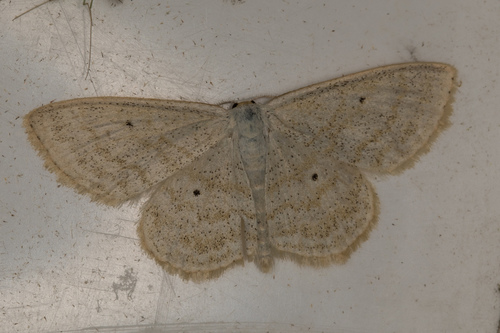


Lesser Cream Wave
scopula immutata
The Lesser Cream Wave (Scopula immutata) is a delicate and elegant geometrid moth widely distributed across temperate Europe and Asia. Thriving in damp, humid environments such as fens, marshes, and wet woodlands, this understated insect is a quiet beauty of the summer landscape. Its presence is often associated with undisturbed wetland habitats, making it an excellent indicator of local ecosystem health. During the day, this moth rests quietly among low-growing vegetation, but it becomes active at dusk, fluttering gracefully over marshy ground in search of nectar. As a caterpillar, it feeds on a variety of damp-loving plants, contributing to the complex food webs of wetland communities before overwintering and emerging as the familiar pale adult the following summer.
Habitat: Found in damp, marshy environments including fens, bogs, wet meadows, and damp woodlands.
The adult Lesser Cream Wave has a wingspan of 2 to 3 centimeters and features chalky-white or pale cream-colored wings. Its wings are decorated with several fine, wavy, yellowish-brown lines crossing both the forewings and hindwings. A defining feature is the small, dark brown or blackish discal spot situated near the center of each wing, accompanied by a series of tiny black dots along the outer margins.
Category
InsectsRarity
Common
Danger
1/5 · Very low
Snaps
Be the first to snap!
The name 'Geometridae' translates to 'earth-measurer,' referring to the looping movement of the caterpillars (inchworms) of this family, including the Lesser Cream Wave.
This species overwinters as a caterpillar, enduring freezing winter temperatures tucked away in low-lying vegetation before pupating in the spring.
Unlike some of their more colorful moth relatives, Lesser Cream Waves rely entirely on subtle wavy patterns to blend into the shadows of marsh grasses.
Its chalky, line-patterned wings mimic dried leaves or flecks of light on low foliage, keeping it well hidden from visual predators during the day.
Males use highly sensitive antennae to detect female pheromones over significant distances in dark wetland environments.
Capable of maintaining activity during cool summer nights by utilizing microclimates in low, dense wetland vegetation.
Caterpillars feed on various low-growing wetland herbs and deciduous shrubs, while adults drink nectar from wild wetland flowers.

Filipendula ulmaria
The caterpillars feed on the leaves of this wetland plant as their primary host.
Pipistrellus pipistrellus
This aerial predator hunts the adult moths in flight during the twilight hours.
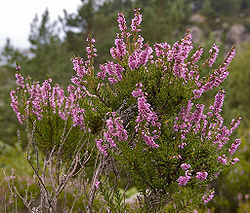
Calluna vulgaris
The caterpillar uses this plant as an alternative food source in heathland habitats.
No trait badges are assigned for this object yet.
No aliases listed yet.
Collections for this object will appear here as more themes are added.
Danger
1/5 · Very low
No special safety notes yet.
Compare resting wing shape, forewing markings, antennae and body build. Small brown moths can hinge on fine details a phone photo can't always catch. Moth Identifier: upload a photo and compare the visible details.
1+ cm
2+ cm
0.0001+ kg
1+ years
Caterpillars feed on various low-growing wetland herbs and deciduous shrubs, while adults drink nectar from wild wetland flowers.
Found in damp, marshy environments including fens, bogs, wet meadows, and damp woodlands.
Foraging
Zoom in to split clusters and explore where this object has been snapped.
Recent snaps will appear here as new observations are added.
Take the discovery with you
Snap it with Snappit to identify it, learn what makes it special, and add the discovery to your collection.