




Leucoptera pachystimella
Leucoptera pachystimella
The Leucoptera pachystimella is a tiny moth that loves to hide in leaves. It has beautiful white wings that can be hard to spot in nature, making it a special little friend in the garden.
Habitat: Gardens
The Leucoptera pachystimella is a tiny moth, typically 2-3 mm long, with bright white or silvery forewings that often feature a few distinct dark spots or metallic markings, especially near the wing tips. Its slender body and delicate fringes make it appear almost ghost-like.
Category
InsectsRarity
Common
Danger
1/5 · Very low
Snaps
Be the first to snap!
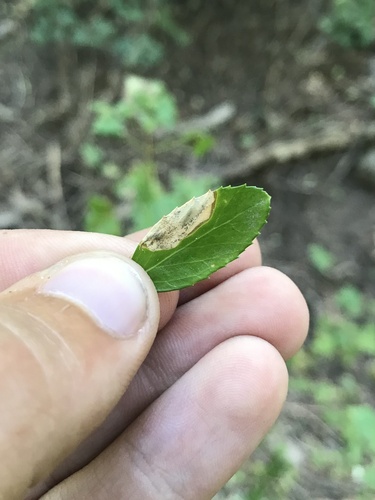
If you hold a leaf of its host plant up to the light, you might see the squiggly tunnels its larvae made inside!
Its species name 'pachystimella' comes from the specific plant its caterpillars love to eat.
This tiny moth is often smaller than a grain of rice, making it one of nature's miniatures!
Unlike many moths, adult Leucoptera pachystimella are usually active and fly around during the daytime!
Leucoptera pachystimella larvae can tunnel inside plant leaves, creating hidden homes and feasting on the green tissues safe from many predators.
Leucoptera pachystimella has tiny white wings that help them blend perfectly with white flowers or sun-dappled leaves, making them very hard to spot.
Leucoptera pachystimella can complete its full life cycle from egg to adult in just a few weeks, allowing many generations to hatch each year.
Larvae munch on plant leaves, while adult moths sip sweet nectar for energy.
Age differences: Larvae burrow into and consume the internal tissues of plant leaves, while adults feed on nectar from flowers.
Pachystima myrsinites
Its larvae feed exclusively on the leaves of this shrub.

Parus atricapillus
Small birds may snatch adult moths for a quick meal.

Argiope aurantia
Spiders often catch adult moths in their sticky webs for food.
Solitary animals live alone for most of their lives, only interacting with others for mating or parental care.
Camouflaged describes organisms that possess coloring or patterns that allow them to blend into their environment.
This trait characterizes organisms whose diet consists entirely or primarily of plant material.
Describes plants that are particularly attractive and beneficial to a wide range of pollinating organisms.
Diurnal animals are primarily active during daylight hours, typically resting or sleeping at night.
Pertaining to species that are significantly smaller than typical or average for their kind.
This habitat trait indicates species that can coexist with humans in urban and suburban environments, utilizing man-made structures and green spaces.
Describes organisms that transfer pollen, enabling the fertilization and reproduction of plants.
No aliases listed yet.
Danger
1/5 · Very low
It's best to look at moths from a distance and not touch them.
Compare resting wing shape, forewing markings, antennae and body build. Small brown moths can hinge on fine details a phone photo can't always catch. Moth Identifier: upload a photo and compare the visible details.
4-6 mm
2-3 mm
7-21 days
Larvae munch on plant leaves, while adult moths sip sweet nectar for energy.
Gardens
Foraging
6
Zoom in to split clusters and explore where this object has been snapped.
Recent snaps will appear here as new observations are added.
Take the discovery with you
Snap it with Snappit to identify it, learn what makes it special, and add the discovery to your collection.