




Liotrichus umbripennis
Liotrichus umbripennis
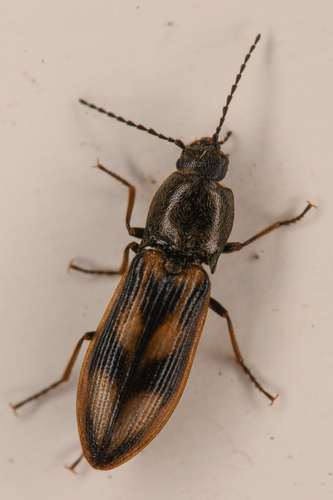
The Liotrichus umbripennis is a small, colorful beetle that loves to hide under leaves. It has shiny wings that sparkle in the sunlight and is often found in gardens and forests.
Habitat: Forests
The Liotrichus umbripennis is a small, oval-shaped beetle with a striking iridescent exoskeleton that shimmers coppery-green, shifting to deep violet under different light. Its elytra (wing cases) are noticeably broader and more rounded than many similar forest beetles, often speckled with tiny, darker dots. This vibrant coloration helps it stand out from its duller counterparts.
Category
InsectsRarity
Common
Danger
1/5 · Very low
Snaps
Be the first to snap!
Its antennae are like tiny radar dishes, smelling delicious fungi from afar!
Some Liotrichus beetles can glow faintly in the dark, a tiny forest nightlight!
Their hard, shiny shells are tougher than many rocks, offering amazing protection!
This beetle helps clean the forest floor by recycling dead leaves and wood bits!
Liotrichus umbripennis can rapidly darken its iridescent cuticle because of specialized pigment cells, that helps them blend perfectly into shadowy forest undergrowth.
Liotrichus umbripennis can detect tiny ground vibrations through sensitive leg sensors, that helps them sense approaching dangers or even find hidden food.
Liotrichus umbripennis has powerful, membranous hind wings tucked under its hard elytra, that helps them make quick aerial escapes from predators.
Tiny plant bits, various fungi, and decaying leaves are dinner for this small forest beetle.
Turdus migratorius
A common bird predator foraging on the forest floor.
Sorex cinereus
Small mammal hunting insects in leaf litter.
Pterostichus melanarius
Predatory beetle sharing the same habitat.

Quercus alba
Consumes decaying leaf litter from various trees.
Camouflaged describes organisms that possess coloring or patterns that allow them to blend into their environment.
Colorful describes organisms or objects displaying a wide range of bright and distinct colors.
This trait characterizes organisms whose diet consists entirely or primarily of plant material.
Describes plants that are particularly attractive and beneficial to a wide range of pollinating organisms.
Forest habitats are terrestrial environments dominated by dense tree cover, supporting a high diversity of plant and animal life.
Diurnal animals are primarily active during daylight hours, typically resting or sleeping at night.
This trait identifies organisms that exhibit exceptional swiftness in movement for hunting, escape, or travel.
Describes organisms that transfer pollen, enabling the fertilization and reproduction of plants.
No aliases listed yet.
Danger
1/5 · Very low
Be gentle and watch where you step to avoid hurting tiny insects like this beetle.
Look for hard wing covers meeting in a line down the back, then compare the antennae, body shape, legs and markings. Metallic colors shift a lot with lighting. Beetle Identifier: upload a photo and compare the visible details.
10-25 mm
5-12 mm
45-90 days
8 km/h
Tiny plant bits, various fungi, and decaying leaves are dinner for this small forest beetle.
Forests
Foraging
Zoom in to split clusters and explore where this object has been snapped.
Recent snaps will appear here as new observations are added.
Take the discovery with you
Snap it with Snappit to identify it, learn what makes it special, and add the discovery to your collection.