




Liriomyza cracentis
Liriomyza cracentis
The Liriomyza cracentis is a tiny fly that loves to munch on plant leaves. They make little tunnels in the leaves, which can look like tiny mazes. These flies are important for nature because they help plants grow strong.
Habitat: Urban areas, gardens
The Liriomyza cracentis is a tiny, dark-bodied fly, often appearing black or dark gray with subtle yellow markings, especially on its head or thorax. It has clear, delicate wings and short antennae. Its minute size makes it difficult to spot without close examination.
Category
InsectsRarity
Common
Danger
1/5 · Very low
Snaps
Be the first to snap!
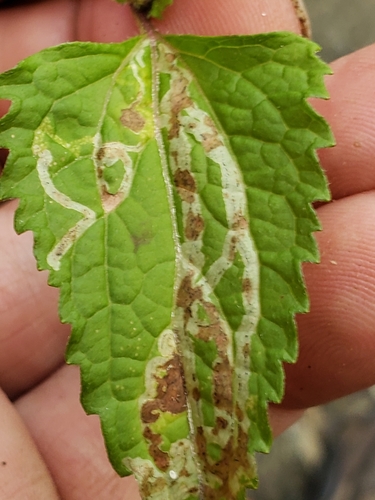
Leaf miners create unique squiggly patterns on leaves, like tiny secret maps!
Mom flies make tiny feeding punctures, but only one egg per puncture is laid.
Their intricate leaf tunnels are called 'mines' and can be seen from outside the leaf!
They develop so quickly, they can complete their entire life cycle in just two weeks!
Liriomyza cracentis larvae can tunnel through leaves because of their specialized mouthparts that help them chew and create winding 'mines' inside plant tissue.
Adult female Liriomyza cracentis can puncture plant leaves with their ovipositor to feed on nutritious sap, which helps them gain energy for egg-laying.
Tiny plant eaters, their larvae munch inside leaves while adults sip plant sap and nectar.
Age differences: Larvae feed exclusively on the internal tissues of host plant leaves, while adults primarily consume plant sap and some nectar.
Lactuca sativa
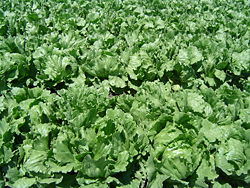
larvae tunnel within leaves causing damage to crops

Helianthus annuus
larvae create characteristic mines inside the leaves
Diglyphus isaea
wasp larvae develop inside or on the leaf miner larvae
Orius insidiosus
predatory bugs feed on leaf miner adults and larvae
Solitary animals live alone for most of their lives, only interacting with others for mating or parental care.
This trait characterizes organisms whose diet consists entirely or primarily of plant material.
Diurnal animals are primarily active during daylight hours, typically resting or sleeping at night.
Describes a species whose presence and role have a disproportionately large effect on its environment.
Pertaining to species that are significantly smaller than typical or average for their kind.
This habitat trait indicates species that can coexist with humans in urban and suburban environments, utilizing man-made structures and green spaces.
Describes organisms that transfer pollen, enabling the fertilization and reproduction of plants.
No aliases listed yet.
Danger
1/5 · Very low
These flies are not harmful to people, but it's best to leave them alone in nature.
Look for six legs, antennae, three body sections and the shape of the wings. Beetles have hardened front wings; flies have just one working pair. Tiny insects may need a close view before their group is clear. Insect Identifier: upload a photo and compare the visible details.
2-4 mm
1-3 mm
15-30 days
Tiny plant eaters, their larvae munch inside leaves while adults sip plant sap and nectar.
Urban areas, gardens
Foraging
6
Zoom in to split clusters and explore where this object has been snapped.
Recent snaps will appear here as new observations are added.
Take the discovery with you
Snap it with Snappit to identify it, learn what makes it special, and add the discovery to your collection.