Lobster Mushroom
hypomyces lactifluorum
The Lobster Mushroom looks like a bright orange crustacean! It’s actually a fungus that loves to grow on other mushrooms.
Habitat: Lobster Mushrooms grow in forests, often found on the ground or on other mushrooms.
The Lobster Mushroom is a vibrant orange to reddish-orange fungus with an irregular, often lumpy shape, resembling a cooked lobster. Its surface is rough and firm, while the interior flesh is dense and white. This striking color makes it distinct from the host mushrooms it covers.
Category
FungiRarity
Common
Danger
1/5 · Very low
Snaps
3
Amazingly, it can turn some normally inedible or bitter mushrooms into a delicious meal!
It doesn't grow its own cap or stem; it completely covers another mushroom!
Scientists can identify its original host mushroom by looking at tiny spores inside!
This vibrant fungus is actually a parasite that grows on and transforms other mushrooms!
Lobster Mushroom can completely transform its host's appearance and texture because of its parasitic mycelium that helps them grow on and encrust another fungus.
Lobster Mushroom has a unique seafood-like flavor that helps them become a highly prized food, despite being a forest fungus.
Lobster Mushroom can hide the gills of its host, making it look like a solid mass because its mycelium encrusts the entire mushroom.
Lactarius piperatus
transforms into the lobster mushroom
Russula brevipes
changes its appearance and flavor
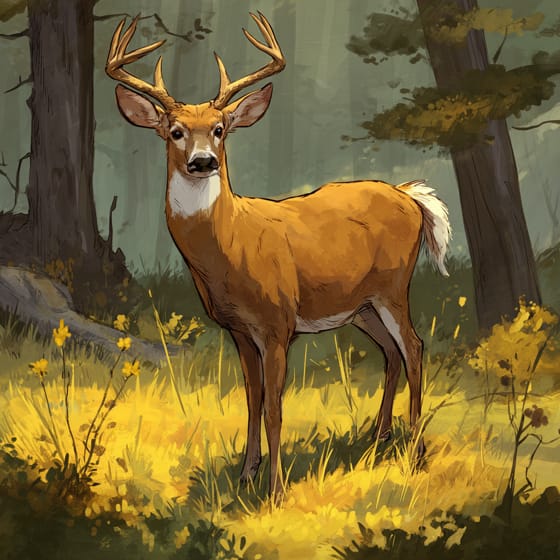
Odocoileus virginianus
forage for this tasty fungus
Homo sapiens
a highly prized gourmet food
Solitary animals live alone for most of their lives, only interacting with others for mating or parental care.
Colorful describes organisms or objects displaying a wide range of bright and distinct colors.
Describes organisms that break down dead organic material, recycling nutrients back into the ecosystem.
Forest habitats are terrestrial environments dominated by dense tree cover, supporting a high diversity of plant and animal life.

Diurnal animals are primarily active during daylight hours, typically resting or sleeping at night.
Danger
1/5 · Very low
Always ask an adult before touching or eating wild mushrooms!
The easiest way to identify Lobster Mushroom is to use the Snappit nature identifier app.
5-15 cm
edible
7-20 cm
Lobster Mushrooms grow in forests, often found on the ground or on other mushrooms.
soil
Summer to fall
White
Zoom in to split clusters and explore where this object has been snapped.

Oregon, US
You might spot Rough-Skinned Newt and Northern Red-Legged Frog.
View guide →

Minnesota, US
You might spot American White Pelican and Painted Turtle.
View guide →

Washington, US
You might spot Devil's Club, Scouler's Corydalis, and Pacific Banana Slug.
View guide →

Pennsylvania, US
You might spot Eastern Skunk Cabbage and American Hornbeam.
View guide →

Washington, US
You might spot Salal, Bog Labrador Tea, and Salmonberry.
View guide →
Take the discovery with you
Snap it with Snappit to identify it, learn what makes it special, and add the discovery to your collection.