.jpg&width=800)





Long-legged Buzzard
Buteo rufinus
The Long-legged Buzzard is a large bird of prey with long legs and beautiful feathers. It soars high in the sky, looking for small animals to catch for lunch!
Habitat: Mountain regions
The Long-legged Buzzard has striking rufous (reddish-brown) plumage, especially on its tail and belly. It features visibly longer, feathered legs compared to other buzzards and often displays dark carpal patches on its underwings. Its head is typically paler, giving it a distinctive appearance.
Category
BirdsRarity
Common
Danger
2/5 · Low
Snaps
Be the first to snap!
Their scientific name 'rufinus' means 'reddish,' perfectly describing their striking tail feathers!
These buzzards sometimes stand tall on perches, like watchtowers, scanning for their next meal!
They come in different color patterns, from very pale to dark brown, even within the same family!
Unlike many birds, Long-legged Buzzards often reuse their nests year after year, adding new sticks!
Long-legged Buzzard has incredible eyesight that helps them spot tiny prey like mice from high above.
Long-legged Buzzard can soar effortlessly for hours because of its broad wings, conserving energy while hunting.
Long-legged Buzzard has strong, sharp talons that help them firmly grasp and carry away captured prey.
Long-legged Buzzard has longer legs than other buzzards that help them navigate rocky terrain and snatch prey.
This bird of prey primarily eats small mammals and reptiles, hunting from the sky.
Age differences: Young buzzards start with easier-to-catch insects before switching to larger prey.
Meriones libycus
A key prey item in its desert habitats.
Microtus socialis
A common small mammal hunted in steppe regions.
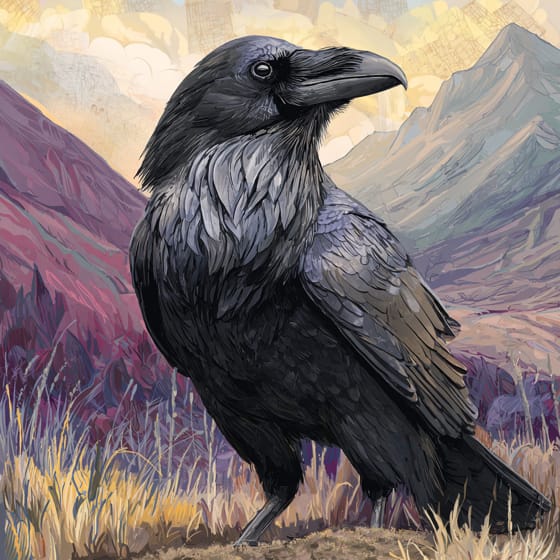
Corvus corax
Occasionally preys on eggs and young chicks.
Macrovipera lebetina
Predates on venomous snakes, a fearless hunter.
Feathered describes animals, primarily birds, possessing a covering of feathers.
Solitary animals live alone for most of their lives, only interacting with others for mating or parental care.
Aerial creatures spend a significant portion of their lives airborne, utilizing flight for various activities such as hunting, migration, or nesting.
Gliding animals move through the air by launching themselves and maintaining flight with specialized body structures, without flapping wings.

Grassland habitats are terrestrial biomes dominated by grasses and herbaceous plants, supporting a variety of grazing animals.

This habitat trait identifies species found in mountainous regions, characterized by high elevation, steep slopes, and varying climate zones.

This trait identifies organisms whose diet consists entirely or primarily of animal tissue.

Diurnal animals are primarily active during daylight hours, typically resting or sleeping at night.
No aliases listed yet.
Danger
2/5 · Low
Always watch birds from a distance and don't try to touch them.
The easiest way to identify Long-legged Buzzard is to use the Snappit nature identifier app.
50-66 cm
115-160 cm
0.8-1.9 kg
15-20 years
60 km/h
This bird of prey primarily eats small mammals and reptiles, hunting from the sky.
Mountain regions
Zoom in to split clusters and explore where this object has been snapped.
Recent snaps will appear here as new observations are added.
Take the discovery with you
Snap it with Snappit to identify it, learn what makes it special, and add the discovery to your collection.




.jpg&width=800)








