





Marsh Lousewort
Pedicularis palustris
Marsh Lousewort is a beautiful plant that grows in wet places like marshes. It has pretty pink and purple flowers that look like little bells, making it a lovely sight in nature.
Habitat: Wetlands
The Marsh Lousewort has vibrant purple-pink flowers clustered on tall stalks, each flower uniquely hooded. Its delicate, fern-like leaves form a feathery rosette at the base, making it stand out in damp, green landscapes.
Category
PlantsRarity
Common
Danger
1/5 · Very low
Snaps
Be the first to snap!
Its hooded flowers look like tiny elephant heads or bird beaks up close!
Its name "Lousewort" comes from an old belief that eating it caused lice in livestock!
Marsh Lousewort is a hemi-parasite, meaning it makes its own food but also steals from neighbors.
This plant is a great indicator of healthy, undrained wetland ecosystems!
Marsh Lousewort can steal water and nutrients from the roots of nearby plants, making it a clever semi-parasite to survive in poor soils.
Marsh Lousewort has special roots that allow it to thrive in waterlogged, acidic bog and fen habitats where many other plants cannot grow.
Marsh Lousewort has uniquely shaped, hooded flowers that guide specific insects, like bumblebees, directly to its pollen and nectar.
Festuca rubra
steals nutrients from its roots
Bombus terrestris
attracts with nectar and pollen
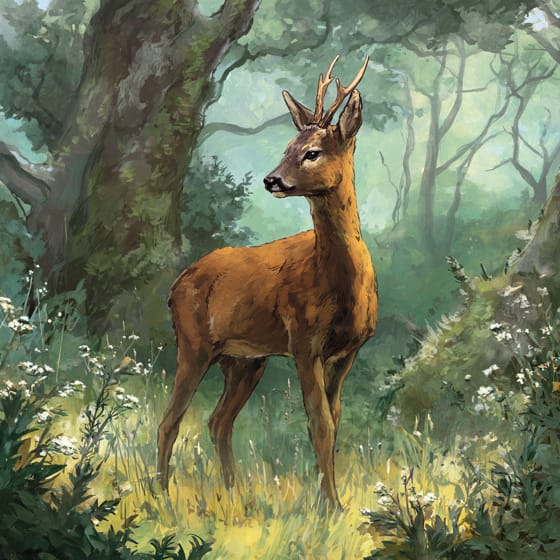
Capreolus capreolus
sometimes grazed upon in its habitat
Furry describes animals possessing a dense covering of soft hair or fur.
Bell-shaped flowers possess petals fused or arranged to form a cup-like or campanulate structure resembling a bell.
Flowering plants are any plants that produce flowers as part of their reproductive cycle.
Spring blooming plants produce their flowers during the spring season, often signifying the end of winter and the start of new growth.

Describes plants that are particularly attractive and beneficial to a wide range of pollinating organisms.

This habitat trait identifies species found in wetlands, which are areas of land saturated with water, either permanently or seasonally, including marshes, swamps, and bogs.

Describes a species whose presence and role have a disproportionately large effect on its environment.
No aliases listed yet.
Danger
1/5 · Very low
Always look but don't touch plants unless you know they are safe.
The easiest way to identify Marsh Lousewort is to use the Snappit nature identifier app.
10-60 cm
1-2.5 cm
Late spring to late summer
No
Mild
Biennial
Insect
Zoom in to split clusters and explore where this object has been snapped.
Recent snaps will appear here as new observations are added.
Take the discovery with you
Snap it with Snappit to identify it, learn what makes it special, and add the discovery to your collection.








.jpg&width=800)



_001.jpg&width=800)




