





Perennial Wooly Bean
strophostyles umbellata
The Perennial Wooly Bean is a fun plant with fuzzy pods that kids love to touch! It grows in fields and along roadsides, adding beauty to nature's canvas.
Habitat: Fields, roadsides, and open areas across North America.
The Perennial Wooly Bean is a slender, fuzzy-stemmed vine with small, trifoliate leaves. It has delicate, pea-like flowers that can range from pinkish-purple to reddish-brown. Its most unique feature is the elongated, densely hairy seed pods that give it its 'wooly' name.
Category
PlantsRarity
Common
Danger
0/5 · No known danger
Snaps
2
Its deep roots can tap water from far below, helping it survive dry spells!
Look closely! Its tiny flowers sometimes change color from pink to a reddish-brown as they age.
This plant is like nature's fertilizer, adding important nutrients back into the soil!
When its seed pods dry out, they often burst open with a loud 'pop' to spread seeds!
Perennial Wooly Bean has special root nodes that help it pull important nitrogen from the air into the soil.
Perennial Wooly Bean has tiny hairs on its seed pods that help protect the developing seeds from hungry insects.
Perennial Wooly Bean has a deep taproot that helps it find water deep in the soil during dry weather.
Rhizobium leguminosarum
Helps fix nitrogen in the soil.
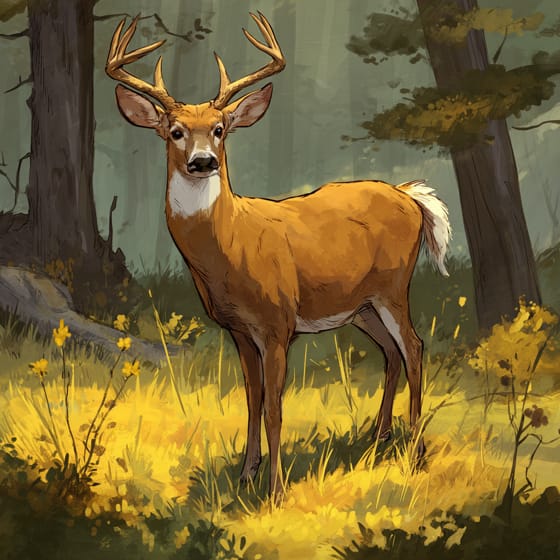
Odocoileus virginianus
Browses on its leaves and stems.
Apis mellifera
Visits its flowers for nectar.

Colinus virginianus
Feeds on its nutritious seeds.
Social animals live in organized groups, cooperating for survival benefits such as foraging, defense, and raising offspring.
Colorful describes organisms or objects displaying a wide range of bright and distinct colors.
Grassland habitats are terrestrial biomes dominated by grasses and herbaceous plants, supporting a variety of grazing animals.
This trait characterizes organisms whose diet consists entirely or primarily of plant material.

Describes organisms that transfer pollen, enabling the fertilization and reproduction of plants.
Danger
0/5 · No known danger
No special safety notes yet.
The easiest way to identify Perennial Wooly Bean is to use the Snappit nature identifier app.
30-100 cm
60-200 cm
1-1.5 cm
Summer-fall
No
None
Perennial
Zoom in to split clusters and explore where this object has been snapped.

Arkansas, US
You might spot Pear-Shaped Puffball and American Beautyberry.
View guide →

Georgia, US
You might spot Bay-Breasted Warbler and Eastern Diamondback Rattlesnake.
View guide →
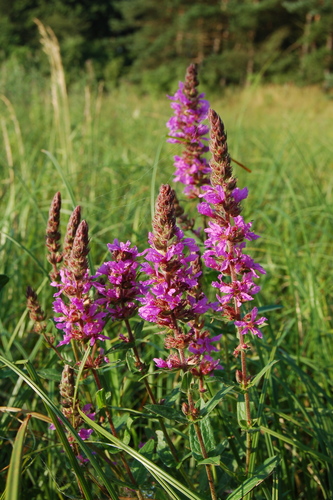
Virginia, US
You might spot Purple Loosestrife, Haircap Mosses, and Magnolias.
View guide →
Take the discovery with you
Snap it with Snappit to identify it, learn what makes it special, and add the discovery to your collection.









.jpg&width=800)



_001.jpg&width=800)




