





meadow buttercup
Ranunculus acris
Meadow buttercups are bright yellow flowers that grow in fields and meadows. They have shiny petals that look like little cups, and they bloom in the spring and summer, making the fields look cheerful!
Habitat: Grasslands
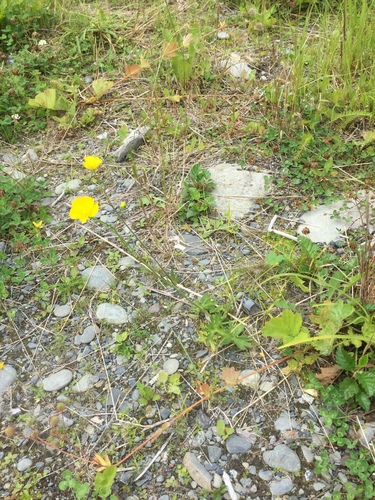
The meadow buttercup has bright, glossy yellow flowers, each with five distinct, overlapping petals. Its deeply lobed leaves form a basal rosette, and its stems are typically hairy. It stands out with its vibrant, waxy appearance in grassy areas.
Category
PlantsRarity
Common
Danger
2/5 · Low
Snaps
9
Each buttercup flower can produce many tiny, single-seeded fruits called achenes, spreading widely!
Holding a buttercup under your chin was a fun game to see if you "liked butter" when you were a kid!
Its genus name, Ranunculus, means "little frog" because many buttercup species like to grow near water.
The glossy petals of buttercups can reflect sunlight, making them glow almost like tiny mirrors!
Meadow buttercup has super glossy petals that reflect UV light, helping it attract busy pollinating insects.
Meadow buttercup can produce a bitter, mildly toxic chemical to protect itself from hungry animals.
Meadow buttercup has flexible stems that allow it to sway in the wind without breaking in open fields.
Apis mellifera
Collects nectar and pollen
Bombus pascuorum
Visits flowers for nectar
Eristalis tenax
Feeds on nectar
Arion lusitanicus
Grazes on leaves and stems
Flowering plants are any plants that produce flowers as part of their reproductive cycle.
Spring blooming plants produce their flowers during the spring season, often signifying the end of winter and the start of new growth.
Summer blooming plants produce their flowers during the summer season, often providing vibrant color when many other plants have finished.
Fragrant flowers emit a pleasant aroma, often to attract pollinators or for defense.

Colorful describes organisms or objects displaying a wide range of bright and distinct colors.

Grassland habitats are terrestrial biomes dominated by grasses and herbaceous plants, supporting a variety of grazing animals.

Describes plants that are particularly attractive and beneficial to a wide range of pollinating organisms.
No aliases listed yet.
Danger
2/5 · Low
Do not eat any flowers without asking an adult, as some can be harmful.
The easiest way to identify meadow buttercup is to use the Snappit nature identifier app.
30-70 cm
15-30 cm
1.5-2.5 cm
Late spring to early autumn
No
Mild
Perennial
Zoom in to split clusters and explore where this object has been snapped.
Jul 27, 2018
SunrisePhoto attribution
(c) Matt Bowser, some rights reserved (CC BY)
License: CC BY 4.0 ↗
Image may be shown cropped inside the card frame.

Massachusetts, US
You might spot Hemlock Woolly Adelgid, Eastern Newt, and Red Trillium.
View guide →

Québec, CA
You might spot Common Eastern Bumble Bee and Asian Lady Beetle.
View guide →

Alaska, US
You might spot Beluga, North American Porcupine, and Meadow Buttercup.
View guide →
.jpg)
Municipal District of Cobh, IE
You might spot Ring-Tailed Lemur, Giraffes, and Cheetahs.
View guide →

Pennsylvania, US
You might spot Eastern Newt, Ghost Pipe, and American Toad.
View guide →

Massachusetts, US
You might spot Painted Turtle, Duck, and White-Tailed Deer.
View guide →
Take the discovery with you
Snap it with Snappit to identify it, learn what makes it special, and add the discovery to your collection.








.jpg&width=800)


_001.jpg&width=800)




