





hardy tapioca
Manihot grahamii
Hardy tapioca is a special plant that can grow in tough places. It has big, green leaves and can produce yummy roots that people can eat. This plant is strong and can survive in different weather!
Habitat: Grasslands
The hardy tapioca is a tall, woody shrub with distinct large, hand-shaped leaves, often dark green above and lighter below. Its small, greenish-yellow flowers appear in clusters, sometimes with a reddish tint, contrasting with its robust stems.
Category
PlantsRarity
Common
Danger
1/5 · Very low
Snaps
Be the first to snap!
Careful! Parts of this plant must be cooked properly before eating!
Its amazing roots store so much food, they're like underground energy banks!
The unique shape of its leaves helps it catch sunlight like tiny solar panels!
This plant can grow in places so dry, many other plants just can't survive!
Hardy tapioca can send its robust roots deep underground to find water and nutrients in dry soils.
Hardy tapioca stores large amounts of starchy food in its roots, helping it survive long periods without much rain.
Hardy tapioca produces special chemicals that help protect its leaves from hungry insects and animals.
Erinnyis ello
Larvae feed on Manihot leaves.
Apis mellifera
Bees visit its small flowers for nectar.
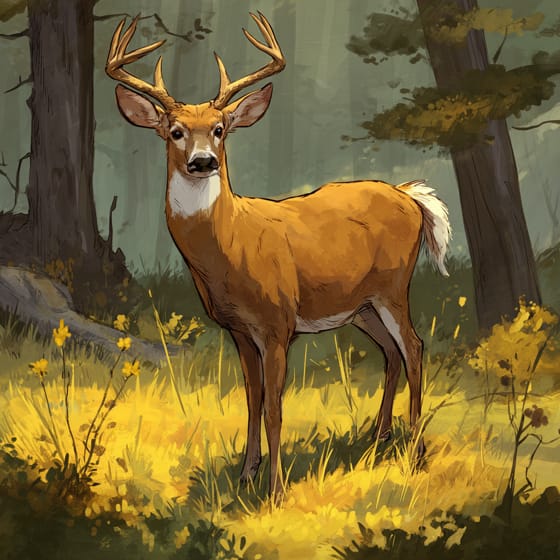
Odocoileus virginianus
Deer browse on the leaves and young shoots.
Flowering plants are any plants that produce flowers as part of their reproductive cycle.
Shade tolerant plants are adapted to grow and thrive in areas with low light levels, requiring less direct sunlight.
Broadleaf trees are angiosperms characterized by flat, wide leaves that are typically shed annually in temperate climates.
Drought-tolerant plants can survive and flourish in conditions with limited water availability.

Edible plants are those parts of a plant that are considered safe for human consumption.

Grassland habitats are terrestrial biomes dominated by grasses and herbaceous plants, supporting a variety of grazing animals.

Rapid growing plants exhibit accelerated growth rates, quickly increasing in size and biomass within a short period.
No aliases listed yet.
Danger
1/5 · Very low
Always ask an adult before touching or eating any plants.
The easiest way to identify hardy tapioca is to use the Snappit nature identifier app.
200-500 cm
150-400 cm
0.5-1 cm
Summer to Fall
Yes
Moderate
Perennial
Zoom in to split clusters and explore where this object has been snapped.
Recent snaps will appear here as new observations are added.
Take the discovery with you
Snap it with Snappit to identify it, learn what makes it special, and add the discovery to your collection.








.jpg&width=800)


_001.jpg&width=800)


