

Mediterranean Lineseed
bellardia trixago
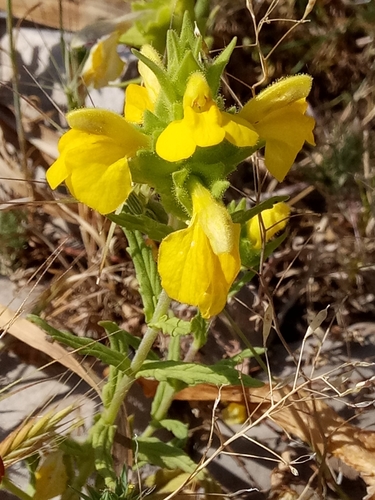
The Mediterranean Lineseed (Bellardia trixago) is a striking annual wildflower belonging to the broomrape family, Orobanchaceae. Native to the Mediterranean basin but widely introduced elsewhere, this clever plant is a hemiparasite. While it features bright green leaves capable of photosynthesis, it also extracts vital water and nutrients from the roots of neighboring plants, particularly grasses. This survival strategy allows it to thrive in dry, nutrient-poor grasslands where other plants might struggle. During late spring, it transforms open fields into vibrant spectacles, producing dense, sticky spikes of beautiful, two-lipped flowers that attract a variety of native pollinators, making it a delightful find for nature enthusiasts.
Habitat: Found in open grasslands, pastures, roadsides, and disturbed areas, particularly in sandy soils within Mediterranean climates.
This erect, sticky-hairy annual plant typically grows between 15 and 70 centimeters tall, featuring sturdy, square stems lined with opposite, deeply-toothed lanceolate leaves. The defining feature is its dense terminal flower spike, which showcases distinctive two-lipped flowers. The upper lip forms a hood-like structure that is usually white, pink, or yellow, while the lower lip is broader, deeply three-lobed, and provides a contrasting landing pad for visiting bees. The entire plant is covered in glandular hairs that give it a noticeably sticky feel to the touch.
Category
PlantsRarity
Common
Danger
1/5 · Very low
Snaps
4
Despite being a parasite that steals from neighboring plants, Mediterranean Lineseed still maintains fully functional green leaves and conducts its own photosynthesis.
Its scientific name trixago historically refers to a resemblance to certain germander plants used in ancient herbal remedies.
The glandular hairs on this plant make it sticky to the touch, which helps trap crawling insects that might try to steal nectar without pollinating the flowers.
Utilizes specialized structures called haustoria to tap into host roots, absorbing water and mineral nutrients.
Glandular hairs cover the plant, acting as a physical and chemical barrier against herbivorous insects.
Displays variable flower colors from yellow to pinkish-white, maximizing attraction for diverse pollinators.
As a hemiparasite, it manufactures sugars through photosynthesis while extracting water and mineral nutrients from host grass roots.
Age differences: Seedlings rely on their own cotyledon reserves and initial photosynthesis before establishing parasitic connections.
Bromus madritensis
Taps into the root system of this common annual grass to extract nutrients and water.
Bombus terrestris
Serves as a primary pollinator, visiting the two-lipped flowers for nectar.
Avena fatua
Competes for space, sunlight, and soil nutrients in open sandy grasslands.
No trait badges are assigned for this object yet.
No aliases listed yet.
Collections for this object will appear here as more themes are added.
Danger
1/5 · Very low
No special safety notes yet.
Start with the whole plant, then compare leaf arrangement, leaf edges, stems and any flowers or fruit. Opposite leaves grow in pairs; alternate leaves come one at a time along the stem. These details tell you far more together than a single green leaf does. Plant Identifier: upload a photo and compare the visible details.
15-70 cm
1 years
As a hemiparasite, it manufactures sugars through photosynthesis while extracting water and mineral nutrients from host grass roots.
Found in open grasslands, pastures, roadsides, and disturbed areas, particularly in sandy soils within Mediterranean climates.
Foraging
Zoom in to split clusters and explore where this object has been snapped.

California, US
You might spot Acorn Woodpecker and Western Fence Lizard.
View guide →

California, US
You might spot Monarch, Bee, and Anise Swallowtail.
View guide →
California, US
You might spot Warrior's Plume, Western Leatherwood, and White Globe Lily.
View guide →

California, US
You might spot Gray Buckeye and California Buckeye.
View guide →
Take the discovery with you
Snap it with Snappit to identify it, learn what makes it special, and add the discovery to your collection.