





Mertens' Water Monitor
Varanus mertensi
Mertens' Water Monitor is a big lizard that loves to swim! It has a long tail and can be found near water. These lizards are great at catching fish and other tasty treats in the water.
Habitat: Wetlands
The Mertens' Water Monitor has a dark grey to blackish-brown body with numerous yellow or cream spots that often form ocelli. Its underside is pale yellow. It features a distinctive flattened snout with nostrils positioned on top, aiding its aquatic lifestyle.
Category
ReptilesRarity
Common
Danger
2/5 · Low
Snaps
Be the first to snap!
Baby monitors have much brighter patterns than adults, helping them blend into their surroundings!
These lizards can walk along the bottom of rivers and lakes, exploring silently!
They spend most of their entire lives splashing, hunting, and relaxing in freshwater!
They use their forked tongue to 'smell' chemicals in water, finding hidden snacks!
Mertens' Water Monitor has clear vision both in air and water, allowing them to spot prey above and below the surface.
Mertens' Water Monitor can powerfully propel itself with a strong, laterally flattened tail that helps them chase fish.
Mertens' Water Monitor can breathe with just its nostrils above water because they are placed high on its flattened snout.
A speedy swimmer that eats fish, frogs, and other small aquatic creatures in northern Australia's waterways.
Age differences: Juveniles mostly eat insects and very small aquatic prey, while adults consume larger fish and frogs.
Litoria caerulea
A common frog species preyed upon.
Melanotaenia splendida
A widespread fish often hunted.
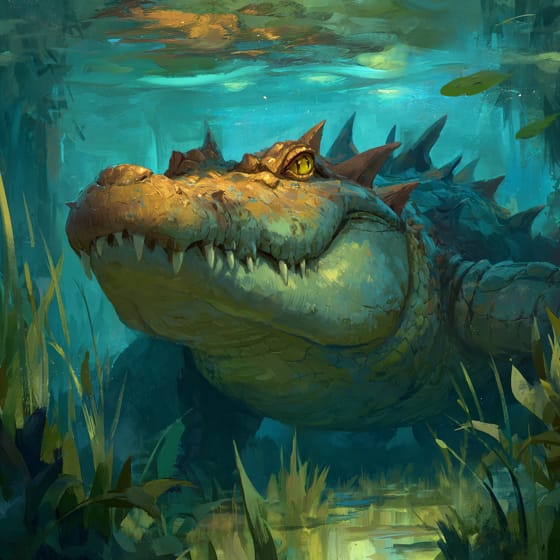
Crocodylus porosus
Larger crocodiles can prey on monitors.
Characterized by having toes connected by a membrane, typically aiding in swimming.
Solitary animals live alone for most of their lives, only interacting with others for mating or parental care.
Piscivorous organisms are animals that primarily subsist on a diet of fish.
An ambush predator hunts by patiently waiting and concealing itself, then launching a sudden attack when unsuspecting prey comes within range.

This habitat trait identifies species found in wetlands, which are areas of land saturated with water, either permanently or seasonally, including marshes, swamps, and bogs.

This trait identifies organisms whose diet consists entirely or primarily of animal tissue.

Diurnal animals are primarily active during daylight hours, typically resting or sleeping at night.

Giant describes organisms or objects of significantly larger size than average for their species or type.
Danger
2/5 · Low
Always watch from a distance and never try to touch wild lizards.
The easiest way to identify Mertens' Water Monitor is to use the Snappit nature identifier app.
80-130 cm
2-5 kg
10-15 years
15 km/h
A speedy swimmer that eats fish, frogs, and other small aquatic creatures in northern Australia's waterways.
15 km/h
Wetlands
Zoom in to split clusters and explore where this object has been snapped.
Recent snaps will appear here as new observations are added.
Take the discovery with you
Snap it with Snappit to identify it, learn what makes it special, and add the discovery to your collection.















