

Metallic Harpalus
harpalus affinis
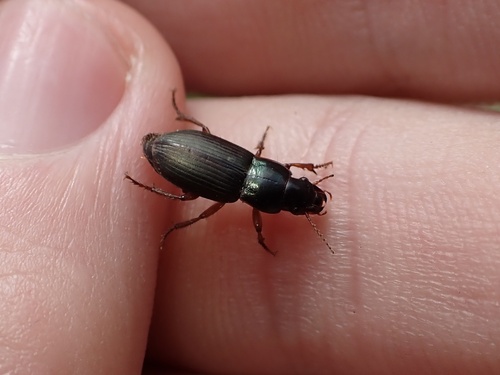
The Metallic Harpalus (Harpalus affinis) is an eye-catching ground beetle celebrated for its dazzling, iridescent coloration. Widely distributed across Europe and North America, this active insect is a familiar sight in agricultural fields, meadows, and backyard gardens. Unlike many of its strictly carnivorous relatives in the carabid family, this beetle is a beneficial omnivore that plays a dual role in ecosystems. It serves as both a seed predator, helping suppress invasive agricultural weeds, and a voracious hunter of small insect pests like aphids. Gardeners and farmers alike welcome the Metallic Harpalus because of its valuable biocontrol services. Observing one of these beetles darting rapidly across the soil on a sunny day is a true delight, as their metallic bodies glint beautifully in the light.
Habitat: Typically found in open habitats with sparse vegetation, such as agricultural fields, pastures, gardens, and waste grounds.
Measuring between 0.8 and 1.2 centimeters in length, this beetle features an oval, slightly flattened body shape. The most distinctive identifier is the metallic luster on its pronotum and elytra, which can range from brilliant emerald green to coppery-bronze or deep blue, particularly visible in direct sunlight. Its legs are typically dark brown to black, and its antennae are yellowish-red at the base.
Category
InsectsRarity
Common
Danger
1/5 · Very low
Snaps
Be the first to snap!
Despite being ground beetles, they are capable of flight and are sometimes drawn to artificial lights at night.
Their metallic coloration is structural, created by microscopic layers in their exoskeleton that refract light.
They are highly valued in agriculture as weed seed predators, consuming thousands of weed seeds per square meter annually.
Equipped with powerful mandibles, it can easily crush and consume tough weed seeds, acting as an effective natural weed control agent.
Active during both day and night, it uses polarization patterns of sunlight to navigate open, sun-baked terrain with high efficiency.
When threatened by predators, it can secrete noxious chemical compounds from its pygidial glands to deter attackers.
A flexible feeder that consumes both small invertebrates and weed seeds depending on seasonal availability.
Age differences: Larvae are primarily carnivorous ground-dwellers, while adults consume a mix of seeds and insects.
Aphis fabae
The Metallic Harpalus hunts these crop pests, providing valuable biological control.

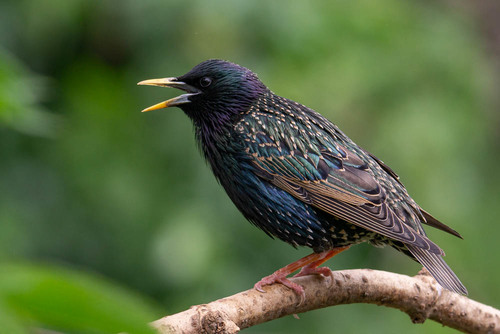
Sturnus vulgaris
This ground-foraging bird frequently preys upon adult beetles found in open fields.
Pterostichus melanarius
Both ground beetle species compete for the same terrestrial insect prey and shelter sites.
No trait badges are assigned for this object yet.
No aliases listed yet.
Collections for this object will appear here as more themes are added.
Danger
1/5 · Very low
No special safety notes yet.
Look for hard wing covers meeting in a line down the back, then compare the antennae, body shape, legs and markings. Metallic colors shift a lot with lighting. Beetle Identifier: upload a photo and compare the visible details.
A flexible feeder that consumes both small invertebrates and weed seeds depending on seasonal availability.
Typically found in open habitats with sparse vegetation, such as agricultural fields, pastures, gardens, and waste grounds.
Foraging
Zoom in to split clusters and explore where this object has been snapped.
Recent snaps will appear here as new observations are added.
Take the discovery with you
Snap it with Snappit to identify it, learn what makes it special, and add the discovery to your collection.