





Northeastern Pine Sawyer
Monochamus notatus
The Northeastern Pine Sawyer is a special beetle that loves to live in pine trees. It has a long body and beautiful patterns that help it blend in with the bark.
Habitat: Forests
The Northeastern Pine Sawyer is a large, sturdy beetle, typically mottled grey, brown, and black, providing excellent camouflage against tree bark. It has unusually long antennae, often two to three times its body length, making it visually distinct from most other beetles. Its strong mandibles are also noticeable.
Category
InsectsRarity
Common
Danger
1/5 · Very low
Snaps
Be the first to snap!
A single female can lay over 100 eggs, carefully placing them in cracks of pine tree bark!
If disturbed, adult pine sawyers can make a surprising squeaking sound to scare you away!
These beetles are master recyclers, helping dead pine trees decompose much faster in nature!
Wow! Their larvae can chew wood so loudly you might hear them munching inside a tree!
Northeastern Pine Sawyer has a mottled grey and brown pattern that helps them blend perfectly with tree bark, avoiding detection by predators.
Northeastern Pine Sawyer has strong mandibles that help them chew through bark to lay eggs and for adults to feed on tender bark.
Northeastern Pine Sawyer larvae can bore deep tunnels into wood because of their powerful mouthparts that help them feed and develop protected.
Larvae eat dead pine wood; adults munch on bark and sap of pine trees.
Age differences: Larvae bore into and consume dead pine wood; adults feed on the bark and sap of live pine trees.
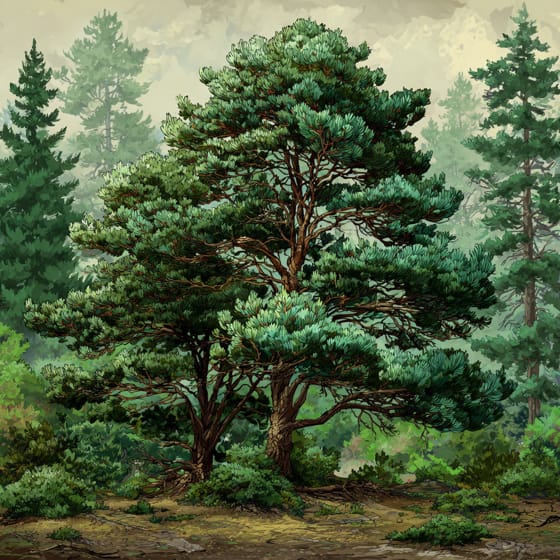
Pinus strobus
Larvae bore and feed within its dead wood.
Picoides arcticus
Feeds on larvae found deep in wood.
Spathius brachyurus
Lays eggs inside sawyer beetle larvae.
Solitary animals live alone for most of their lives, only interacting with others for mating or parental care.
Camouflaged describes organisms that possess coloring or patterns that allow them to blend into their environment.
Colorful describes organisms or objects displaying a wide range of bright and distinct colors.
This trait characterizes organisms whose diet consists entirely or primarily of plant material.

Describes organisms that break down dead organic material, recycling nutrients back into the ecosystem.

Forest habitats are terrestrial environments dominated by dense tree cover, supporting a high diversity of plant and animal life.

Describes a species whose presence and role have a disproportionately large effect on its environment.
No aliases listed yet.
Danger
1/5 · Very low
Be careful not to touch insects you find, as some can bite or sting.
The easiest way to identify Northeastern Pine Sawyer is to use the Snappit nature identifier app.
40-70 mm
20-35 mm
730-1200 days
7 km/h
Larvae eat dead pine wood; adults munch on bark and sap of pine trees.
Forests
Foraging
Zoom in to split clusters and explore where this object has been snapped.
Recent snaps will appear here as new observations are added.
Take the discovery with you
Snap it with Snappit to identify it, learn what makes it special, and add the discovery to your collection.








.jpg&width=800)

