





Northern Bedstraw
Galium boreale
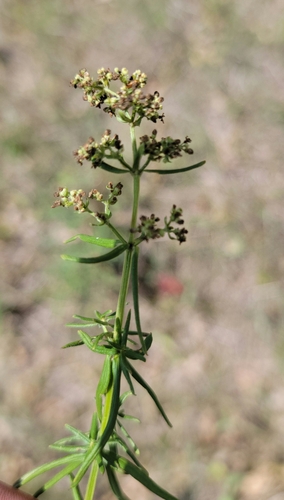
Northern Bedstraw is a small plant with tiny, star-like flowers. It grows in cool places like forests and fields, and its leaves are whorled around the stem, making it look very special!
Habitat: Forests
The Northern Bedstraw has upright, square stems with narrow, lance-shaped leaves arranged in whorls of four. It produces numerous tiny, white, four-petaled flowers clustered at the top of the stems, creating a delicate, airy appearance.
Category
PlantsRarity
Common
Danger
1/5 · Very low
Snaps
6
Its family name, 'Bedstraw', comes from people once stuffing mattresses with soft, dried relatives of this plant!
Its tiny seeds have hooks, making them expert hitchhikers on animal fur or clothing!
The genus name 'Galium' comes from Greek for milk, as some relatives were used to curdle milk!
The roots of this plant were once used by some cultures to make a natural red dye!
Northern Bedstraw has tiny hooks on its seeds that cling to animals, helping it spread far and wide.
This plant spreads using hidden underground roots (rhizomes) to form dense patches and find new resources.
Apis mellifera
Visits flowers to collect nectar and pollen.
Hyles gallii
Its caterpillars feed on the leaves of this plant.
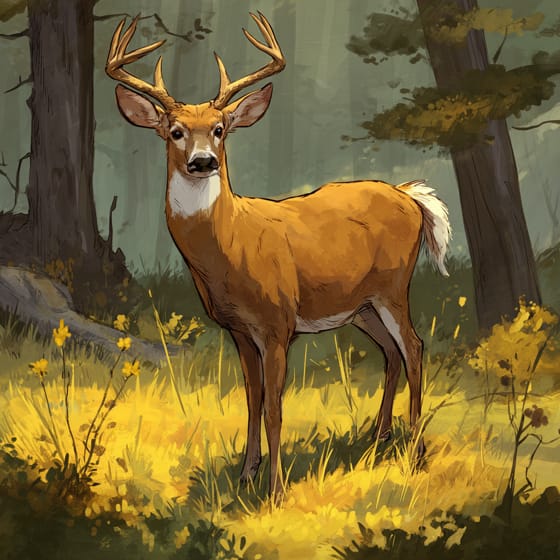
Odocoileus virginianus
Deer browse on its stems and leaves.

Bombus impatiens
Helps spread pollen while foraging for nectar.
Furry describes animals possessing a dense covering of soft hair or fur.
Flowering plants are any plants that produce flowers as part of their reproductive cycle.
Shade tolerant plants are adapted to grow and thrive in areas with low light levels, requiring less direct sunlight.
This human use trait indicates species from which natural dyes can be extracted and used to color textiles, food, or other materials.

Medicinal plants possess chemical compounds that can be used for therapeutic purposes to treat illnesses or maintain health.

Forest habitats are terrestrial environments dominated by dense tree cover, supporting a high diversity of plant and animal life.
No aliases listed yet.
Danger
1/5 · Very low
Always look but don't touch plants unless you're with an adult who knows they're safe.
The easiest way to identify Northern Bedstraw is to use the Snappit nature identifier app.
30-90 cm
15-30 cm
0.3-0.5 cm
Summer
Yes
None
Perennial
Zoom in to split clusters and explore where this object has been snapped.
Jul 2, 2023
Canoe Landing Prairie State Natural AreaPhoto attribution
(c) aarongunnar, some rights reserved (CC BY)
License: CC BY 4.0 ↗
Image may be shown cropped inside the card frame.

Alaska, US
You might spot Sandhill Crane, Fireweed, and Prickly Wild Rose.
View guide →

Alaska, US
You might spot Forest Bumble Bee and Alaskan Fritillary.
View guide →

Wisconsin, US
You might spot Sundial Lupine, Aurora Damsel, and Lancet Clubtail.
View guide →

Illinois, US
You might spot Common Eastern Bumble Bee and Brown-Belted Bumble Bee.
View guide →

Montana, US
You might spot Baker's Mariposa Lily, Yellow Beardtongue, and Elk.
View guide →
.jpg)
South Dakota, US
You might spot Leopard Frog, Red-Winged Blackbird, and Dame's Rocket.
View guide →
Take the discovery with you
Snap it with Snappit to identify it, learn what makes it special, and add the discovery to your collection.







.jpg&width=800)



_001.jpg&width=800)



