





great blue lobelia
Lobelia siphilitica
The great blue lobelia is a beautiful flower with bright blue petals. It grows tall and loves to bloom in late summer, making gardens look colorful and cheerful.
Habitat: Wetlands
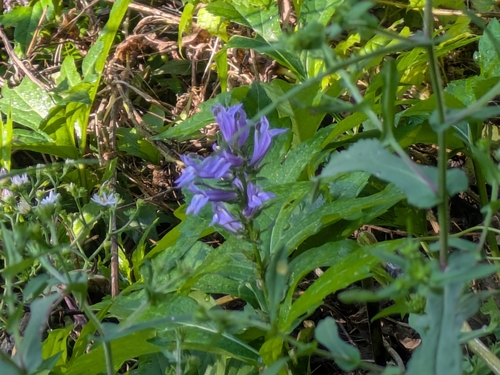
The great blue lobelia has striking, deep blue-purple flowers arranged in tall, dense spikes. Each blossom is tubular with two distinct lips, and its green, lance-shaped leaves are often toothed, creating a vibrant contrast.
Category
PlantsRarity
Common
Danger
1/5 · Very low
Snaps
11
Its scientific name, 'siphilitica', hints at its past use in traditional medicine!
Native Americans once used this plant to help treat many different ailments.
Sometimes, hummingbirds will drink nectar from its blue flowers, not just red ones!
The tiny seeds of this lobelia are so small, a single plant can make thousands!
Great blue lobelia can grow in waterlogged soil because its roots are adapted to low oxygen environments, helping it survive in wetlands.
This plant has a unique flower shape that guides long-tongued bees to its nectar, ensuring efficient pollination and seed production.
Great blue lobelia produces special compounds that can deter herbivores from eating it, protecting its leaves and flowers.
Flowering plants are any plants that produce flowers as part of their reproductive cycle.
Cluster flowers are inflorescences where individual flowers are arranged closely together on a common stem.
Summer blooming plants produce their flowers during the summer season, often providing vibrant color when many other plants have finished.
Fragrant flowers emit a pleasant aroma, often to attract pollinators or for defense.

Colorful describes organisms or objects displaying a wide range of bright and distinct colors.

Describes plants that are particularly attractive and beneficial to a wide range of pollinating organisms.

This habitat trait identifies species found in wetlands, which are areas of land saturated with water, either permanently or seasonally, including marshes, swamps, and bogs.
No aliases listed yet.
Danger
1/5 · Very low
Always look but don't touch flowers without asking an adult first.
The easiest way to identify great blue lobelia is to use the Snappit nature identifier app.
30-120 cm
30-60 cm
2-3 cm
Late summer to fall
No
Moderate
Perennial
Zoom in to split clusters and explore where this object has been snapped.
Sep 9, 2025
Bixby State PreservePhoto attribution
(c) Nicholas Stockmaster, some rights reserved (CC BY)
License: CC BY 4.0 ↗
Image may be shown cropped inside the card frame.
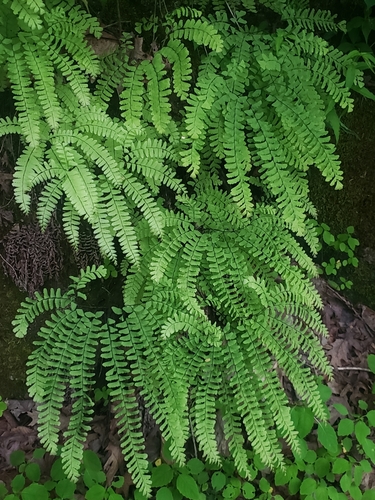
Iowa, US
You might spot Northern Maidenhair Fern and Wood Nettle.
View guide →

Michigan, US
You might spot Eastern Box Turtle, Autumn Olive, and Common Watersnake.
View guide →

Michigan, US
You might spot Bald Eagle, American White Pelican, and Painted Turtle.
View guide →

Michigan, US
You might spot Common Merganser, Tansy, and American Herring Gull.
View guide →

Kentucky, US
You might spot Large White Trillium and Sharp-Lobed Hepatica.
View guide →

Indiana, US
You might spot Amur Honeysuckle, Sycamore, and Common Pawpaw.
View guide →
Take the discovery with you
Snap it with Snappit to identify it, learn what makes it special, and add the discovery to your collection.








.jpg&width=800)


_001.jpg&width=800)




