




northern coralroot
Corallorhiza trifida
Northern coralroot is a special plant that doesn't have green leaves! It grows in shady forests and gets its food from the ground instead of sunlight. This makes it very unique and interesting!
Habitat: Forests
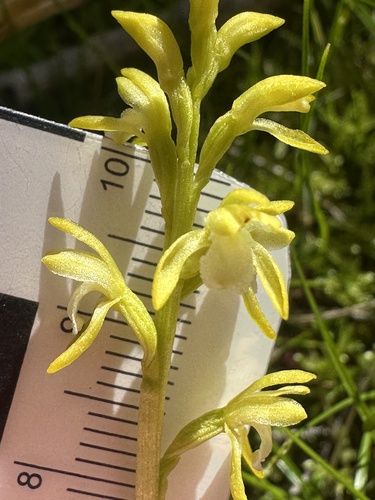
The northern coralroot has a slender, erect stem that is typically pale yellowish-green to purplish-brown, lacking true green leaves. It produces a spike of small, inconspicuous flowers, often with whitish petals and a purplish-striped lower lip, making it distinct from green plants.
Category
PlantsRarity
Rare
Danger
1/5 · Very low
Snaps
2
Instead of typical leaves, it often has tiny, scale-like growths on its stem!
It's sometimes called a 'ghost orchid' because it completely lacks green leaves!
Its seeds are as fine as dust, carried by the wind like tiny spores!
This plant can live underground for years before a single flower appears!
northern coralroot has a special bond with fungi, which give it all the food it needs from the soil.
northern coralroot can spend years hidden underground, only sending up flowers when conditions are just right.
northern coralroot can grow without any green leaves because it doesn't use sunlight for food.
northern coralroot has dense, branching roots that store energy for its unusual lifestyle.
Tomentella sublilacina
Provides essential nutrients to the non-photosynthetic orchid.
Sciara coprophila
Visits the small flowers, helping transfer pollen.
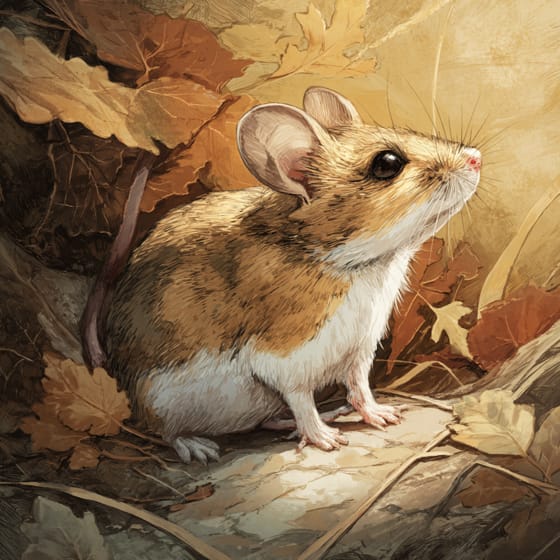
Peromyscus maniculatus
Forages on forest floor, potentially consuming seeds.
This trait describes a symbiotic relationship between a fungus and the roots of a plant, benefiting both organisms.
Flowering plants are any plants that produce flowers as part of their reproductive cycle.
Shade tolerant plants are adapted to grow and thrive in areas with low light levels, requiring less direct sunlight.
Spring blooming plants produce their flowers during the spring season, often signifying the end of winter and the start of new growth.

Describes a relationship between two different species where they live in close association, often benefiting one or both.

Describes organisms that break down dead organic material, recycling nutrients back into the ecosystem.

Forest habitats are terrestrial environments dominated by dense tree cover, supporting a high diversity of plant and animal life.

Endangered status indicates a species is at a very high risk of extinction in the wild in the near future.
No aliases listed yet.
Danger
1/5 · Very low
Do not touch or pick plants without asking an adult first.
The easiest way to identify northern coralroot is to use the Snappit nature identifier app.
10-40 cm
2-5 cm
0.5-1.5 cm
Spring to summer
No
None
Perennial
Zoom in to split clusters and explore where this object has been snapped.
May 11, 2026
CheshamPhoto attribution
(c) Jaime McGuigan, some rights reserved (CC BY)
License: CC BY 4.0 ↗
Image may be shown cropped inside the card frame.

New Hampshire, US
You might spot Eastern Red-Backed Salamander and Eastern Newt.
View guide →

Alaska, US
You might spot Moose, Fly Agaric, and Bald Eagle.
View guide →

New Hampshire, US
You might spot Eastern Red-Backed Salamander, Eastern Newt, and Wood Frog.
View guide →
Take the discovery with you
Snap it with Snappit to identify it, learn what makes it special, and add the discovery to your collection.








.jpg&width=800)



_001.jpg&width=800)



