





Northern Harrier
Circus hudsonius
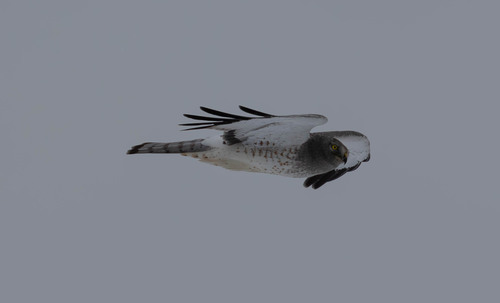
The Northern Harrier is a graceful bird of prey that flies low over fields and marshes. With its long wings and a distinctive white patch on its tail, it hunts for small animals like mice and birds.
Habitat: Wetlands
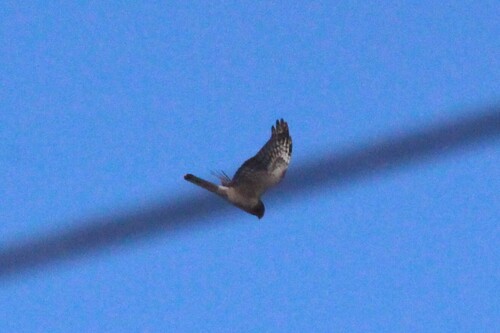
The Northern Harrier has a distinct owl-like facial disk and a prominent white patch on its rump, visible in flight. Males are pale gray above with white undersides, while females are streaky brown with a buff underside.
Category
BirdsRarity
Common
Danger
2/5 · Low
Snaps
26
A bright white patch above its tail helps identify them in flight!
Males hunt for multiple females, sometimes feeding two or three nests at once!
Their nests are built right on the ground, cleverly hidden in dense marsh plants.
They often 'kite' into the wind, hovering almost perfectly still while hunting.
Northern Harrier can locate prey hidden under vegetation by sound alone, using its unique owl-like facial disk.
Northern Harrier has a distinctive low, rocking flight that helps them surprise small mammals and birds in tall grasses.
A swift hunter, the Northern Harrier mostly eats small mammals and birds they snatch from the ground.
Microtus pennsylvanicus
Main food source in grasslands.
Sorex cinereus
Common prey in dense vegetation.
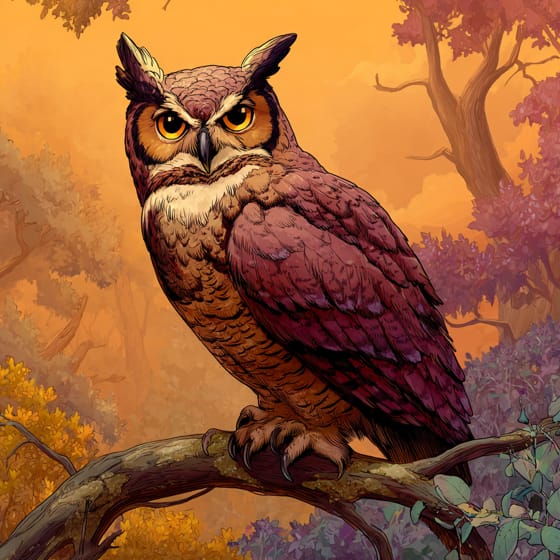
Bubo virginianus
Preys on harrier nestlings and adults.
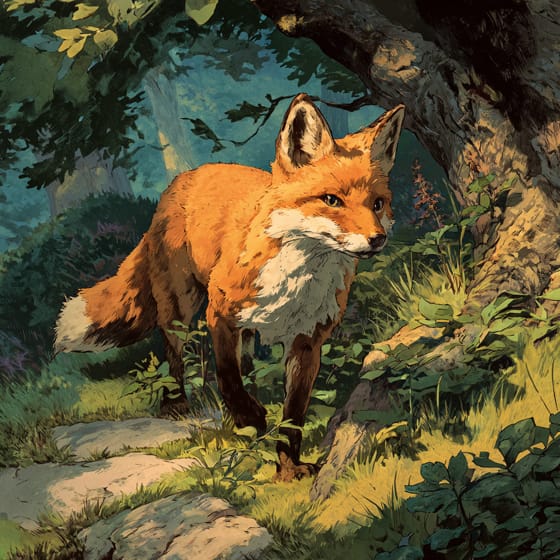
Vulpes vulpes
Raids nests for eggs and young.
Feathered describes animals, primarily birds, possessing a covering of feathers.
Solitary animals live alone for most of their lives, only interacting with others for mating or parental care.
An ambush predator hunts by patiently waiting and concealing itself, then launching a sudden attack when unsuspecting prey comes within range.
This habitat trait identifies species found in wetlands, which are areas of land saturated with water, either permanently or seasonally, including marshes, swamps, and bogs.

This trait identifies organisms whose diet consists entirely or primarily of animal tissue.

Diurnal animals are primarily active during daylight hours, typically resting or sleeping at night.

Describes a species whose presence and role have a disproportionately large effect on its environment.

Migratory animals undertake seasonal movements from one region to another, typically in response to changes in climate or food availability.
Danger
2/5 · Low
Always watch birds from a distance and do not disturb their nests.
The easiest way to identify Northern Harrier is to use the Snappit nature identifier app.
43-50 cm
99-120 cm
0.3-0.6 kg
6-16 years
50 km/h
A swift hunter, the Northern Harrier mostly eats small mammals and birds they snatch from the ground.
Wetlands
Zoom in to split clusters and explore where this object has been snapped.
Apr 22, 2026
Gallup Commercial Historic DistrictPhoto attribution
(c) William Harmon, some rights reserved (CC BY)
License: CC BY 4.0 ↗
Image may be shown cropped inside the card frame.
Sep 13, 2025
SunrisePhoto attribution
(c) Casey H. Richart, some rights reserved (CC BY)
License: CC BY 4.0 ↗
Image may be shown cropped inside the card frame.
Jan 11, 2025
Fincastle Historic DistrictPhoto attribution
(c) kirk gardner, some rights reserved (CC BY)
License: CC BY 4.0 ↗
Image may be shown cropped inside the card frame.

California, US
You might spot Largemouth Bass and Birdcage Evening Primrose.
View guide →

California, US
You might spot Northern Harrier and Black-Tailed Jackrabbit.
View guide →

Oregon, US
You might spot Belding's Ground Squirrel and Yellow-Headed Blackbird.
View guide →

Minnesota, US
You might spot Rue Anemone, Bloodroot, and White-Tailed Deer.
View guide →

New Mexico, US
You might spot Sunflower, Sideoats Grama, and Tree Cholla.
View guide →
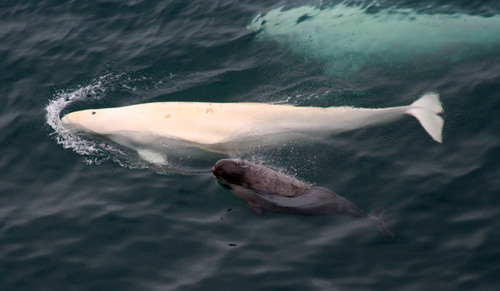
Alaska, US
You might spot Beluga, North American Porcupine, and Meadow Buttercup.
View guide →
Take the discovery with you
Snap it with Snappit to identify it, learn what makes it special, and add the discovery to your collection.






.jpg&width=800)






