Norway Maple
Acer platanoides
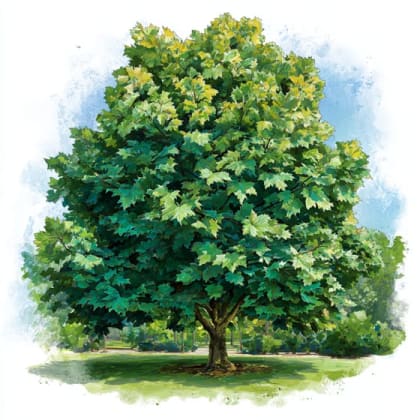
The Norway Maple has wide leaves and can grow very tall. It's a popular tree in parks and streets because of its shade!
Habitat: Urban areas and parks
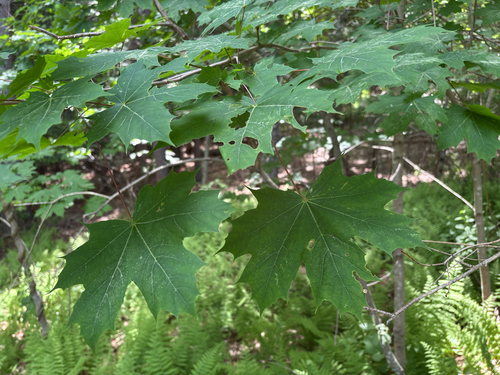
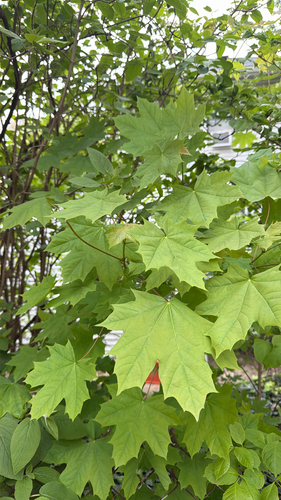
The Norway Maple has large, five-lobed leaves with pointed teeth, often a deep green that turns brilliant yellow in autumn. Its bark is smooth and gray when young, becoming furrowed with age, and it produces distinctive helicopter-like seeds.
Category
TreesRarity
Common
Danger
1/5 · Very low
Snaps
28
Break a leaf stem and you'll see milky white sap, unlike most other maple trees!
Despite its name, it's widely planted around the world, far beyond Norway's borders!
Its seeds are often called 'helicopters' because they spin as they fall to the ground.
The wood of some maples can be used to make musical instruments, like violins!
Norway Maple can release chemicals from its roots that inhibit the growth of nearby competing plants, helping it dominate habitats.
Norway Maple has dense foliage that creates heavy shade, making it difficult for many other plant species to grow underneath its canopy.
Norway Maple has milky white sap that oozes when a leaf stalk is broken, which helps deter some herbivores and insect pests.
Drepanosiphum platanoidis
Feeds on the sap from leaves.
Laccaria bicolor
Forms beneficial root associations for nutrient uptake.
Apis mellifera
Visits early spring flowers for nectar and pollen.
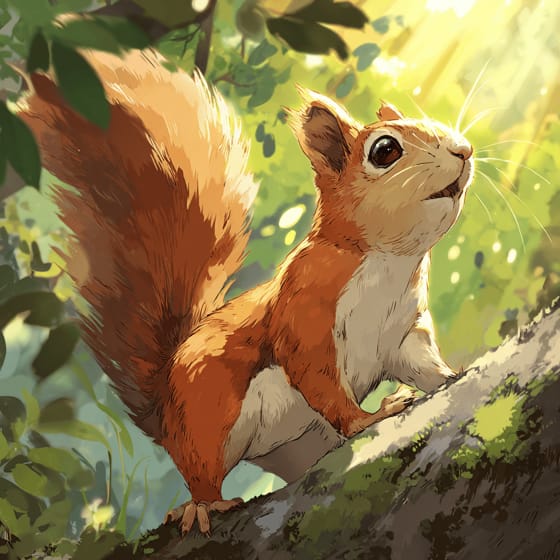
Sciurus carolinensis
Builds nests in branches and uses tree for refuge.
Anoplophora glabripennis
Larvae bore into wood, causing severe damage.
Deciduous plants periodically shed all their leaves, typically during autumn or dry seasons.
Shade tolerant plants are adapted to grow and thrive in areas with low light levels, requiring less direct sunlight.
Broadleaf trees are angiosperms characterized by flat, wide leaves that are typically shed annually in temperate climates.
Fall color refers to the seasonal change in foliage pigmentation, primarily in deciduous plants, displaying vibrant hues.

This habitat trait indicates species that can coexist with humans in urban and suburban environments, utilizing man-made structures and green spaces.

Invasive species are non-native organisms that cause harm to the environment, economy, or human health.
Danger
1/5 · Very low
Do not pick or eat anything you find. Some plants and mushrooms can be harmful.
The easiest way to identify Norway Maple is to use the Snappit nature identifier app.
20-30 m
10-15 m
No
50-100 cm
80-150 years
Urban areas and parks
Winged samara
Zoom in to split clusters and explore where this object has been snapped.
Jun 7, 2026
Jewell Town DistrictPhoto attribution
(c) Sarah Courchesne, some rights reserved (CC BY)
License: CC BY 4.0 ↗
Image may be shown cropped inside the card frame.
May 9, 2026
Leila ArboretumPhoto attribution
(c) Aidan, some rights reserved (CC BY)
License: CC BY 4.0 ↗
Image may be shown cropped inside the card frame.

Rhode Island, US
You might spot Spotted Lanternfly, Duck, and American Robin.
View guide →

Rhode Island, US
You might spot Spotted Lanternfly, Duck, and American Robin.
View guide →

Maine, US
You might spot American Bullfrog and Three-Toothed Cinquefoil.
View guide →

New Jersey, US
You might spot White-Tailed Deer and Eastern Gray Squirrel.
View guide →

Massachusetts, US
You might spot Common Eastern Bumble Bee and Asian Lady Beetle.
View guide →

Rhode Island, US
You might spot Spotted Lanternfly, American Robin, and Duck.
View guide →
Take the discovery with you
Snap it with Snappit to identify it, learn what makes it special, and add the discovery to your collection.