

Omnivorous Looper
sabulodes aegrotata
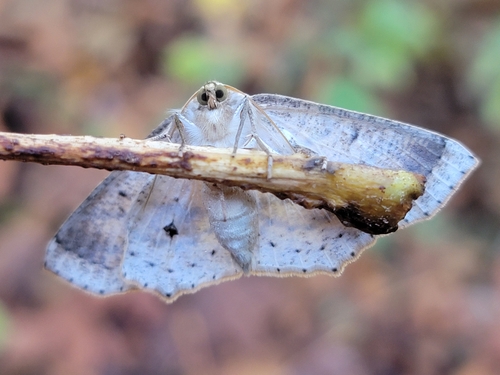
The Omnivorous Looper, Sabulodes aegrotata, is a fascinating insect species belonging to the Geometridae family, commonly known as geometer moths or loopers. While its common name suggests an incredibly broad diet, the 'omnivorous' refers more to the caterpillar's polyphagous (many-plant-eating) nature rather than consuming both plants and animals. These moths are particularly notable for the distinctive looping movement of their larvae, an adaptation due to having fewer prolegs than most caterpillars, which makes them appear to measure the earth as they move. As adults, they are nocturnal flyers, often attracted to lights, and play a role in pollination. Their presence is a common sight across their Western North American range, thriving in diverse vegetated environments.
Habitat: Found in woodlands, forests, chaparral, and even urban and suburban gardens where a variety of host plants are present.
The adult Omnivorous Looper moth typically has a wingspan ranging from 3.5 to 6 centimeters. Its wings are generally buff to brownish-yellow, often adorned with indistinct, wavy, darker brown lines or speckles that provide effective camouflage against tree bark. The hindwings usually match the forewings in coloration and patterning, though sometimes slightly paler. The body is robust and covered in short, yellowish-brown hairs. The caterpillar, or looper, is highly variable in color, ranging from light green to mottled brown, often mimicking a twig or leaf stem, aiding in its camouflage. It possesses distinct segments and moves with a characteristic 'looping' motion.
Category
InsectsRarity
Common
Danger
1/5 · Very low
Snaps
Be the first to snap!
Despite its common name, the Omnivorous Looper caterpillar is a generalist herbivore, capable of feeding on over 100 different plant species.
Female moths lay their eggs in small clusters on the undersides of host plant leaves.
The 'looper' name comes from the caterpillar's unique way of moving, arching its body into a loop to bring its hind prolegs forward before extending its front section.
The adult moths are nocturnal and are often observed fluttering around porch lights or streetlamps on warm evenings.
The looper caterpillar has evolved a remarkable ability to blend seamlessly with its environment. Its body shape and mottled coloration closely resemble a dead twig or leaf stem, making it nearly undetectable to predators.
The larval stage of the Omnivorous Looper is known for its ability to feed on an exceptionally wide range of host plants, including many broadleaf trees, shrubs, and garden plants. This adaptability ensures a stable food supply across various habitats.
Its distinctive 'looping' movement, caused by the absence of prolegs on the middle segments, is a specialized form of movement that allows it to navigate branches and leaves efficiently while maintaining its camouflage.
The larval stage (caterpillar) of the Omnivorous Looper is primarily herbivorous, feeding on the foliage of a wide variety of broadleaf trees, shrubs, and cultivated plants. Adult moths typically do not feed or consume only small amounts of nectar.
Age differences: Larvae are defoliating herbivores, while adult moths primarily seek mates and lay eggs, consuming little to no food, or occasionally nectar.
Turdus migratorius
Predation by birds on caterpillars and adult moths.

Quercus agrifolia
Caterpillars feed on the leaves of this tree.
Braconidae sp.
Parasitic wasp lays eggs in or on looper caterpillars.
Eptesicus fuscus
Bats prey on adult moths during their nocturnal flights.
No trait badges are assigned for this object yet.
No aliases listed yet.
Collections for this object will appear here as more themes are added.
Danger
1/5 · Very low
No special safety notes yet.
Compare resting wing shape, forewing markings, antennae and body build. Small brown moths can hinge on fine details a phone photo can't always catch. Moth Identifier: upload a photo and compare the visible details.
3-6 cm
3-6 cm
0.001-0.005 kg
0-1 years
10 km/h
The larval stage (caterpillar) of the Omnivorous Looper is primarily herbivorous, feeding on the foliage of a wide variety of broadleaf trees, shrubs, and cultivated plants. Adult moths typically do not feed or consume only small amounts of nectar.
Found in woodlands, forests, chaparral, and even urban and suburban gardens where a variety of host plants are present.
Zoom in to split clusters and explore where this object has been snapped.
Recent snaps will appear here as new observations are added.
Take the discovery with you
Snap it with Snappit to identify it, learn what makes it special, and add the discovery to your collection.