Pacific Acorn Barnacle
balanus glandula
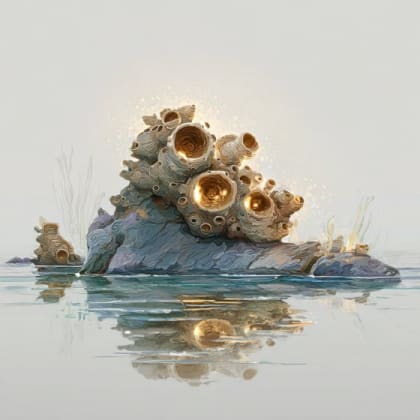
The Pacific Acorn Barnacle is a tiny animal that sticks to rocks and shells in the ocean. They have a hard shell that looks like a little acorn, and they open up to eat tiny food from the water!
Habitat: Rocky shores and tidal pools along the Pacific coast.
The Pacific Acorn Barnacle is a small, whitish-grey cone with a rough, often ridged surface. Its top has a diamond-shaped opening made of four movable plates. It looks like a tiny volcano glued to rocks, distinct from smooth, flat limpets.
Category
InvertebrateRarity
Common
Danger
0/5 · No known danger
Snaps
2
Barnacles are actually crustaceans, which means they are related to crabs and lobsters!
Some barnacles can live for many years, often ten times longer than a pet hamster!
They spend their whole adult life upside down, sticking their head to a rock!
Wow! Baby barnacles swim like tiny shrimp before finding a spot to glue down!
Pacific Acorn Barnacle can make an incredibly strong natural cement because of specialized glands that helps them stick to rocks forever.
Pacific Acorn Barnacle has feathery 'cirri' legs that helps them sweep tiny food particles from the ocean water.
Pacific Acorn Barnacle can close its shell plates because of strong muscles that helps them stay safe and moist during low tide.
Pacific Acorn Barnacle has both male and female parts that helps them reproduce even when neighbors are scarce.
They sweep tiny ocean critters and plant bits from the water using their feathery legs.
Pisaster ochraceus
Pries open shells to eat the soft body.
Nucella emarginata
Drills a tiny hole through the shell.
Oligocottus maculosus
Nips at the feathery feeding legs.
Social animals live in organized groups, cooperating for survival benefits such as foraging, defense, and raising offspring.
Filter feeders obtain nutrients by straining suspended food particles and small organisms from water.
Coastal habitats are dynamic environments located along the interface between land and sea, influenced by tides, waves, and saltwater.
Aquatic habitats encompass environments where organisms live predominantly in water, including oceans, rivers, lakes, and wetlands.

Marine habitats encompass all saltwater environments of the Earth's oceans, supporting an immense diversity of aquatic life.
Danger
0/5 · No known danger
No special safety notes yet.
The easiest way to identify Pacific Acorn Barnacle is to use the Snappit nature identifier app.
1.5 cm
0.5 g
10 years
They sweep tiny ocean critters and plant bits from the water using their feathery legs.
Rocky shores and tidal pools along the Pacific coast.
Filter Feeding
12
Zoom in to split clusters and explore where this object has been snapped.

Alaska, US
You might spot Steller Sea Lion, Harbor Seal, and Tufted Puffin.
View guide →

US
You might spot Ochre Sea Star and Giant Green Anemone.
View guide →

British Columbia, CA
You might spot Barn Swallow, Pelagic Cormorant, and Sea Lion.
View guide →
Washington, US
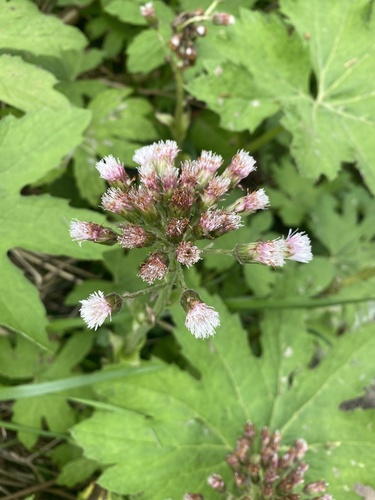
You might spot Arctic Butterbur, Red Valerian, and American Brooklime.
View guide →
Take the discovery with you
Snap it with Snappit to identify it, learn what makes it special, and add the discovery to your collection.