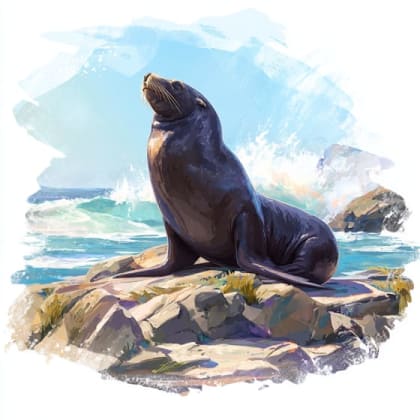





Steller Sea Lion

The Alaska SeaLife Center is the state's premier public aquarium and only permanent marine mammal rehabilitation facility, uniquely situated on the shores of Resurrection Bay in Seward.
The Alaska SeaLife Center is the state's premier public aquarium and only permanent marine mammal rehabilitation facility, uniquely situated on the shores of Resurrection Bay in Seward. It stands as the sole institution globally dedicated to studying the northern marine environment while seamlessly integrating research, public education, and wildlife rescue efforts. This non-profit center offers an immersive experience, allowing visitors to connect with Alaskan marine life while learning about critical conservation work.
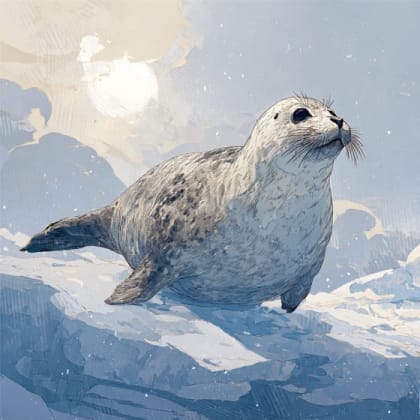
Visitors can marvel at the impressive Steller sea lions in their expansive habitat, watch graceful harbor seals, and observe playful sea otters, some of whom are undergoing rehabilitation. The spectacular seabird aviary, featuring a 21-foot-deep diving tank, provides breathtaking above and underwater views of iconic species like Horned and Tufted Puffins, Common Murres, and Red-legged Kittiwakes. Delve deeper into the ocean's mysteries with exhibits showcasing Giant Pacific Octopuses, a variety of Alaskan fish like salmon and wolf eels, king crabs, and an interactive Discovery Pool where you can touch sea stars and urchins.
A visit to the Alaska SeaLife Center is an enriching experience for all ages, offering close encounters with marine creatures in a convenient, indoor setting. Beyond entertainment, it fosters a deeper understanding and stewardship of Alaska's delicate marine ecosystems through engaging exhibits and visible research and rehabilitation efforts. It's a memorable destination that educates, inspires, and provides a unique perspective on the wonders of the Last Frontier's underwater world. Explore the grounds like a pro—download the Snappit app to instantly identify animals and plants.
The concept for the Alaska SeaLife Center originated over 25 years ago, stemming from a vision by Seward community leaders to enhance the existing University of Alaska's Seward Marine Center research facilities. In 1990, the Seward Association for the Advancement of Marine Science (SAAMS) was formed by concerned citizens and researchers, aiming to create a world-class marine research, wildlife rehabilitation, and public education institution. A significant portion of the center's funding, $37.5 million out of a total $55 million cost, came from the Exxon Valdez Oil Spill settlement funds, specifically designated for research and rehabilitation following the 1989 disaster. Groundbreaking occurred in May 1995, and the Alaska SeaLife Center officially opened its doors in May 1998, becoming Alaska's only permanent marine mammal rehabilitation center and a leading facility for marine research.
Beyond the main exhibits, look for interactive learning displays and educational presentations by naturalists and animal care specialists. Consider booking a behind-the-scenes experience or an animal encounter for a more in-depth look. Keep an eye out for animals undergoing rehabilitation; you might glimpse orphaned seal or otter pups.
As an indoor facility, weather doesn't significantly impact the experience. However, daily programming and events are more frequent during the summer season.
The Alaska SeaLife Center is wheelchair and stroller accessible throughout. It is also the first organization in Alaska to be certified Sensory Inclusive by KultureCity, offering sensory bags, designated quiet areas, and headphone zones to assist visitors with sensory disabilities. Service animals (dogs and miniature horses) are generally permitted in public areas, with some exceptions for safety around collection animals.
Observe the largest sea lions in the world in their impressive 185,000-gallon tank.
Witness puffins, murres, and kittiwakes diving and swimming in North America's deepest diving bird tank.
Watch these agile pinnipeds from both above and below the water.
A hands-on touch tank where you can feel sea stars, sea urchins, and other intertidal creatures.
Each card links to a full Explore page with photos, traits, and fun facts.
Start with the big picture, then zoom in to explore individual wildlife observations around this place.
Check the schedule
Look up daily program schedules for animal talks and demonstrations in advance to plan your visit around these engaging presentations.
Book tickets early
The center uses a plan-ahead pricing model, so purchasing tickets online in advance can secure the best rates and entry times, especially during busy seasons.
Bring a camera
There are incredible photo opportunities of marine mammals, birds, and underwater life, so make sure to have your camera ready.
Dress in layers
While mostly indoors, some areas, particularly near large tanks, can be cooler. A light jacket or sweater is recommended.
Allow ample time
Plan for at least 2-3 hours to fully explore all the exhibits and interactive displays.
Visit the outdoor deck
Don't miss the outdoor viewing deck overlooking Resurrection Bay, where you might spot wild marine life in their natural habitat.
Jun 6, 2026
Jun 5, 2026
Jun 5, 2026
Jun 5, 2026
Jun 5, 2026

Michigan, US
You might spot African Lion, Komodo Dragon, and Brown Bear.
View guide →
.jpg)
Municipal District of Cobh, IE
You might spot Ring-Tailed Lemur, Giraffes, and Cheetahs.
View guide →

Nouvelle-Aquitaine, FR
You might spot Greater Flamingo, Giraffes, and Red Panda.
View guide →

Texas, US
You might spot Giraffes, African Lion, and Eastern Black Rhinoceros.
View guide →
Take the discovery with you
Identify the wildlife you spot, learn as you go, and keep a collection of the adventure.



























.jpg&width=800)
