

Pacific Black Duck
anas superciliosa
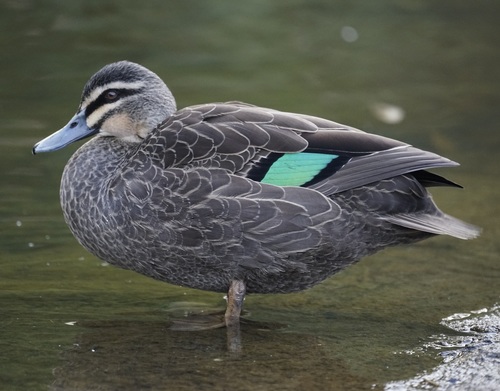
The Pacific Black Duck is one of the most common and versatile waterfowl species native to the wetlands, rivers, and lagoons of Australia, New Zealand, and the Pacific islands. Known for its highly adaptable nature, this medium-sized dabbling duck easily transitions between remote natural waterways and bustling urban parks. Despite its common name, its plumage is predominantly a rich, dark brown with intricately patterned feathers rather than true black. This species plays an essential ecological role in its wetland habitats by dispersing the seeds of aquatic plants and controlling insect populations. They are highly social, often forming small flocks, and can be easily identified by their loud, classic duck-like quacks and their striking iridescent green wing patches visible in flight.
Habitat: Typically found in a wide variety of freshwater wetlands, including swamps, farm dams, slow-moving rivers, coastal estuaries, and urban park ponds.
This medium-sized duck is characterized by its dark brown body where each feather is delicately edged in pale buff, creating a scalloped appearance. The most diagnostic feature is its cream-colored head marked with bold, dark brown stripes: one running from the bill through the eye, and another running parallel below it. When the bird is in flight or grooming, a brilliant, iridescent emerald-green speculum bordered by black is revealed on its secondary wing feathers. The bill is a uniform lead-grey, and the legs are a dull greenish-yellow, completing its elegant camouflage.
Category
BirdsRarity
Common
Danger
1/5 · Very low
Snaps
Be the first to snap!
Despite its name 'Black Duck', the bird is actually mostly dark brown; its name likely stems from early settlers comparing it to the darker plumage of the American Black Duck.
In New Zealand, where it is known as the Grey Duck or Pārera, it is critically endangered in its pure genetic form due to interbreeding with introduced Mallards.
They are highly nomadic during droughts, capable of flying hundreds of kilometers across the Australian continent in search of fresh water.
Utilizes comb-like lamellae inside its bill to filter out tiny aquatic invertebrates and seeds from mud and water without swallowing debris.
Maintains highly water-repellent feathers by distributing oils from its uropygial gland during preening, keeping it dry and buoyant.
Possesses powerful breast muscles that allow it to launch directly upwards into flight from the water's surface without a running start.
Feeds mainly on aquatic plant seeds, leaves, and stems, supplemented by aquatic insects, mollusks, and crustaceans.
Anas platyrhynchos
Hybridizes and competes for resources and nesting sites, threatening the genetic integrity of native populations in New Zealand.

Vulpes vulpes
Preys upon eggs, ducklings, and occasionally nesting adult females in terrestrial environments.
Persicaria decipiens
Feeds extensively on the highly nutritious seeds of this native wetland plant.
No trait badges are assigned for this object yet.
No aliases listed yet.
Collections for this object will appear here as more themes are added.
Danger
1/5 · Very low
No special safety notes yet.
Compare the silhouette, bill shape, tail length, wing bars and markings around the eyes. The same small brown bird at your feeder can look quite different in breeding plumage, winter plumage or its first year. Bird Identifier: upload a photo and compare the visible details.
47-61 cm
80-95 cm
0.8-1.4 kg
3-8 years
65 km/h
Feeds mainly on aquatic plant seeds, leaves, and stems, supplemented by aquatic insects, mollusks, and crustaceans.
Typically found in a wide variety of freshwater wetlands, including swamps, farm dams, slow-moving rivers, coastal estuaries, and urban park ponds.
Zoom in to split clusters and explore where this object has been snapped.
Recent snaps will appear here as new observations are added.
Take the discovery with you
Snap it with Snappit to identify it, learn what makes it special, and add the discovery to your collection.