.JPG&width=800)





Satyr Tragopan
Tragopan satyra
The Satyr Tragopan is a beautiful bird with bright colors and unique patterns. It loves to live in the forests of the Himalayas, where it can hide among the trees and enjoy the fresh air.
Habitat: Mountain regions
The Satyr Tragopan has a striking appearance, with males boasting a bright red body covered in white spots, a deep blue face, and vibrant inflatable blue 'horns' and an orange wattle during courtship. Females are camouflaged in mottled brown, grey, and black, helping them blend into their forest habitat.
Category
BirdsRarity
Rare
Danger
1/5 · Very low
Snaps
Be the first to snap!
Males perform an elaborate, dancing 'bow' display to impress females.
Their eggs are surprisingly large, often a creamy buff color with specks.
They move between altitudes as seasons change, seeking food and milder weather.
Unlike most pheasants, these birds build their nests high up in trees!
Satyr Tragopan males can inflate bright blue, fleshy 'horns' and an orange wattle to attract mates because these elaborate displays showcase their health.
Satyr Tragopan has mottled brown and grey feathers that help them blend perfectly into the dense forest undergrowth to avoid predators.
Satyr Tragopan can make deep, booming calls that echo through the mountains because it helps them communicate across vast, dense territories.
They munch on plants, including leaves and berries, and snack on insects found on the forest floor.
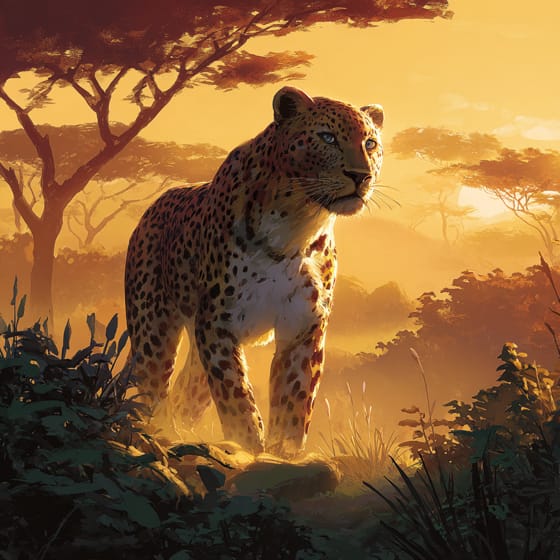
Panthera pardus
Adult Satyr Tragopans can be hunted by leopards.
Martes flavigula
Marten often prey on eggs and young chicks in nests.
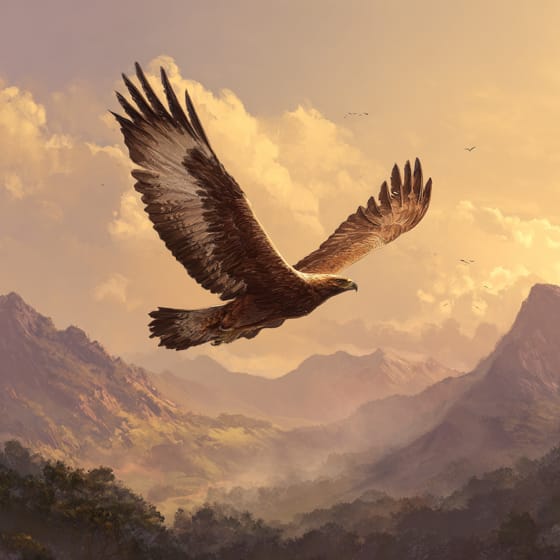
Aquila chrysaetos
Eagles are significant aerial predators of tragopans.
Rhododendron arboreum
Tragopans feed on leaves and buds of rhododendron plants.
Feathered describes animals, primarily birds, possessing a covering of feathers.
Solitary animals live alone for most of their lives, only interacting with others for mating or parental care.
Colorful describes organisms or objects displaying a wide range of bright and distinct colors.
This trait characterizes organisms whose diet consists entirely or primarily of plant material.

This habitat trait identifies species found in mountainous regions, characterized by high elevation, steep slopes, and varying climate zones.

Forest habitats are terrestrial environments dominated by dense tree cover, supporting a high diversity of plant and animal life.

Diurnal animals are primarily active during daylight hours, typically resting or sleeping at night.

Describes a species whose presence and role have a disproportionately large effect on its environment.

Describes organisms that transfer pollen, enabling the fertilization and reproduction of plants.

Endangered status indicates a species is at a very high risk of extinction in the wild in the near future.
No aliases listed yet.
Danger
1/5 · Very low
Always observe birds from a distance so you don't scare them away.
The easiest way to identify Satyr Tragopan is to use the Snappit nature identifier app.
50-70 cm
80-100 cm
1.2-2.2 kg
5-15 years
45 km/h
They munch on plants, including leaves and berries, and snack on insects found on the forest floor.
Mountain regions
Zoom in to split clusters and explore where this object has been snapped.
Recent snaps will appear here as new observations are added.
Take the discovery with you
Snap it with Snappit to identify it, learn what makes it special, and add the discovery to your collection.




.jpg&width=800)







